Saigon: A Feast for All Senses
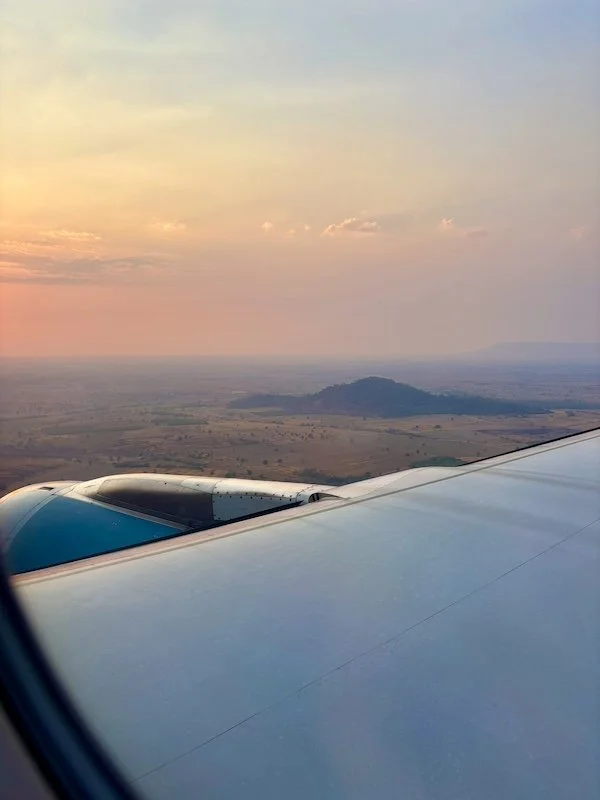
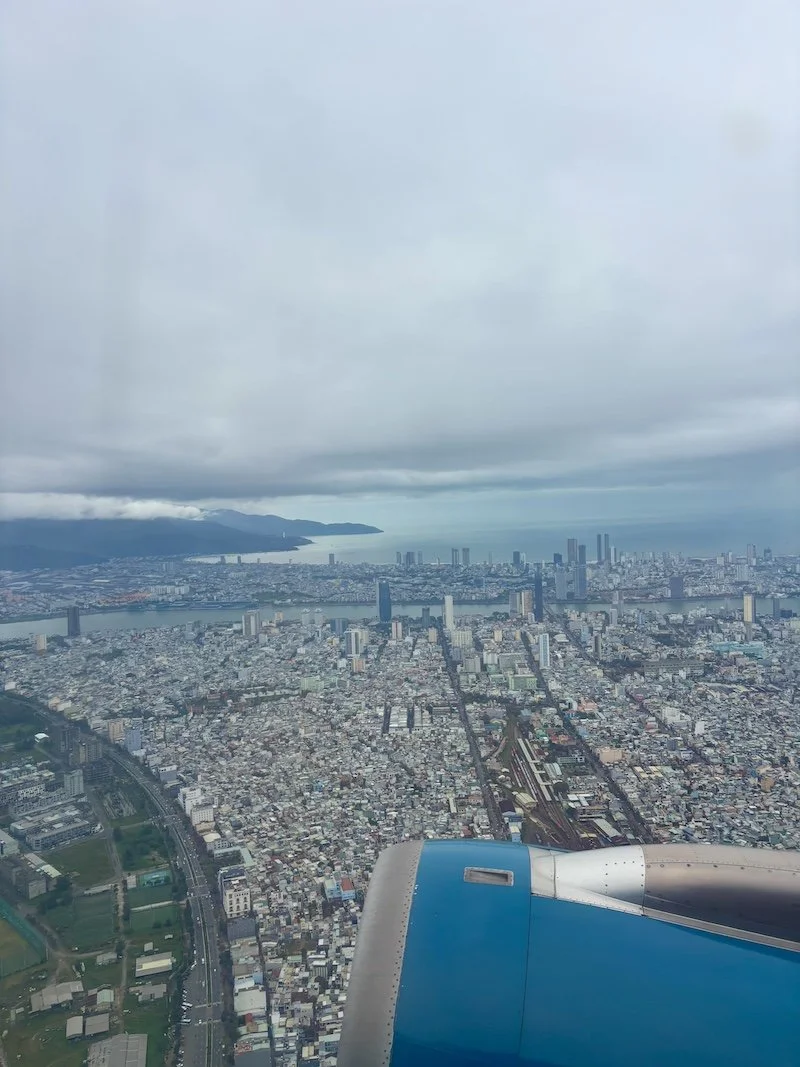
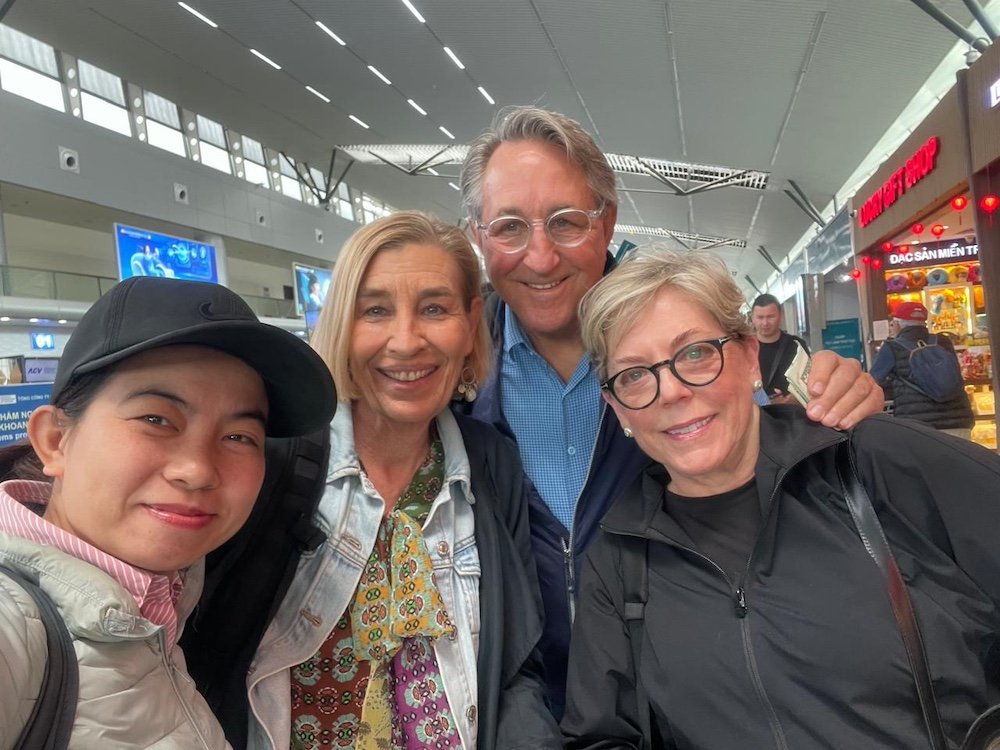
We said goodbye to Central Vietnam and boarded Vietnam Air to fly to our final Vietnam destination in this incredible country: Saigon. I worried about using the word “Saigon,” the historical name of Ho Chi Minh City, the most populated city in the country (14,000,000 people). I didn’t want to offend the locals or be disrespectful of the history. The name was changed in 1976, after the end of the Vietnam War, to honor Ho Chi Minh, the respected leader who led the National reunification of the country under Communist rule. But I needn’t have worried, as many locals still use “Saigon” with love and warmth, and signage abounds with the historical name.
The heat immediately slapped us in the face as we walked out of the airport. With a new driver and a very knowledgeable guide, we drove 1.5 hours to the Cu Chi Tunnels to witness firsthand the intricate underground network of tunnels used as escape and supply routes, hiding spots, living quarters, and hospitals by Vietnamese resistance fighters during the Vietnam War. These people were South Vietnamese Communists and sympathizers who opposed the South Vietnamese government and the US allies. Many of these resisters were also just local villagers who dug fields by day and tunnels by night.
One of the dioramas on display looked like a glass-walled ant farm I had owned in grade school, and the tunnels and their strange passageways were filled with little models of people cooking, sleeping, tending the sick and wounded, assembling weapons, sewing clothes, cleaning guns, and playing with children.
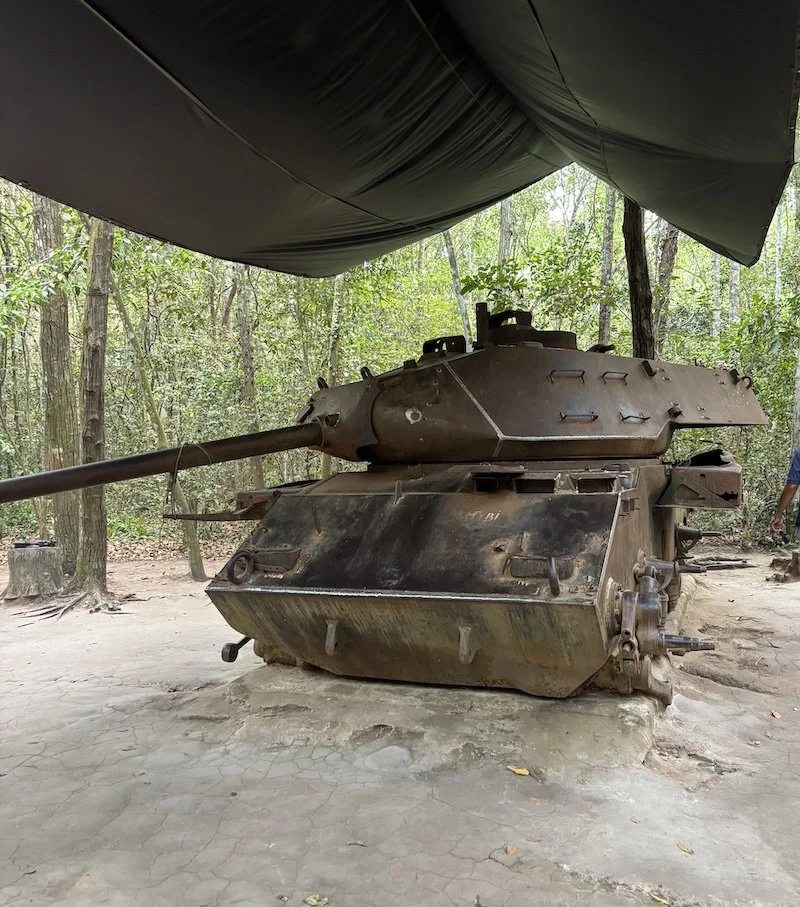
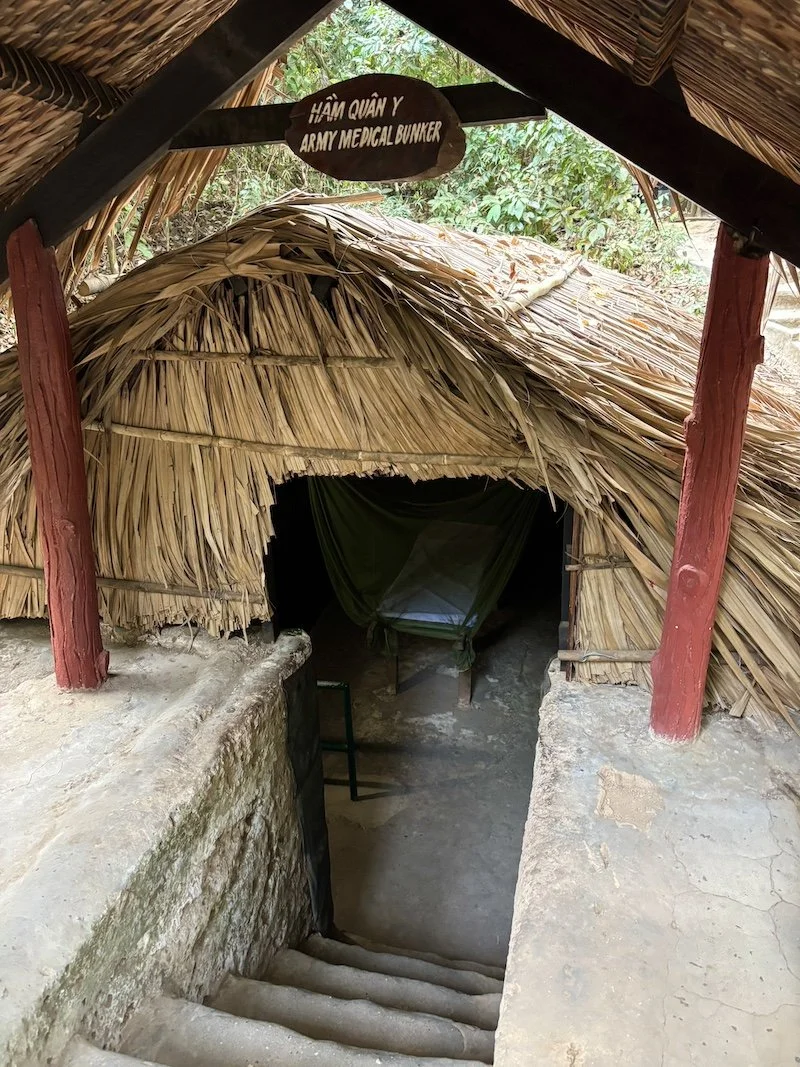
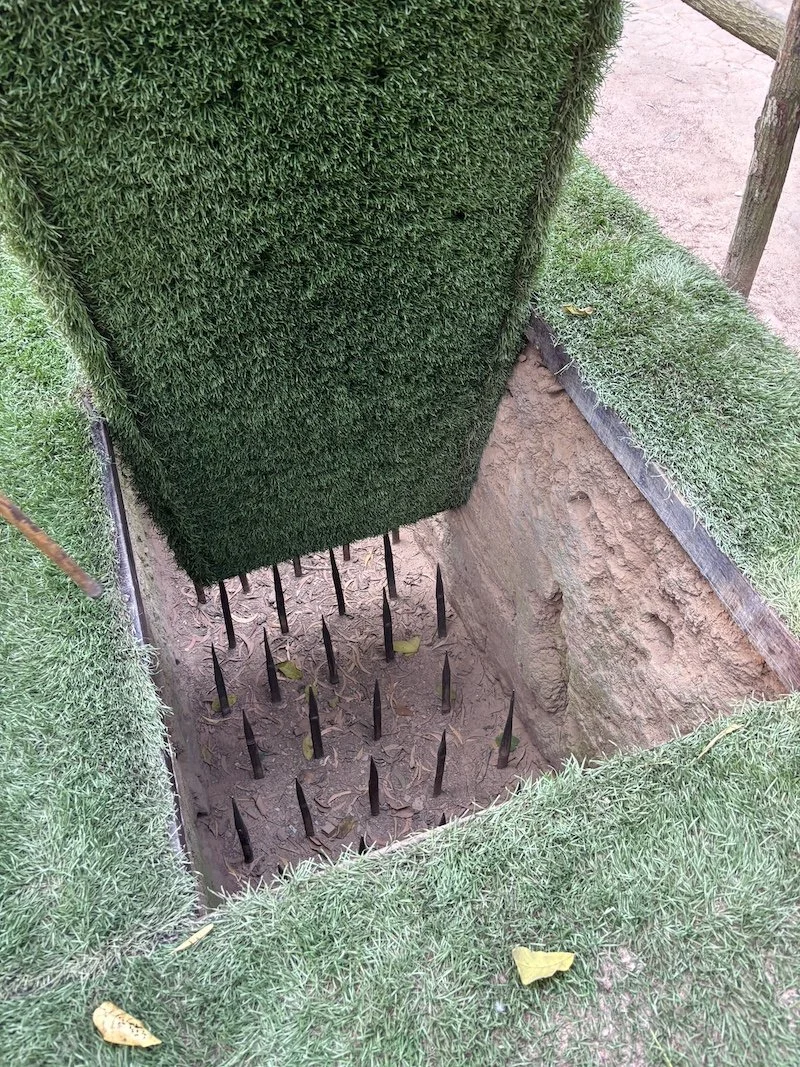
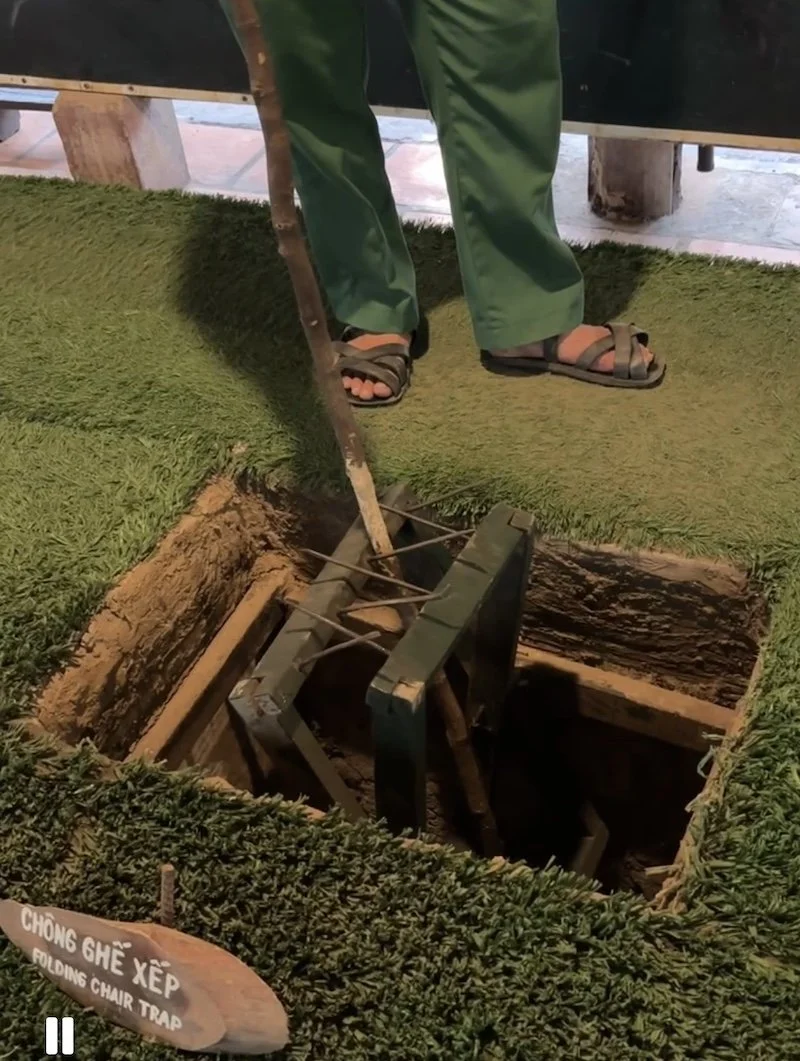
At its peak, the vast tunnel system dug by the local Cu Chi people stretched from Saigon to the Cambodian border—a vast honeycomb web of underground living, working, and fighting areas. At the historical site, we saw a working gun range and life-size modeled figures of the people in their tunnel habitats. What was especially fascinating was the exhibition of various ingenious booby traps. constructed to trap the enemy and inflict great pain and even death.
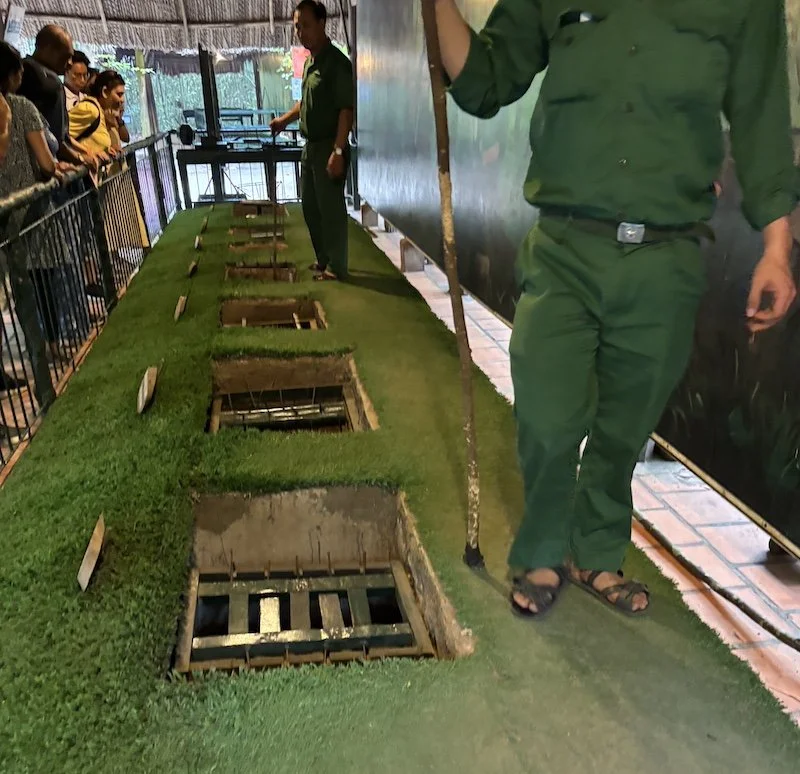
On display and operated by workers dressed in Viet Cong uniforms were dozens of well-camouflaged booby traps dug into the earth, consisting of spring-loaded trap doors and bamboo spikes coated with poisons. In the eerie silence that followed the snapping or clamping of a booby trap, I felt a skin-prickly feeling and a wave of nausea overcome me.
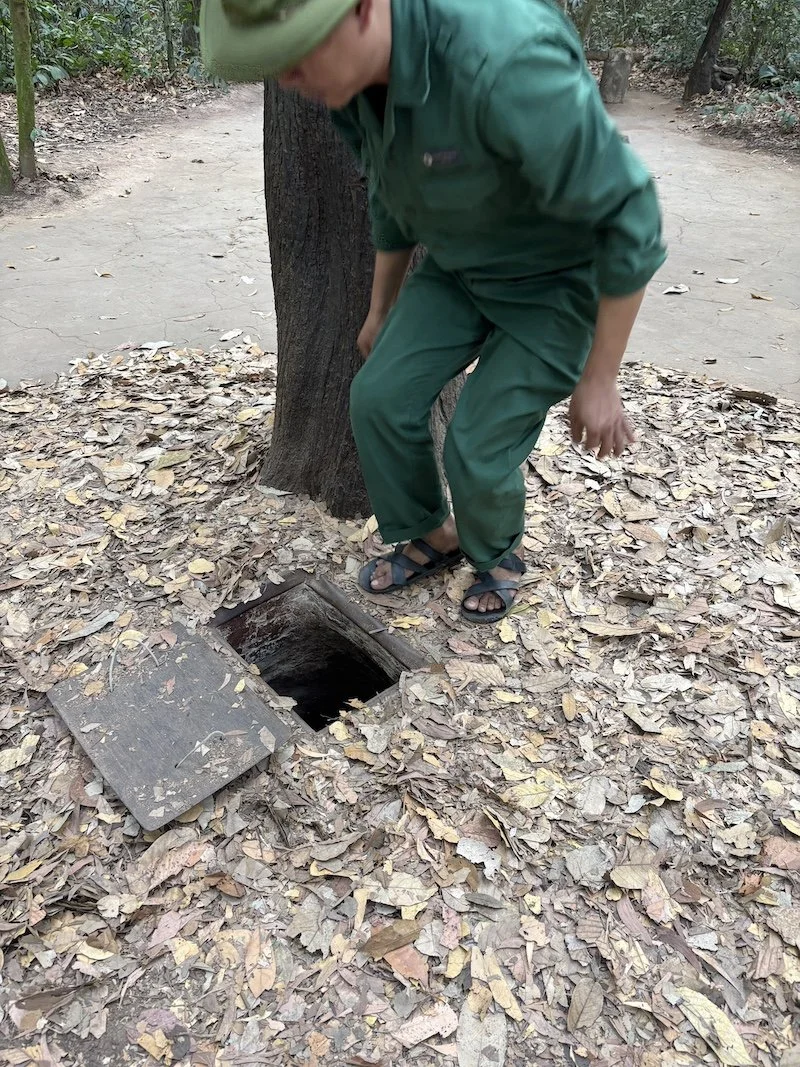
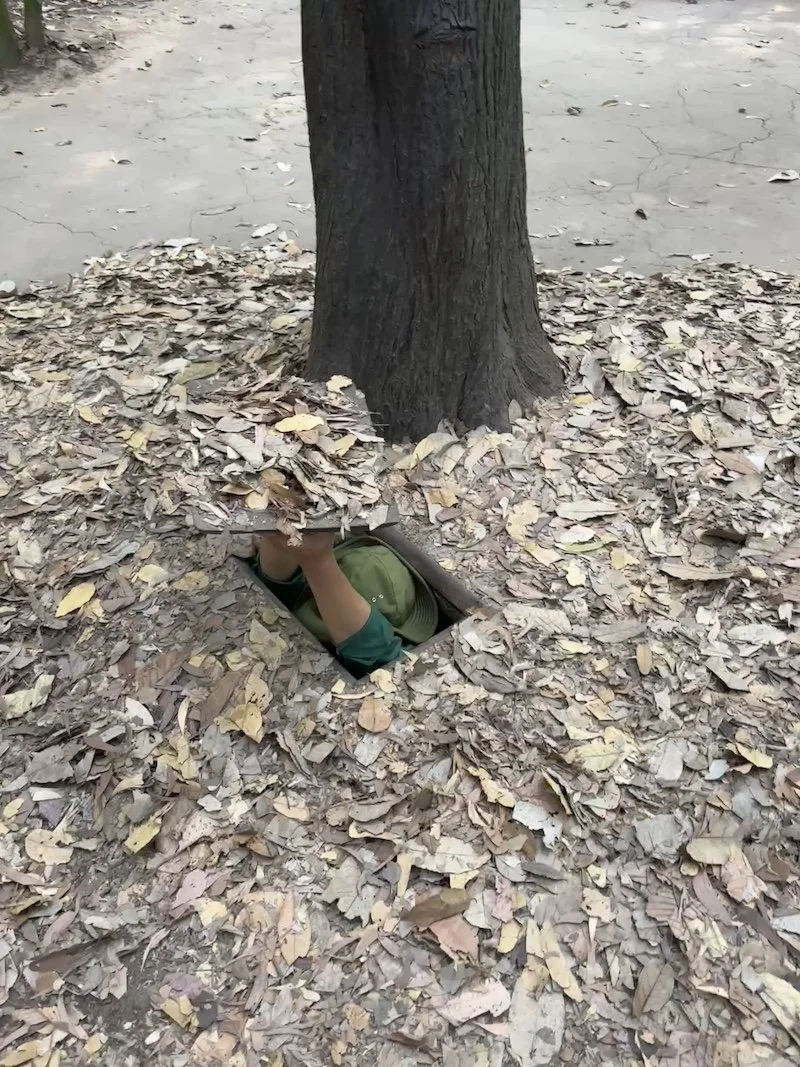
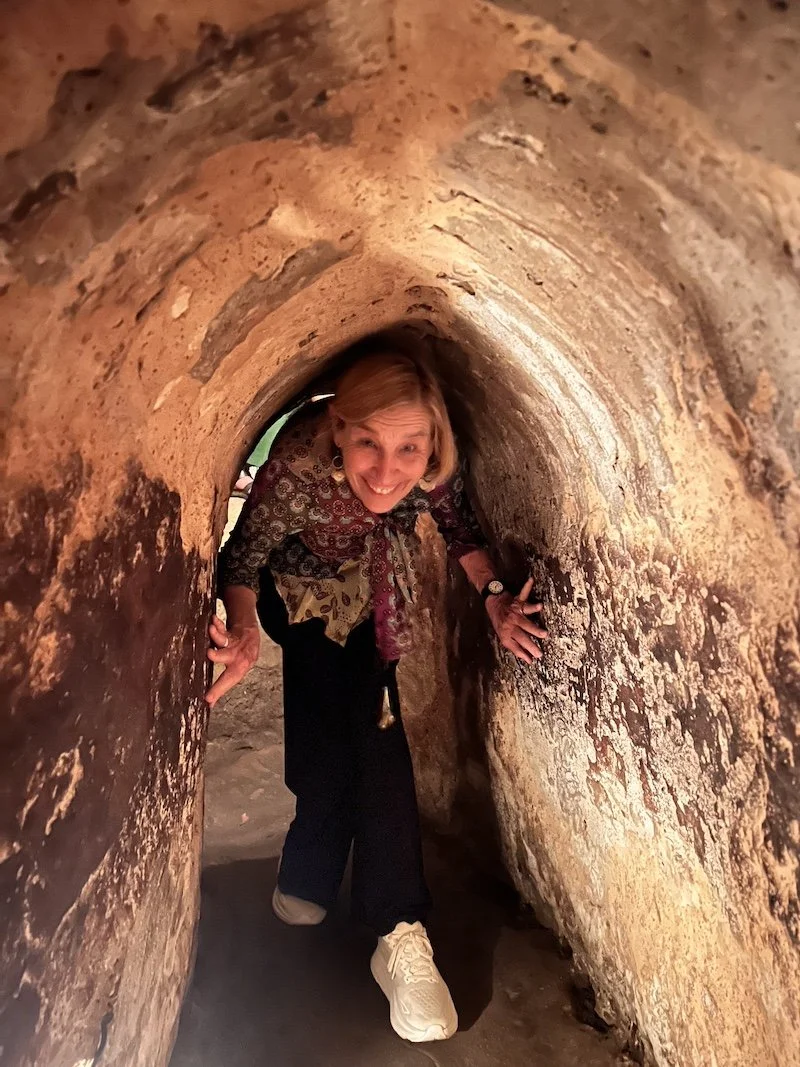
Also freakily scary was when I volunteered to descend into one of the tunnels with a guide and a flashlight and crawled on my hands and knees from one end to the other. Seeing daylight at the end sent a wave of relief over me.
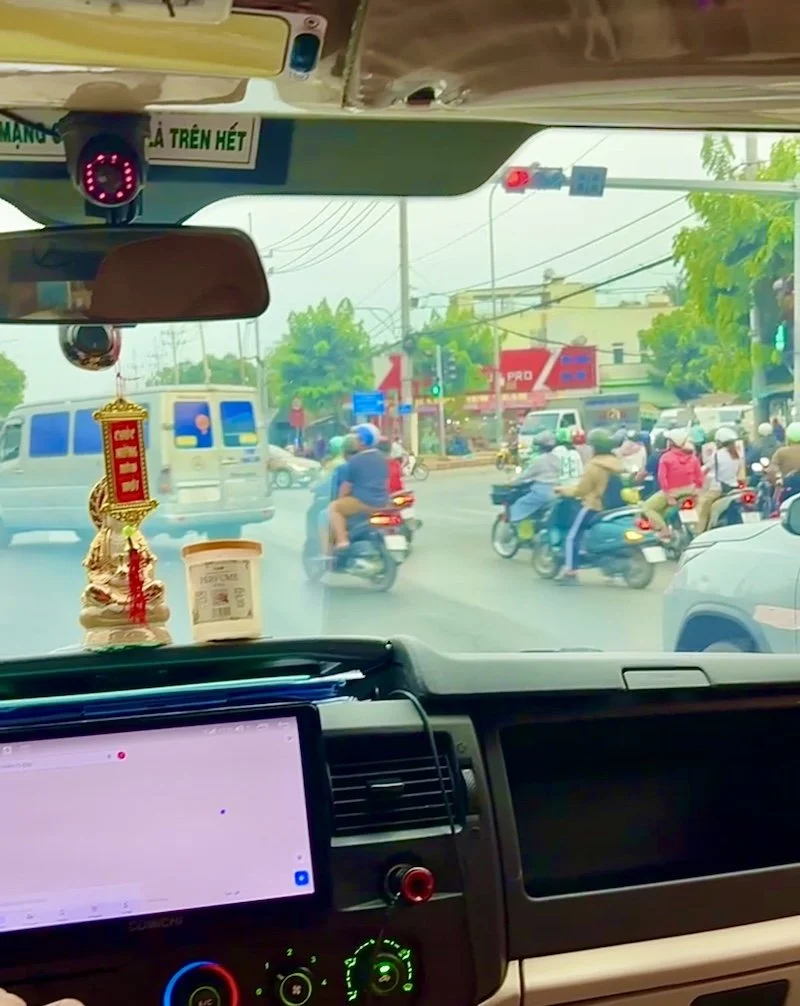
The rush-hour drive into Ho Chi Minh City took two hours, but it allowed us to view the chaotic swarm of pedestrians carrying children, boxes, and flowers; buses filled to overflowing; cyclists balancing small children and live chickens on the seat; and motorbikes with their whining engines and angry horns. As our guide said: Traffic doesn’t stop. It negotiates. He gave us advice on walking in the city: go together, keep going, and make eye contact. Hesitation is the only real danger.
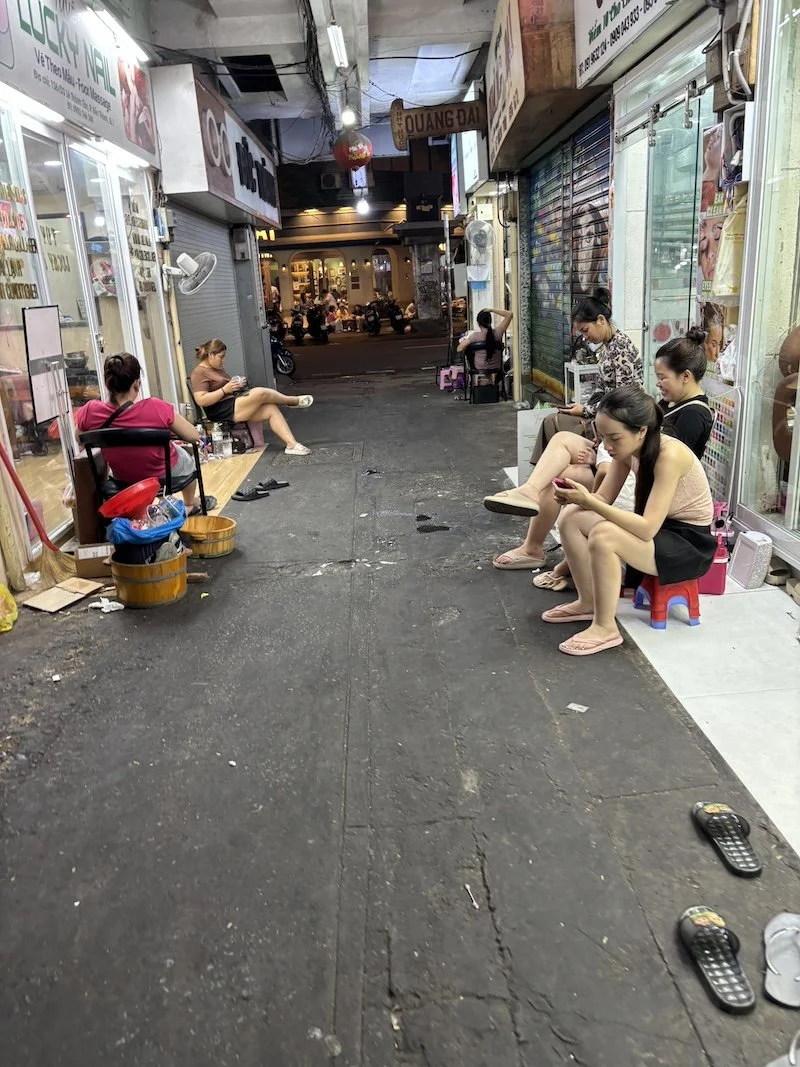
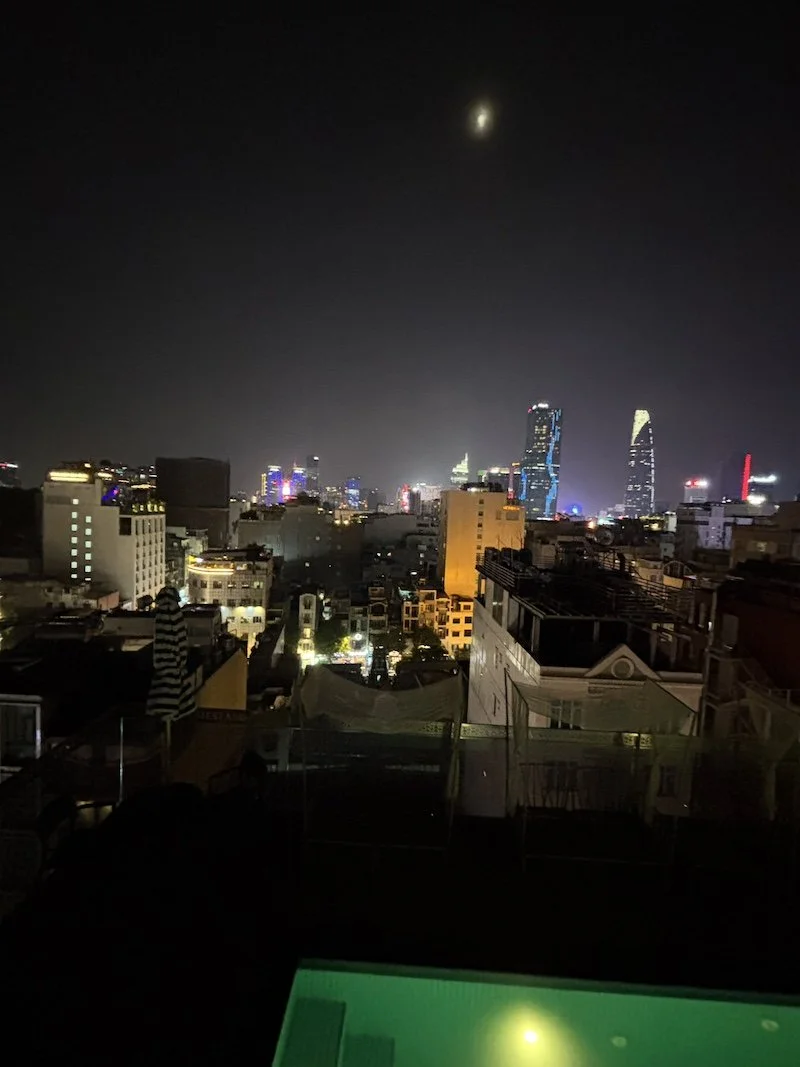
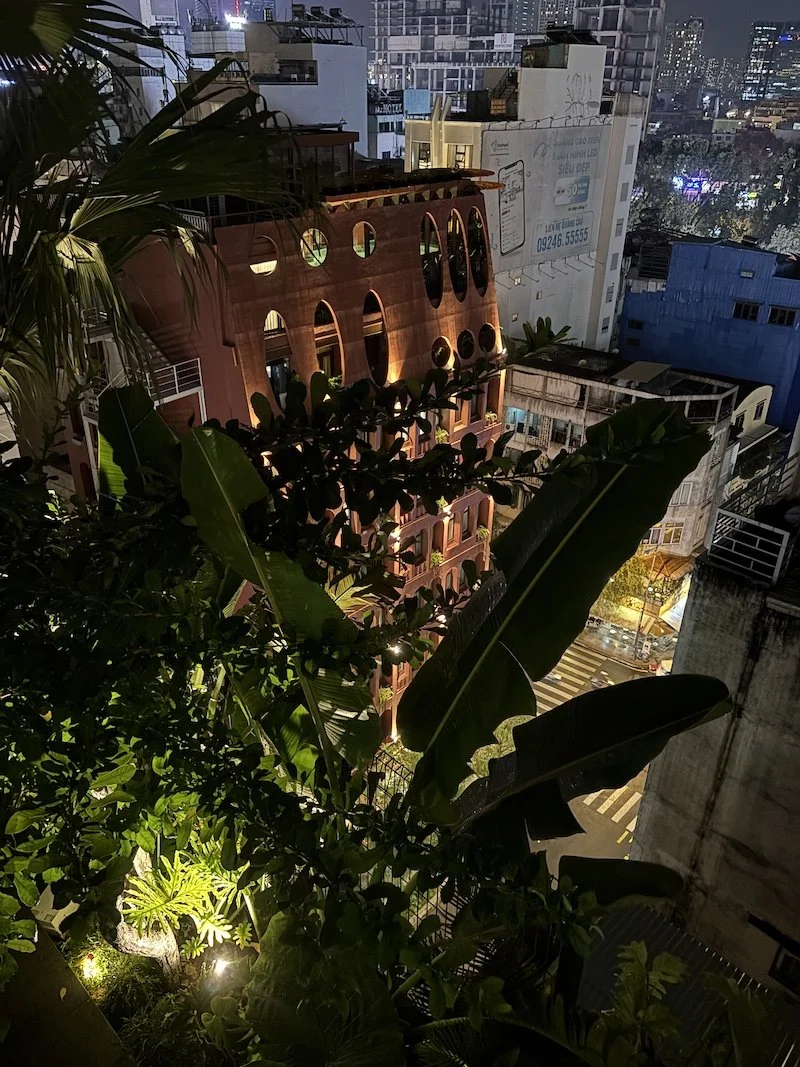
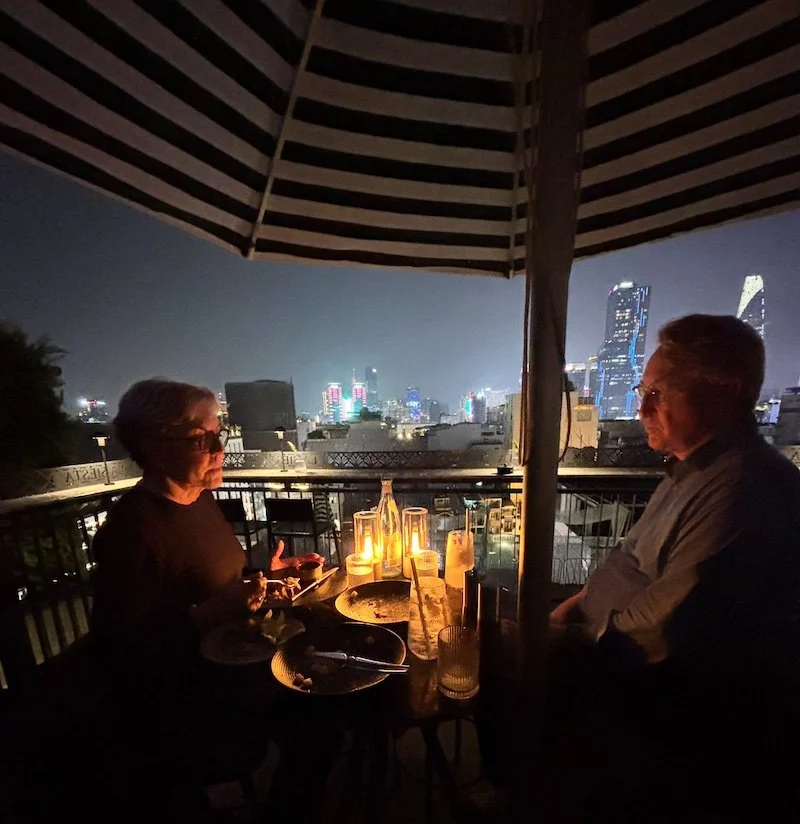
After a huge mix-up (our driver and guide dropped us off at the wrong hotel—not even close to the correct one!), we were finally able to call them to retrieve us and take us to the correct one. All this added another two hours before we were able to check into the right one (La Siesta Boutique Hotel) and finally have a late dinner on the rooftop at the Aqua Sky Bar, next to a lovely infinity pool and overlooking Saigon’s lively downtown. It was actually a beautiful night—not as hot or muggy as the day had been.
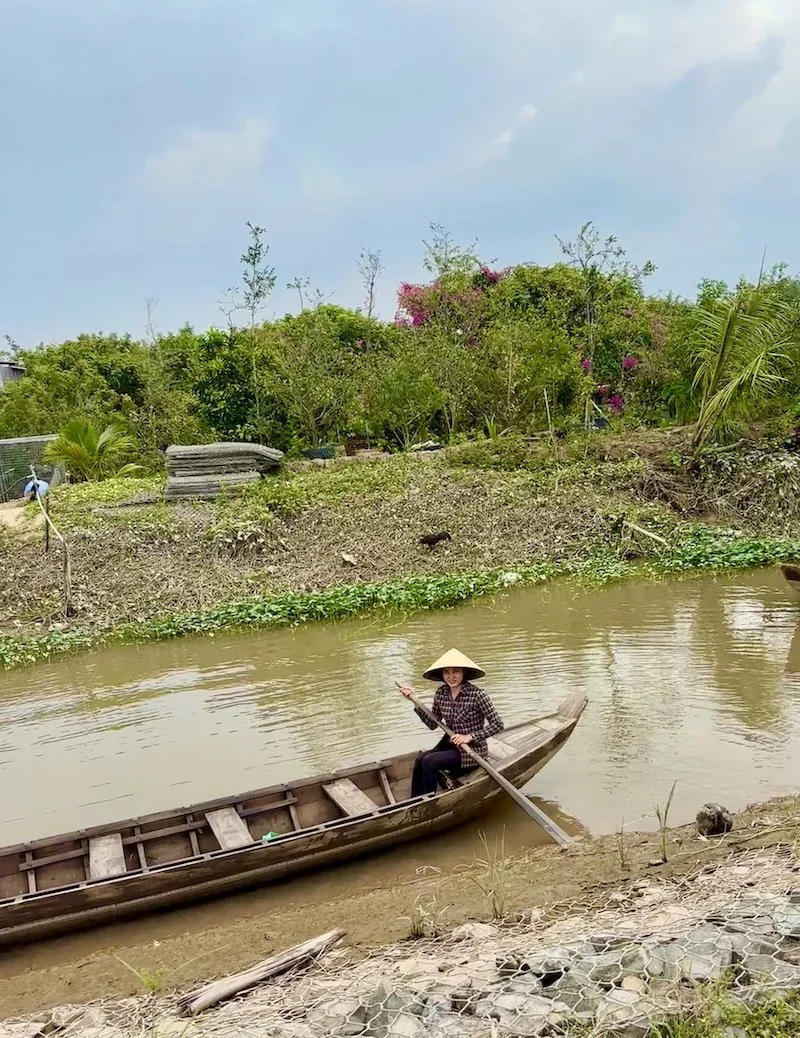
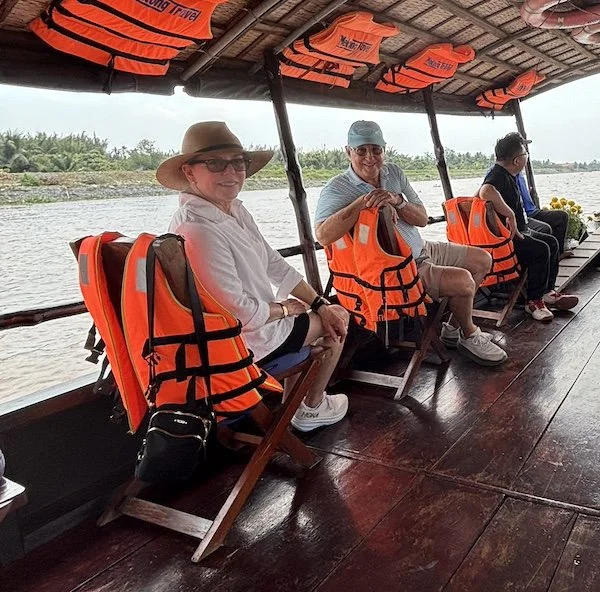
We were picked up at 8 the next morning and driven almost 3 hours to the Mekong Delta. The countryside was so deserted and unsigned that the driver had several false stops before finding the right bridge to cross to deposit us at a boat landing. Our ancient sampan motorboat was waiting, and our destination, Phoenix Island, took only ten minutes.
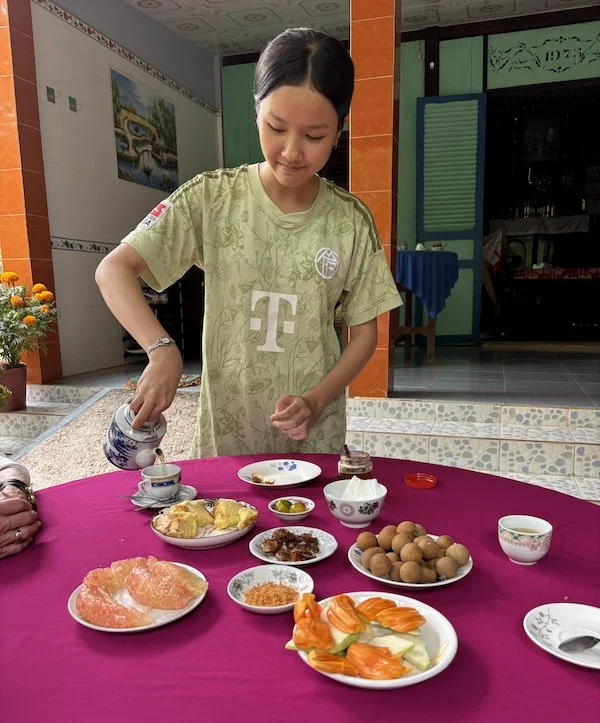
We were a little wary and uncertain when the drop-off was a nondescript dock with a quiet, local man waiting for us. We walked on a hard-packed earthen path along the river and into a jungle-ish area to his home/restaurant where we participated in a local tea ceremony performed by his teenage daughter. We enjoyed a homegrown tea with local honey and persimmon.
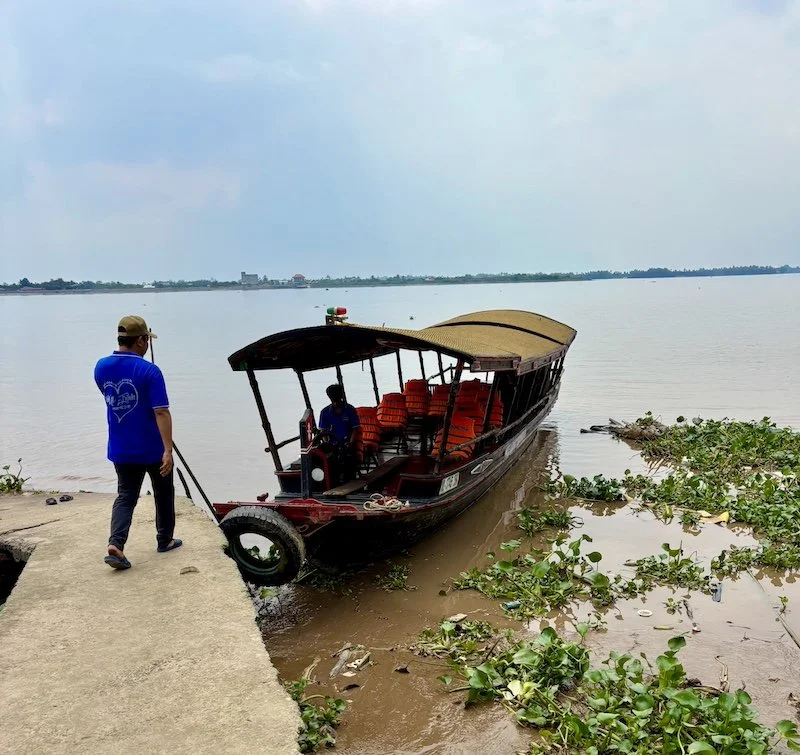
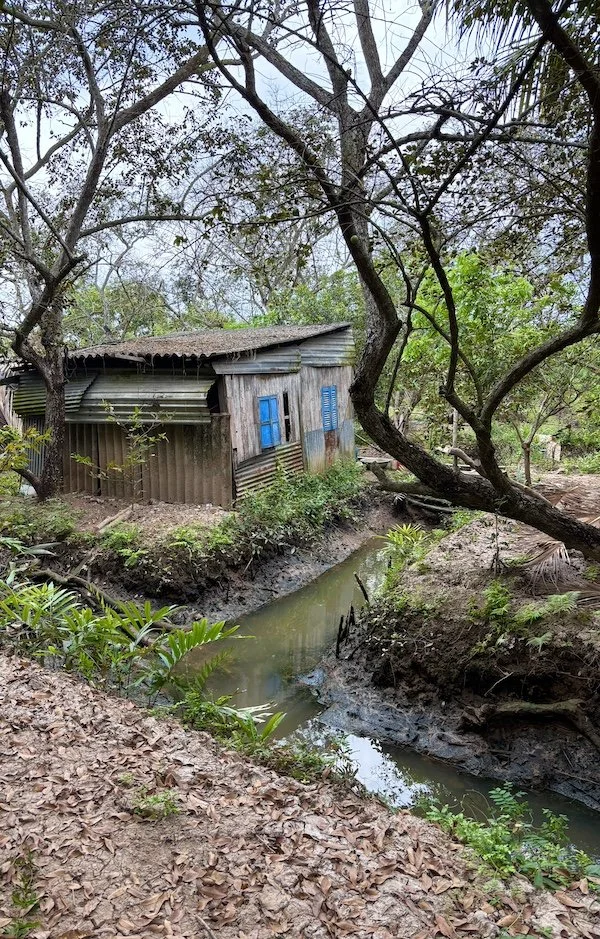
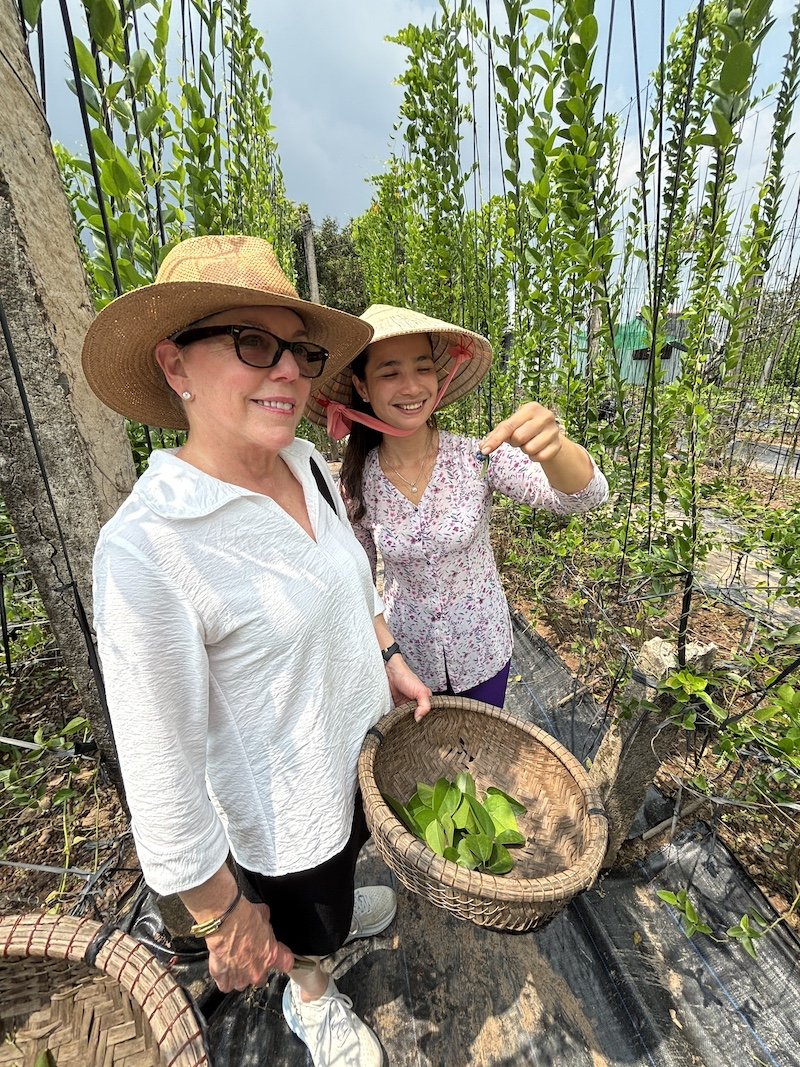
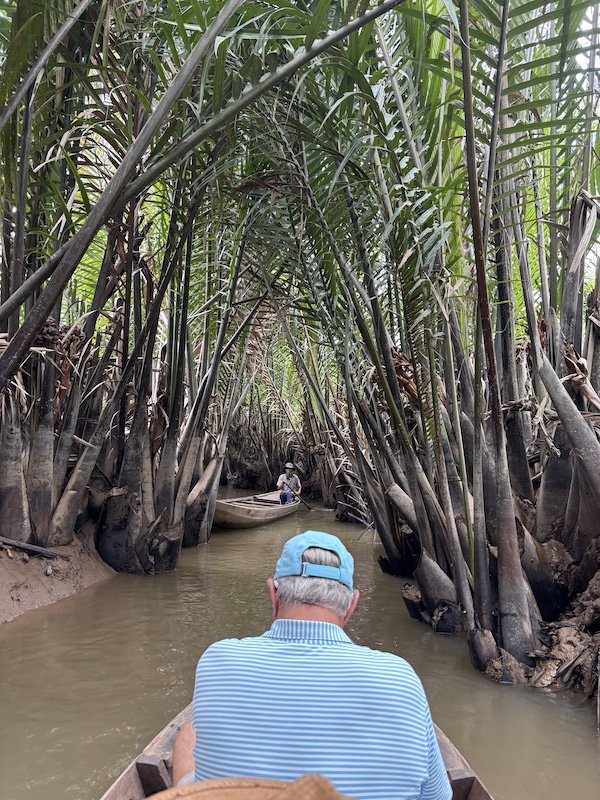
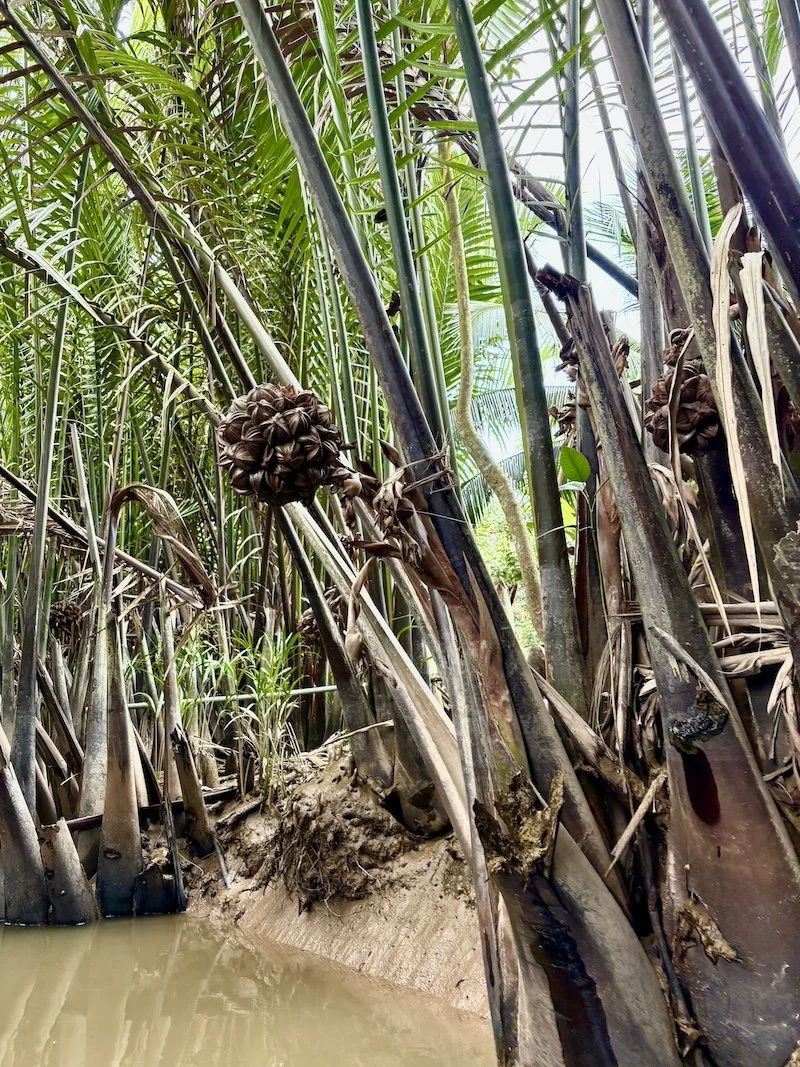
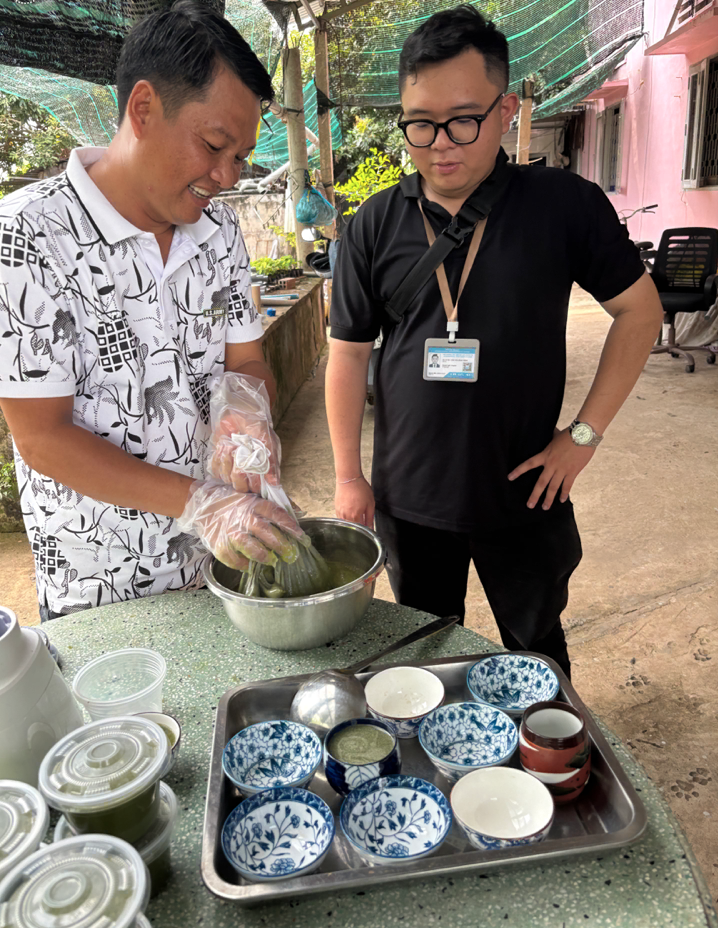
But our adventure was just beginning. This time, a wooden longboat awaited us and another family member rowed us through tall palms and coco groves in a lush, narrow canal buzzing with mosquitoes and filled with birdsong. We were told that the enormous palm fronds were in high demand and used to make thatched roofs for houses in the area. We walked more along a dirt path and were picked up by an old truck with wooden seats in the open bed, where we sat until we arrived at a farm that grows Suong Sam–a native plant in Southeast Asia which is used mostly in local refreshments like teas and jellies. We were taught how to pick the best leaves and then returned to a home where we watched the washing and preparing process.
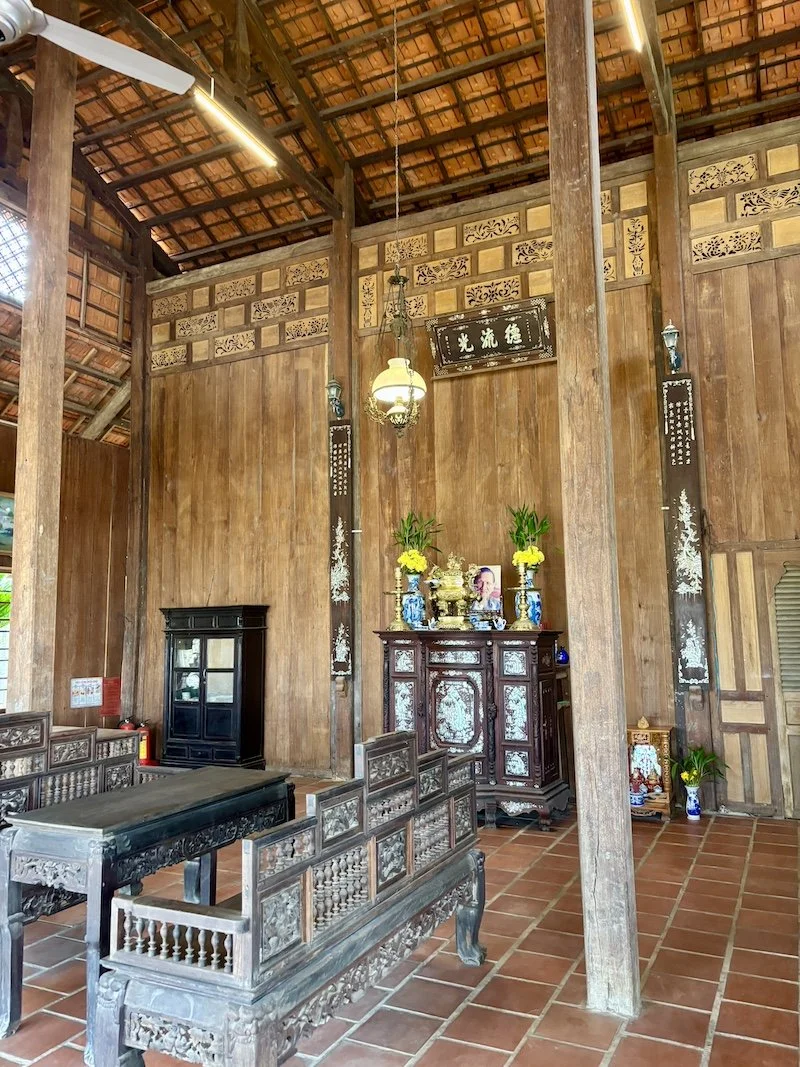
Once again, we boarded a motorized sampan, passed Turtle and Dragon Islands, to our destination: Unicorn Island. A family restaurant on the water’s edge awaited us, and we had one of the most delicious Vietnamese meals in this bright, unassuming little restaurant. One whole side was open to the outdoors, and on the walls and heavy wooden furniture were interesting Vietnamese vases, masks, bowls of flowers, carvings, and other art.
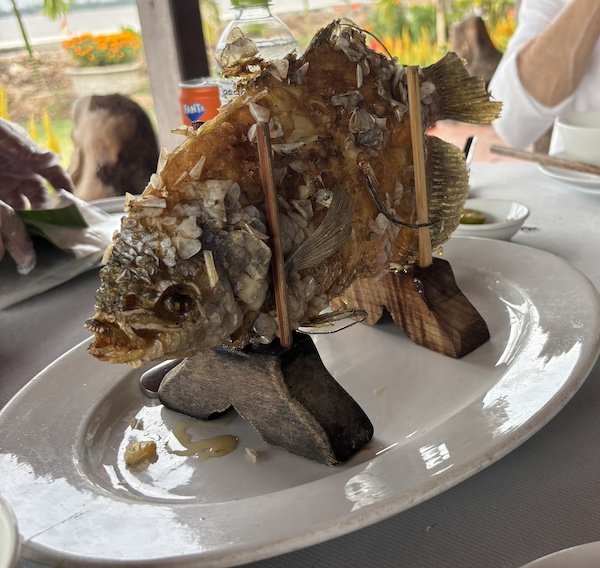
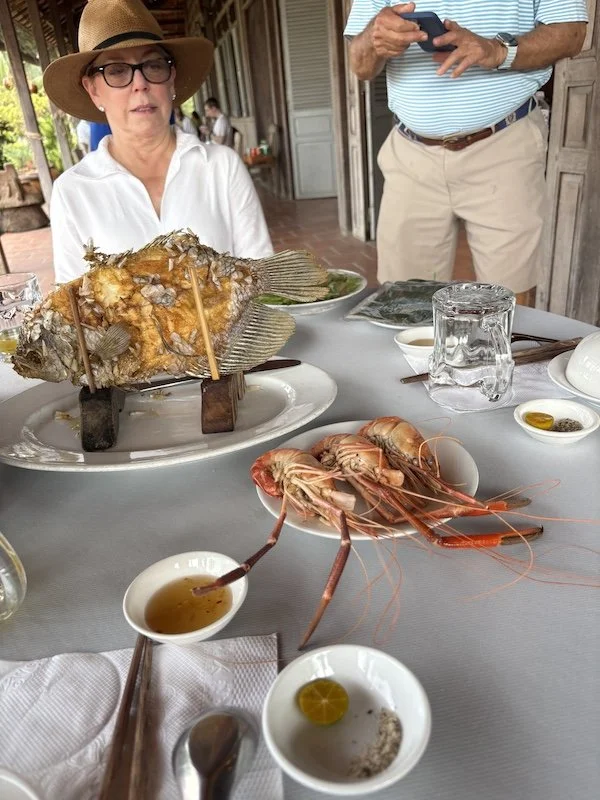
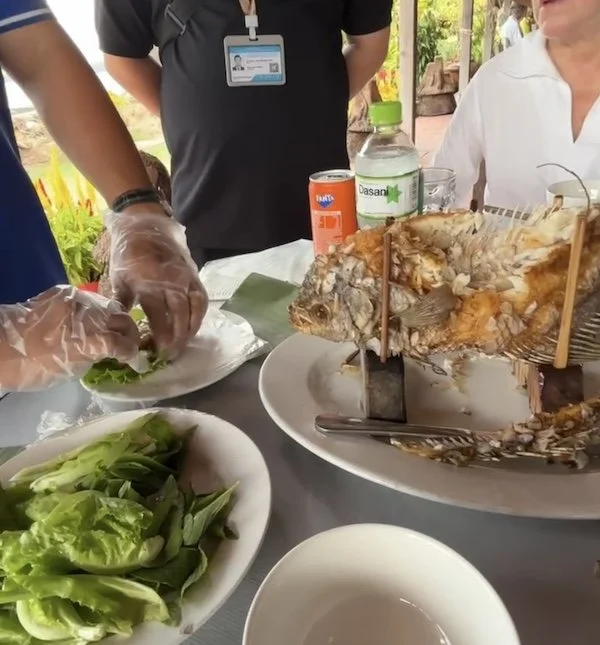
In the center of the table where we were seated was a huge Elephant Ear fish, deep-fried and served whole, vertically on bamboo stilts. After pulling off chunks of white fish meat, we rolled it in mint, greens, and cucumber, and then wrapped it in thin rice paper. Finally, we dipped it in a sweet/sour fish sauce and devoured it. Delicious! But that was just the beginning. The smiling family members continued loading our table with spring rolls, fragrant rice, roasted chicken, and fruit. And, of course, Saigon beer. It was hard to leave that amazing lunch to head back to the chaotic thrum of city life.
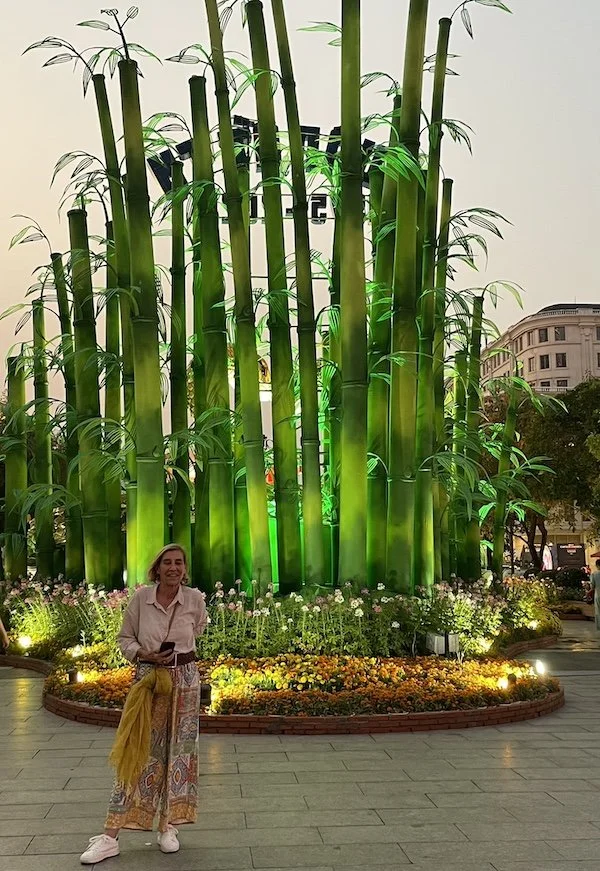
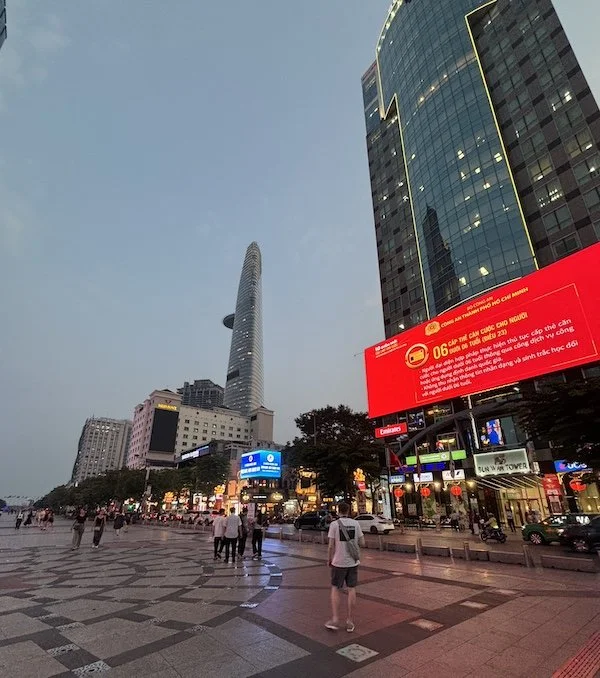
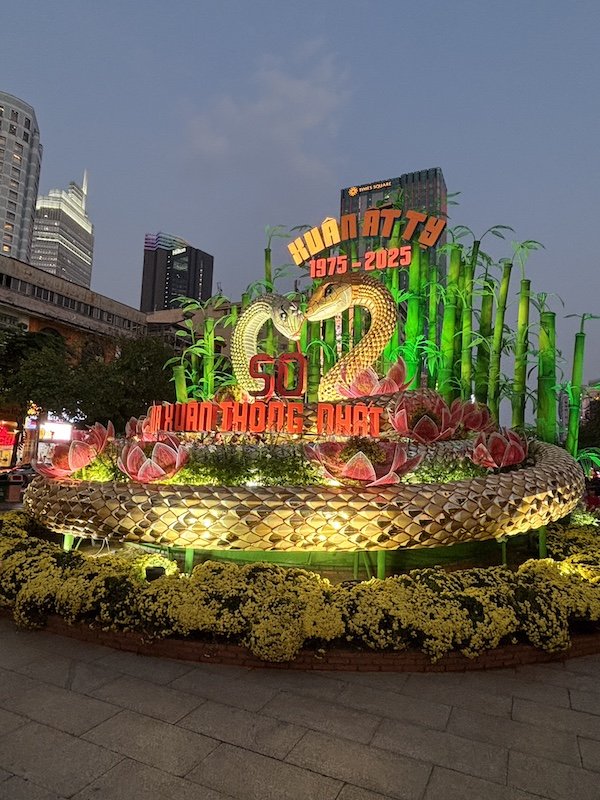
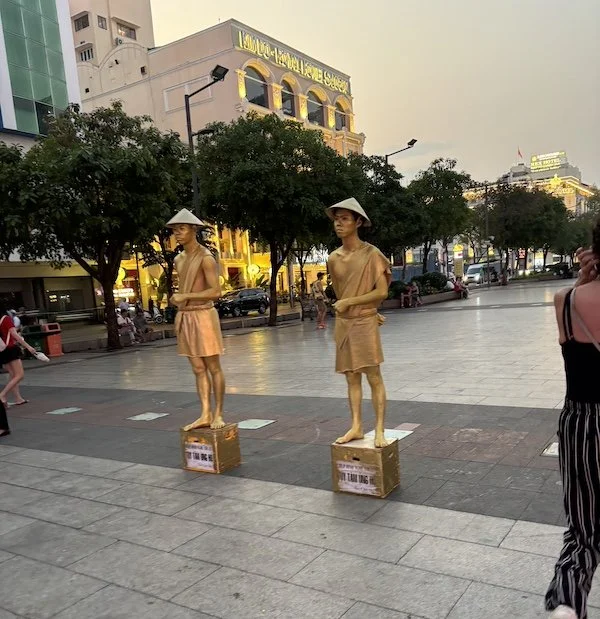
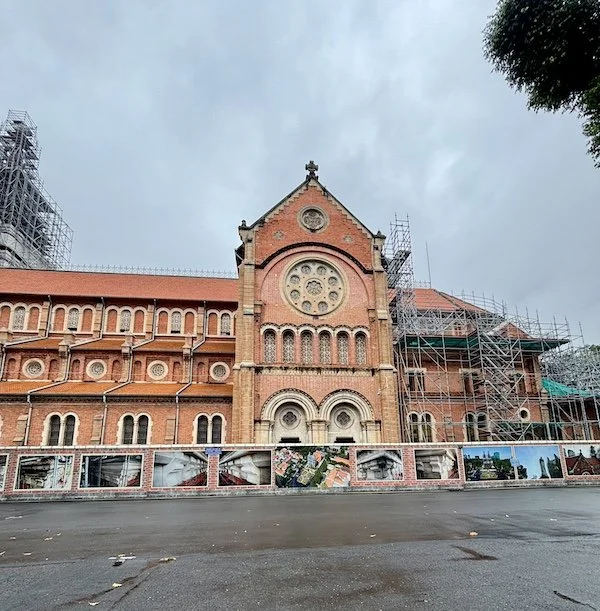
After resting at our hotel, we were on our own for the evening. We had done our research and knew we wanted to see the main hub of Ho Chi Minh City: Nguyen Hue—the pedestrian street in the middle of what the locals called their “Times Square.” It consisted of posh shops and cafes on either side of the brightly-lit square. In the center was a colorfully flowered and lighted “Happy New Year” sign where tourists queued to have their pictures taken. Of course, we did, too. Nearby were some classic European landmarks: the Notre Dame Cathedral, the Opera House, and the elaborate City Hall. We viewed them all only from the outside, but they were beautifully illuminated.
We had looked for a place to try some French food, and we found it at Cocotte, a vibrant and unpretentious bistro overlooking “Times Square,” where we could enjoy steak frites and French onion soup with a Vietnamese twist. What a great way to end such an experiential day!
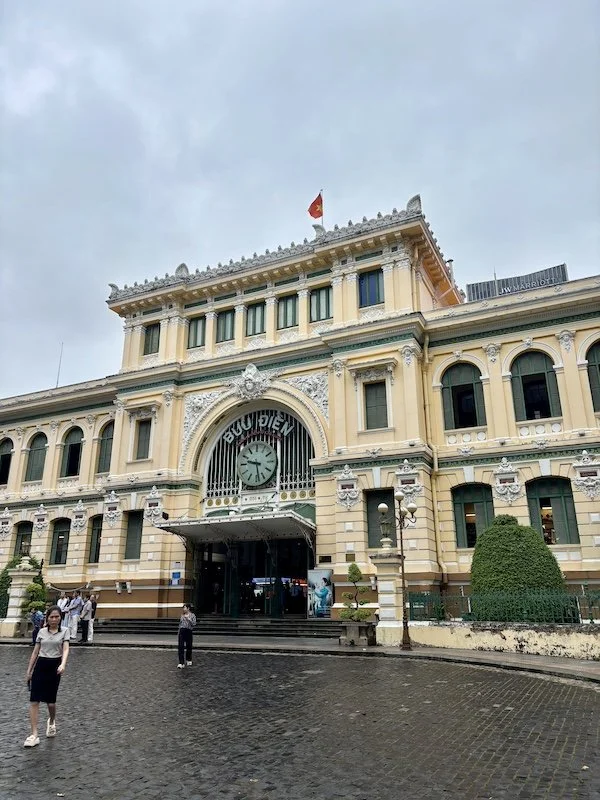
On our final day, our guide Tiene took us on a tour of Saigon to some incredible places: the gorgeous Central Post Office, a stunning example of art deco and French colonial architecture built between 1886 and 1891. It has features of a European train station with tiled floors, vaulted ceilings, delicate ironwork, arched windows, hand-painted murals, and maps, and the most interesting fact was that it still functioned as a post office.
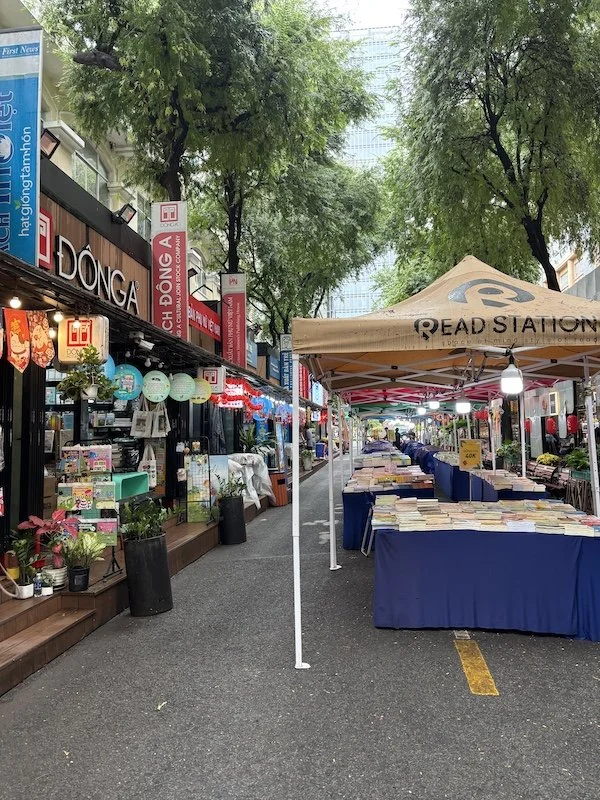
So, of course, we bought and mailed postcards from there and found some nice little souvenirs in the stalls to take home. Near the post office was Tiene’s favorite place: Book Street, a pedestrian street of paper and stationery stores and book shops. A literary overload for the senses!
After that, it was back in the car and a short drive to the Independence Palace (AKA Reunification Palace) which survived lots of changes with each government and was the site of many momentous occasions such as the 1962 bombing attempt by two South Vietnam AF pilots, the presidential headquarters of South Vietnam (1966 to 1975), and the fall of Saigon in 1975 when a North Vietnamese tank smashed through the palace gates shortly after South Vietnam had surrendered.
It’s now a living history museum, where you can walk through the vast corridors and peer into historic rooms preserved as they were in the 1960s and 1970s: the Cabinet Room, Grand Banquet Hall, Presidential Office, and many more. We were there for two hours and didn’t see it all.
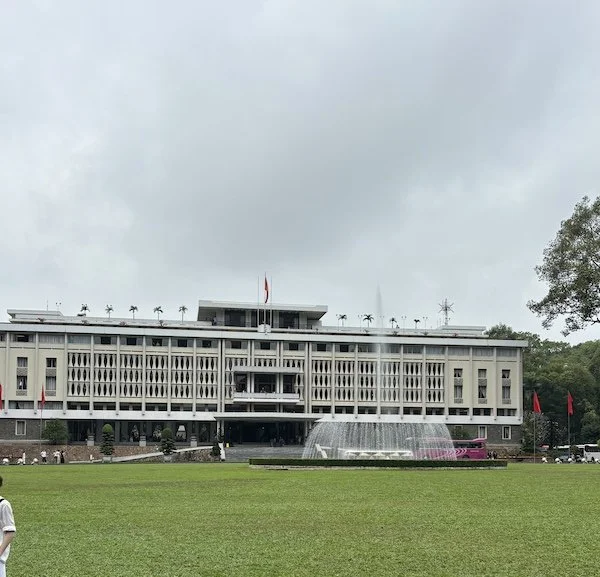
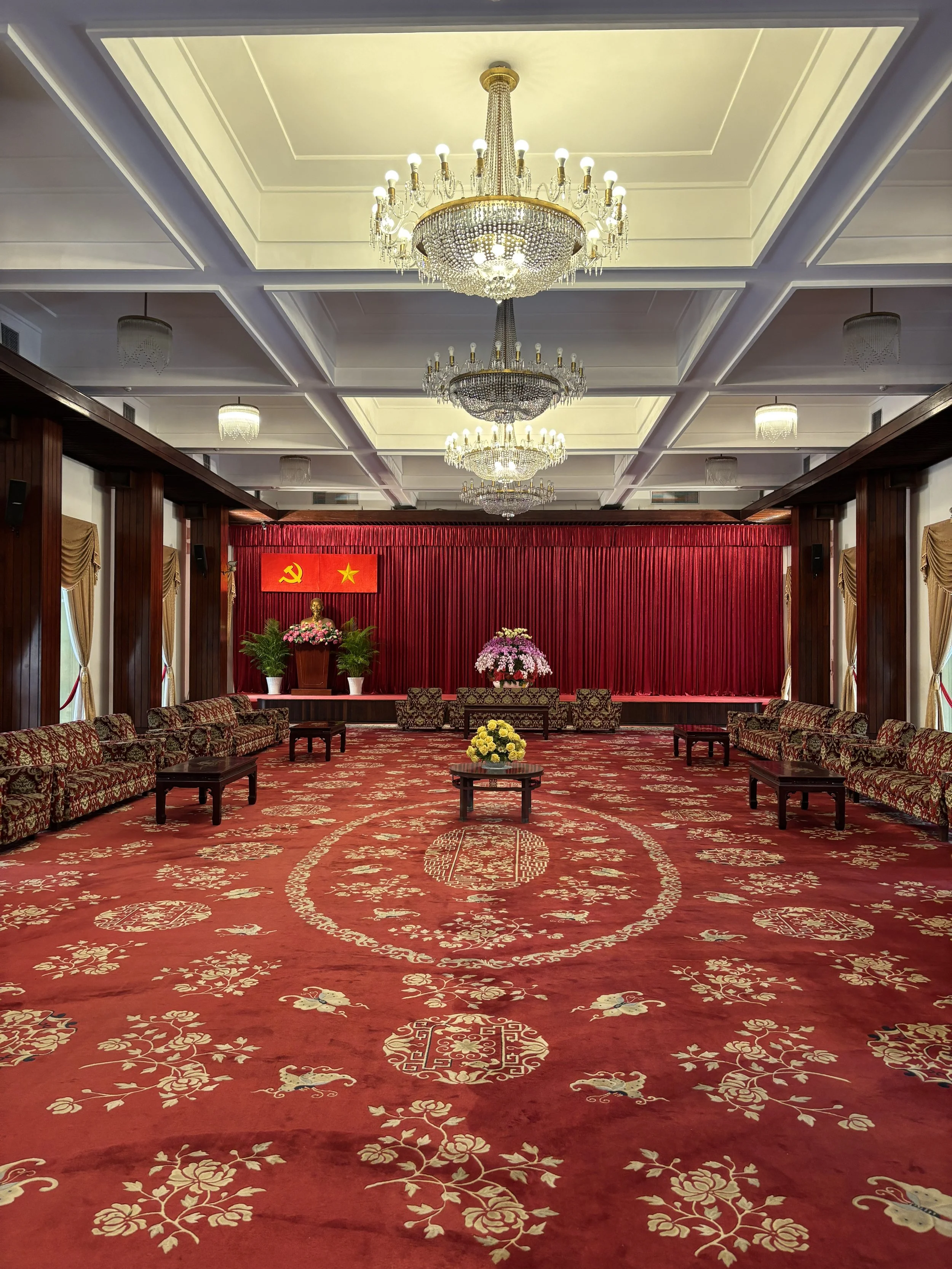
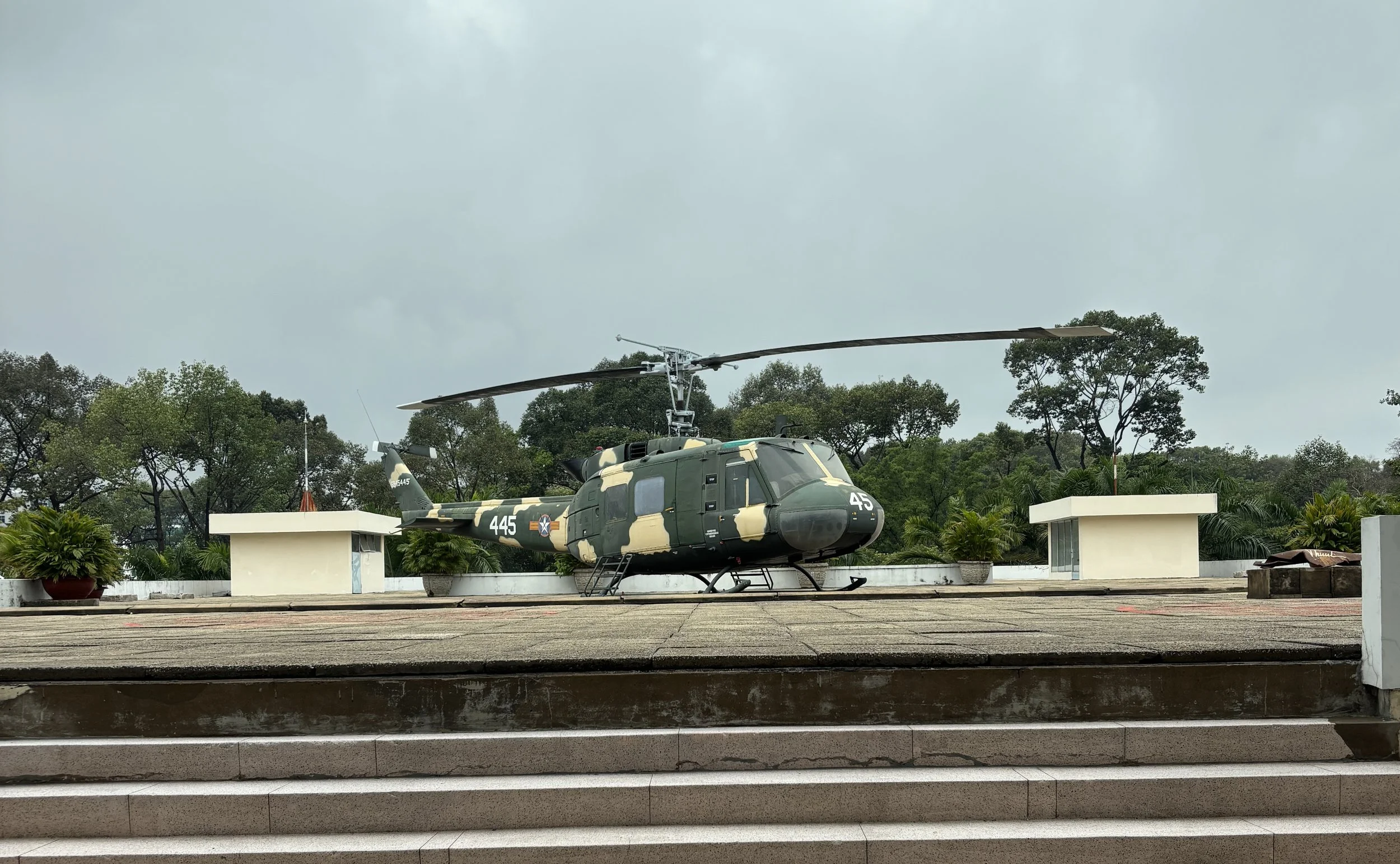
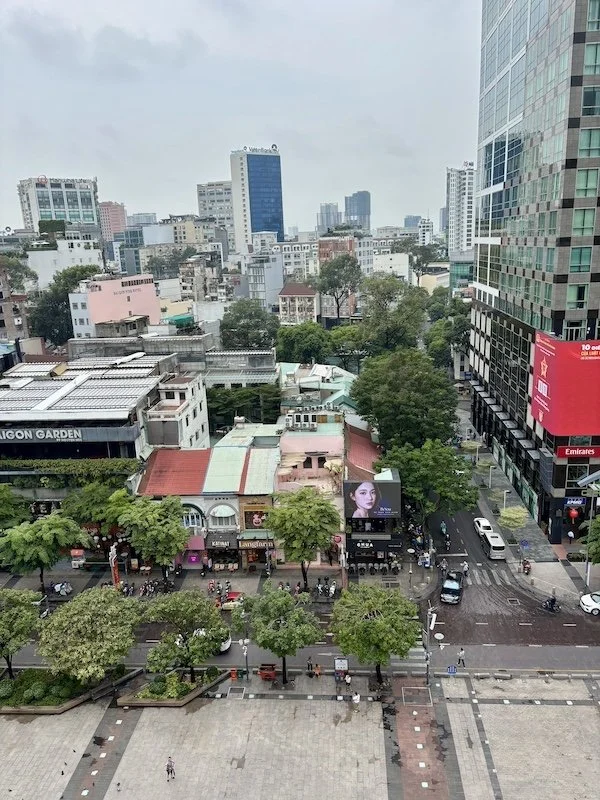
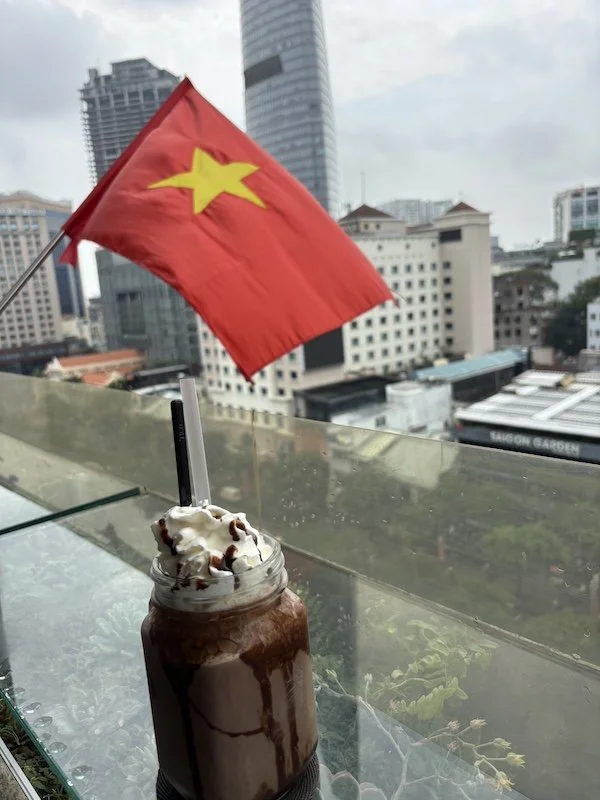
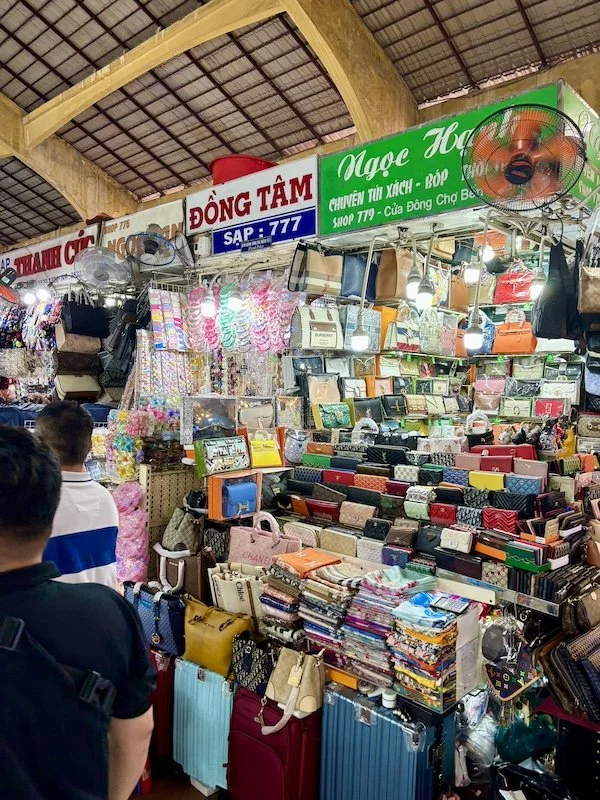
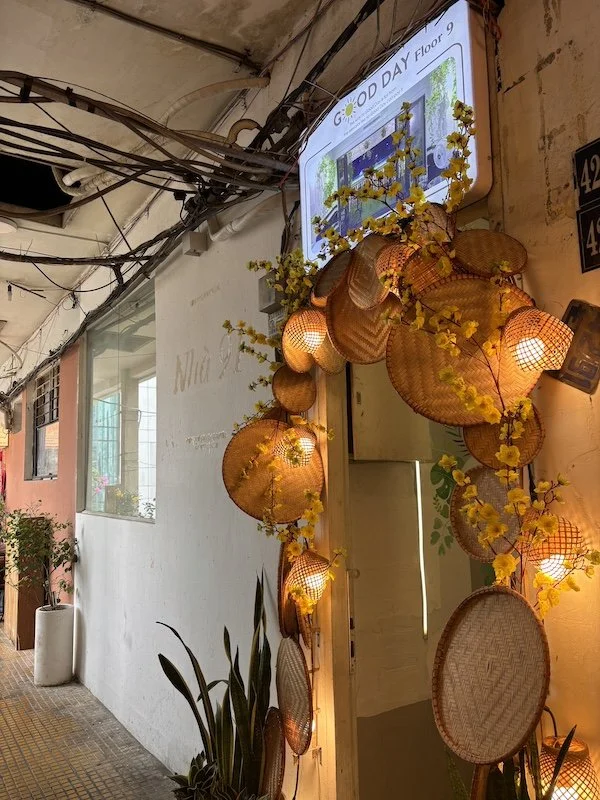
Our last stop that morning was to the Ben Thanh Market and what our guide called the “Coffee Apartment,” an iconic 9-story building which included an amazing array of residential apartments sprinkled in with coffee shops, cafes, co-working spaces. Tiene took us to the top floor via an elevator that charged 2,000 VND, which we could apply to food and beverages purchased in shops. So we perched on stools in an outdoor roof-top garden, drank rich chocolate milkshakes and coffee, and had more stunning views of Nguyen Hue, the Pedestrian Street, and “Times Square,” last night’s destinations.
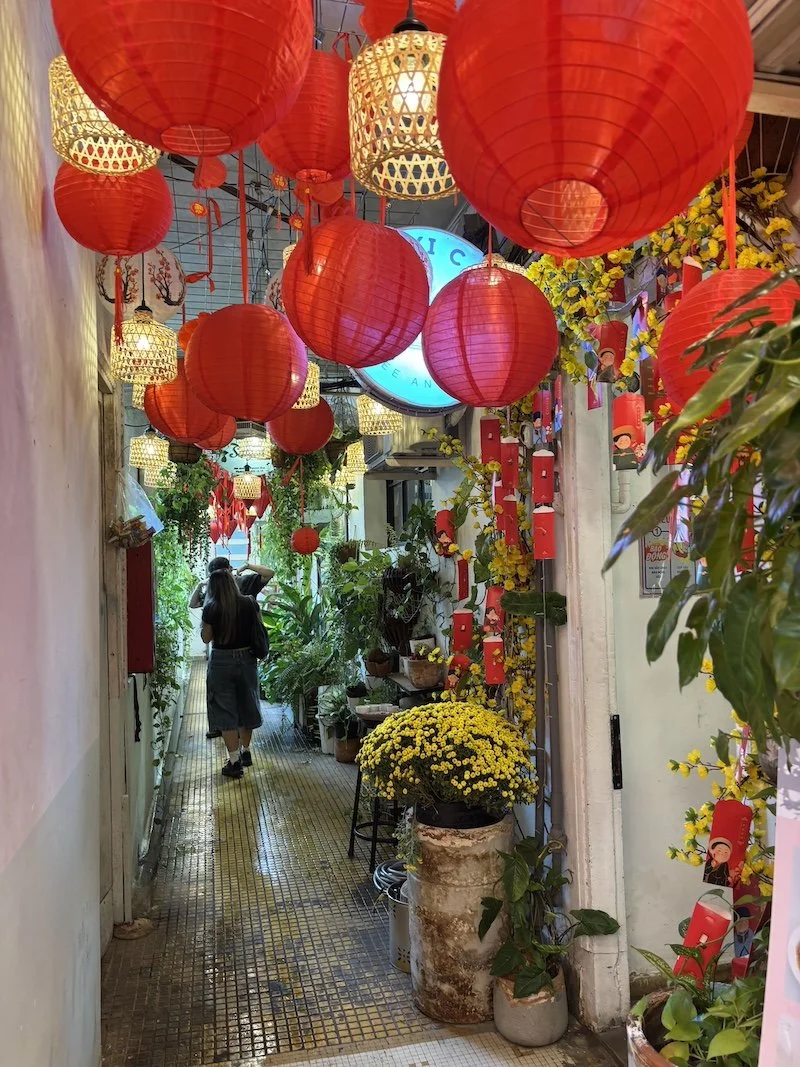
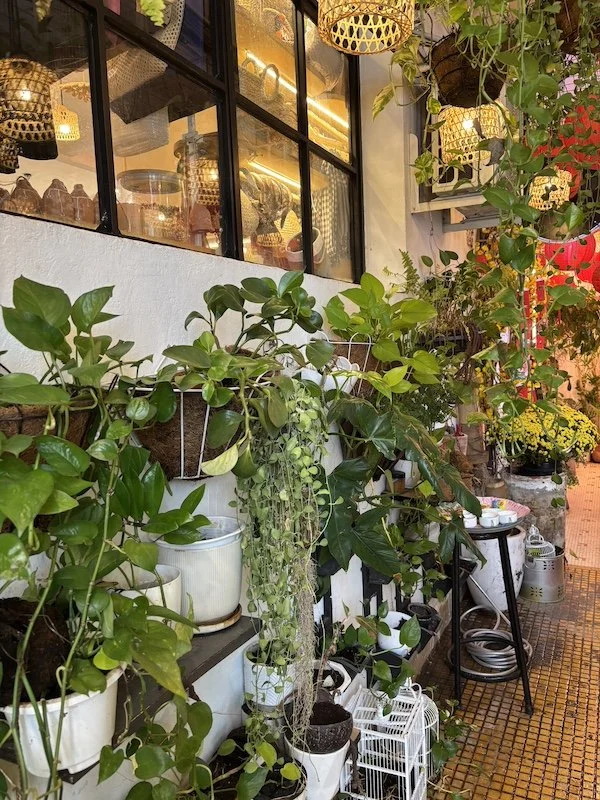
Traveling from Hanoi and the layered northern Vietnam, through the dreamlike beauty of central Vietnam and Ha Long Bay, and onward to the vibrant streets of Saigon in the south, I experienced Vietnam as a country of movement, memory, and life. I was so lucky to have shared this journey with incredible friends, grateful for their companionship, while also honoring David, who longed to make this trip but passed away before it was finalized. In each of these places, I scattered his ashes, allowing him to finally be part of the journey he had dreamed of. Vietnam became not only a place of discovery, but a landscape of remembrance, love, and quiet acceptance.