Lanterns, Lessons, & Locals: Magic in Central Vietnam
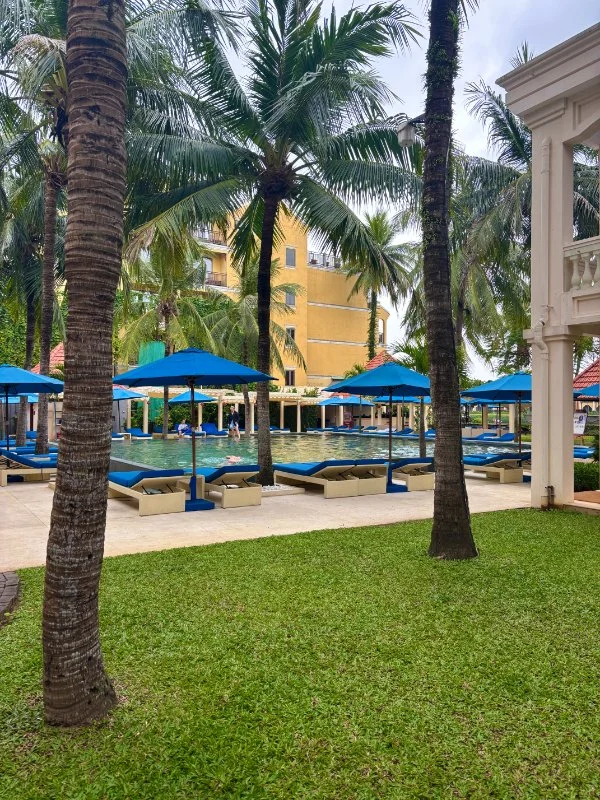
After an early morning tai chi class on the Nostalgia deck with the boat’s captain and a relaxing morning, brunching and cruising back to the Ha Long Bay port where we started, Ray, Coco, and I were picked up and driven to the Hanoi airport to fly to Da Nang and onto our next destination: Hoi An in Central Vietnam. Then a late afternoon drive to our riverfront hotel in Hoi An: Anantara Hoi An Resort. Composed of soft yellow and white Colonial architecture, it was a charming and luxurious resort fronting the Thu Bon River, with lush gardens full of fragrant flowers and tropical plants.
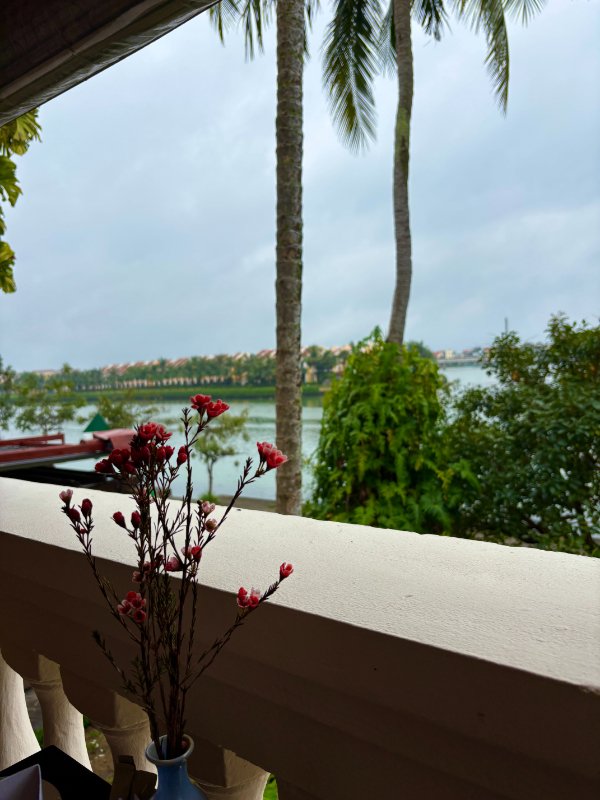
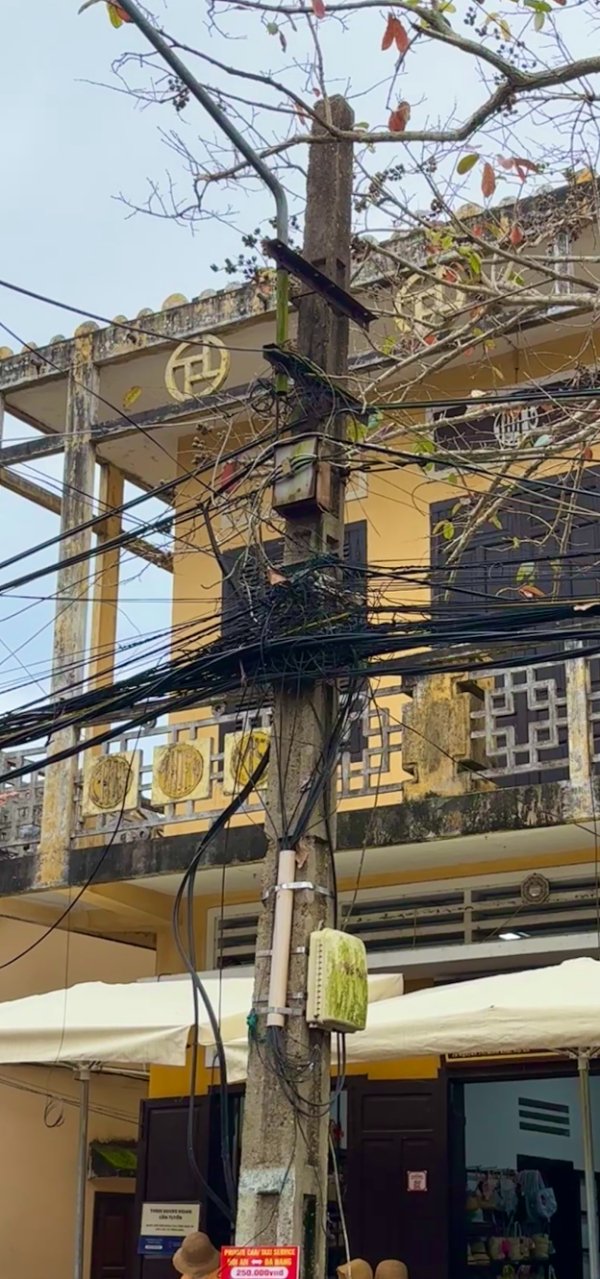
In our three days in lovely, romantic Hoi An, we again immersed ourselves in the life of the people and its culture, history, and food. Once a bustling port for ships from Japan, China, and Europe, Hoi An still boasts grand, timeless architecture along its scenic riverfront setting: tilting wooden Japanese merchant houses, highly ornate Chinese trading halls, and ancestral tea warehouses that are dark and cool inside, steeped in history.
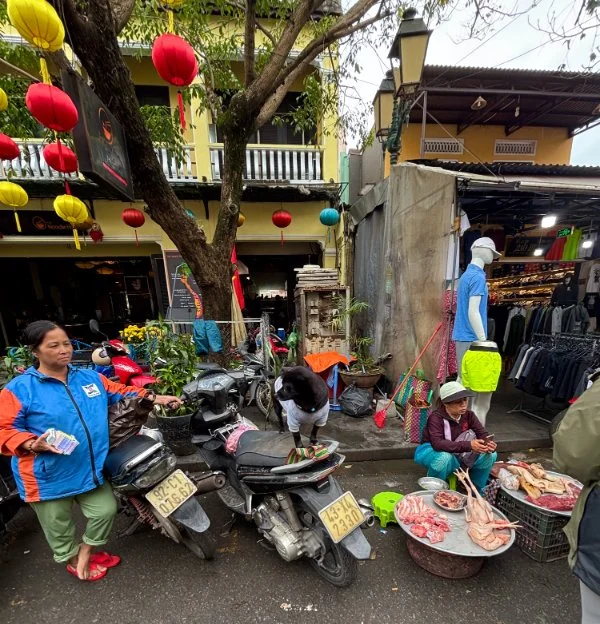
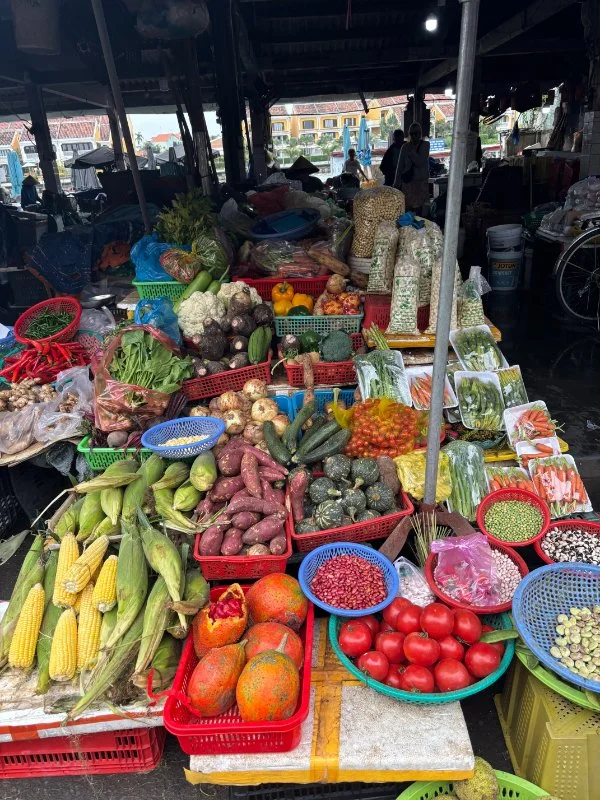
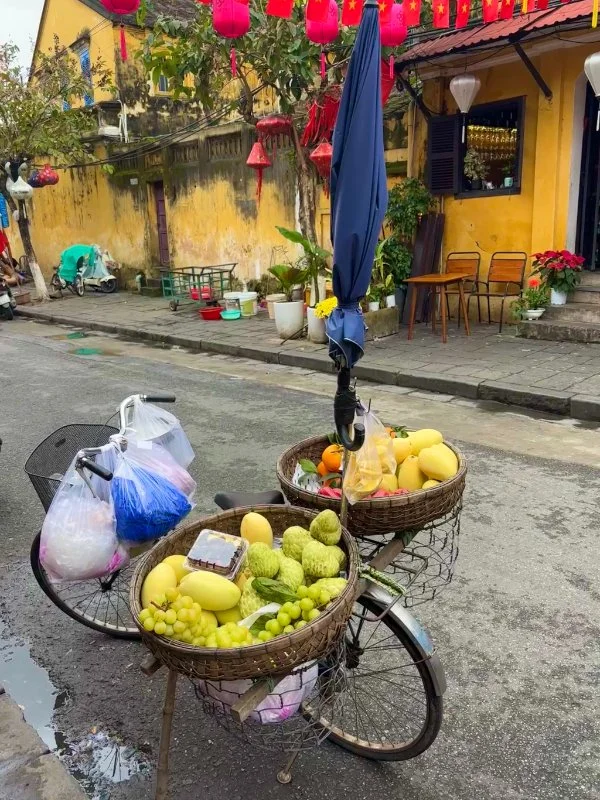
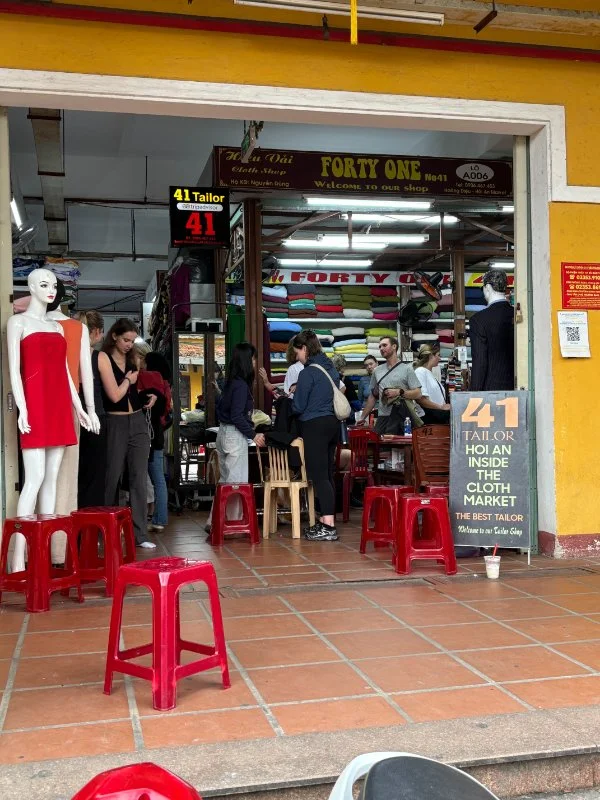
The town itself takes on different vibes depending on the time of day. By day, it is bustling with bicycles carrying one or two children to school, wooden carts full of fresh vegetables and fish being pushed by locals going to market, and tailor shops on every street (Hoi An is the tailoring capital of Vietnam) filled with men and women noisily operating ancient-looking sewing machines to create custom-made clothing, shoes, and bags.
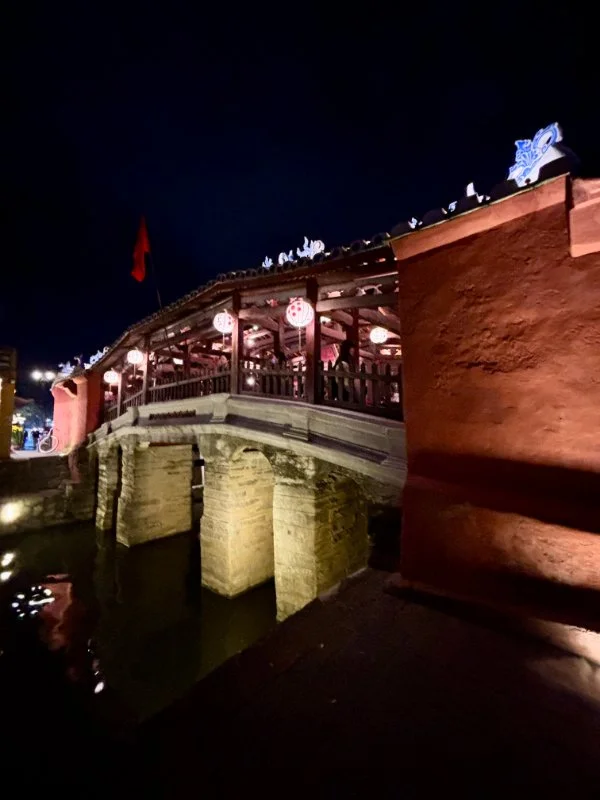
To me, one of the highlights of the Old Town was the Japanese Covered Bridge, built in the 1590s by Japanese merchants and traders over a small canal to connect the Japanese quarter with the Chinese quarter. It is an enduring symbol of the two cultures joining their artistry and trade in harmony. At the entrance and exit, a dog and a monkey, respectively, guard the precious structure and ensure the safety of its pedestrians. To pass through the bridge and enter Old Town, you must purchase an admission ticket (mine was rarely checked because the guard was often sleeping or absorbed in his phone) that includes visits to other interesting heritage sites.
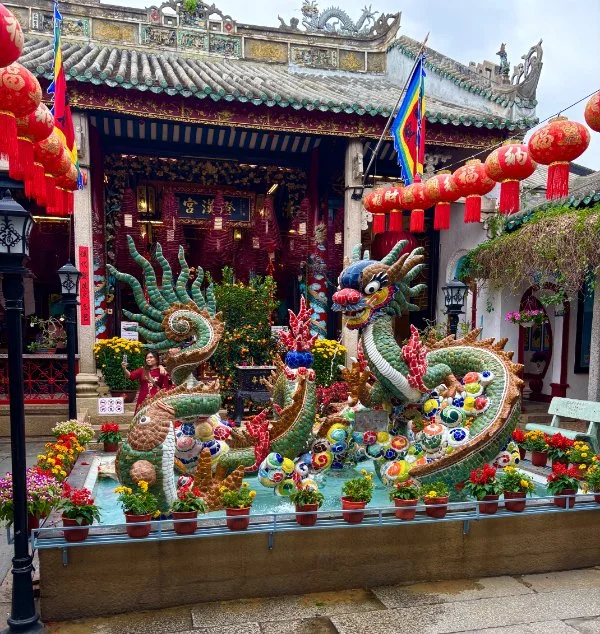
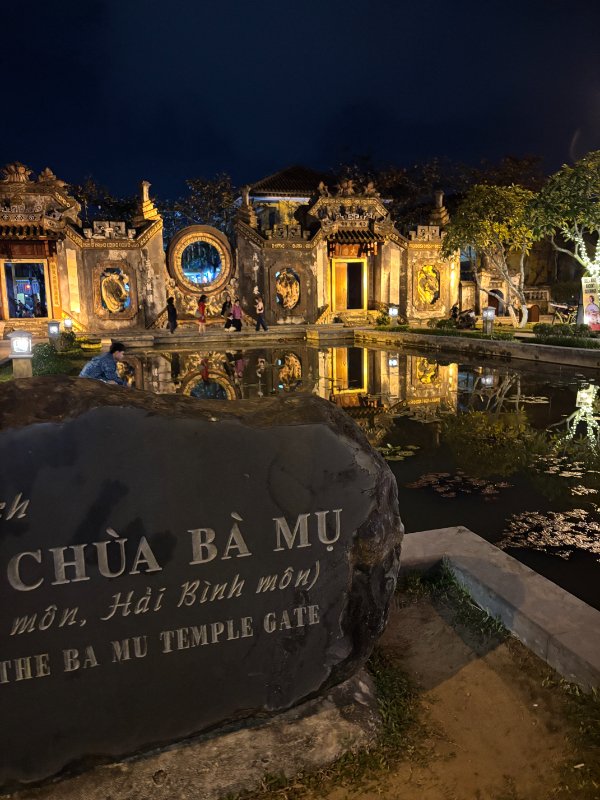
One of those is the Ba Mu Temple, with an ornate pagoda gate, a large courtyard, and a beautiful lily pond; it is dedicated to three mothers (the Goddesses of Heaven, Earth, and Water) who protect the people and ensure peace and prosperity. Women came here to pray for fertility, healthy children, and family well-being. Another site, the Quan Cong Temple, is a classically designed Chinese temple with a brightly colored red and gold roof and many phoenix and dragon carvings throughout the structure that symbolize prosperity and balance. Built in 1653, it celebrates a legendary Chinese general Quan Công, who was known for his honesty, bravery, and loyalty.
On one of my solo saunters through Old Town, I watched a traditional bingo game (so I was told by a young Vietnamese student eager to practice his English). Bài Chòi is more of a folk performance and game that incorporates drama, music, poetry, and luck. It was a rather bizarre activity: Players are arranged in rows of bamboo stalls. The MC, dressed in traditional Vietnamese attire, sings indecipherable songs or poems, and players in the stalls place cards over the symbols on the boards when the MC calls out the clues. Just like in bingo, the one who fills his row with the cards calls out “Bài Chòi” and wins a prize. There was much clapping, singing along, and laughing among the participants and the local onlookers as I watched this strange game.
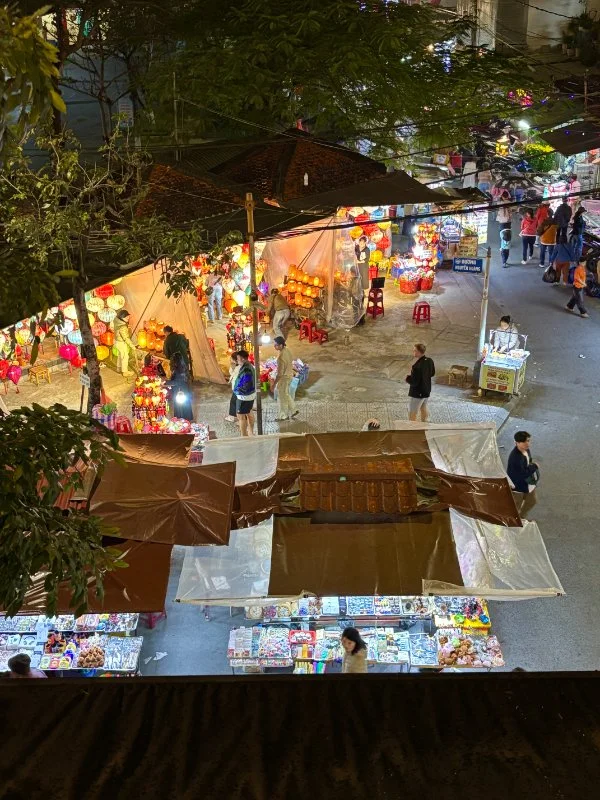
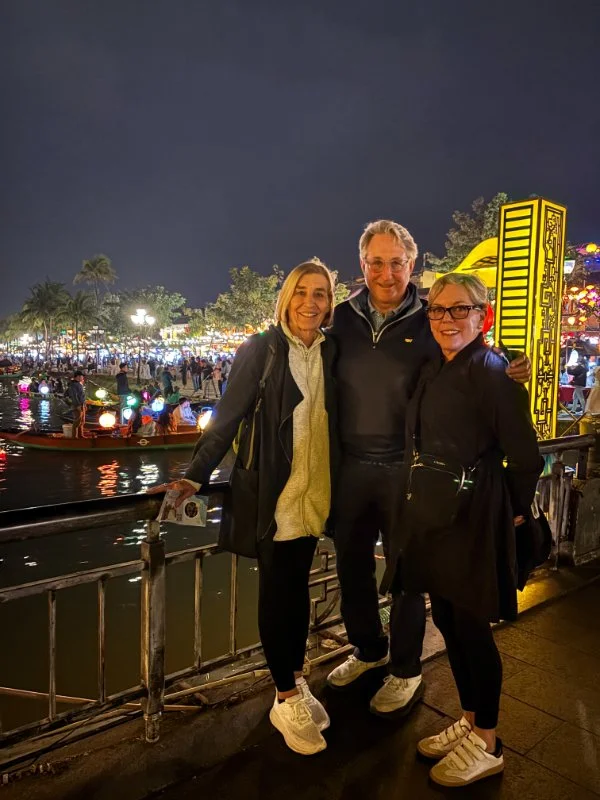
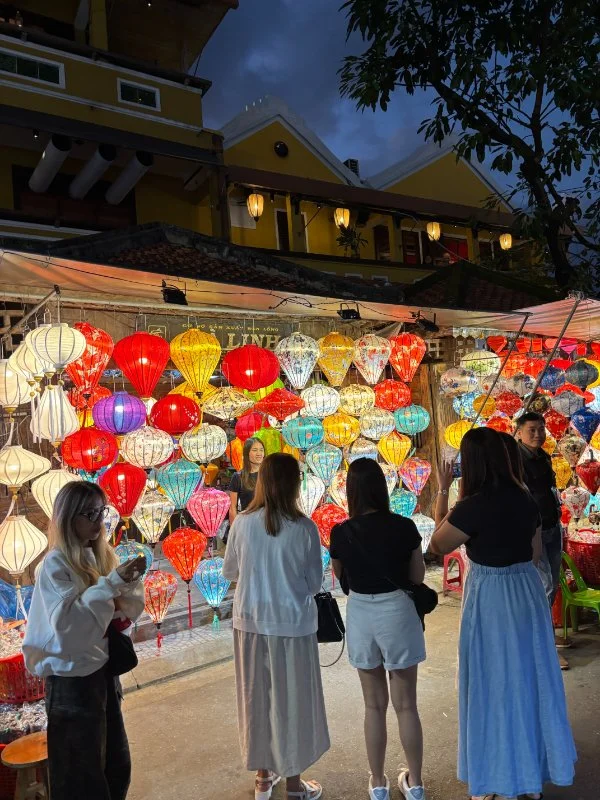
At night, Hoi An takes on a whole other aura because the Night Market comes alive. Thank goodness we had a local guide with us, or I don’t think we would have made it out of the street-lined stalls and shops and wall-to-wall people buying everything from aromatic street food to cheap souvenirs and lanterns — all kinds of lanterns: colorful, collapsible paper ones, shiny hammered tin ones, gorgeous silk ones.
We were fortunate to be in Hoi An at one of the best times: the Lunar New Year, when the temple altars overflow with offerings of fruit, flowers, lit candles, and incense. And there is the Lantern Festival, where we got to watch hundreds and hundreds of people queuing up for 20-minute boat rides so that they could set lighted candles in silk lanterns afloat in the middle of the Thu Bon River. This festival is a highly significant time for honoring one’s ancestors, expressing gratitude, and praying for peace and harmony. In this magical and serene setting, we purchased boat lanterns from a vendor, lit them, and set them afloat on the shimmering river alongside thousands of other floating lanterns and their reflections.
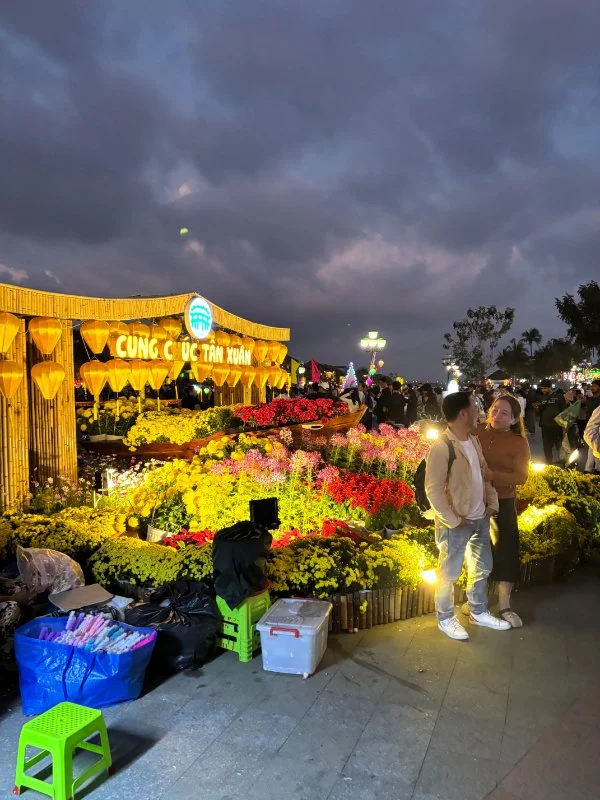
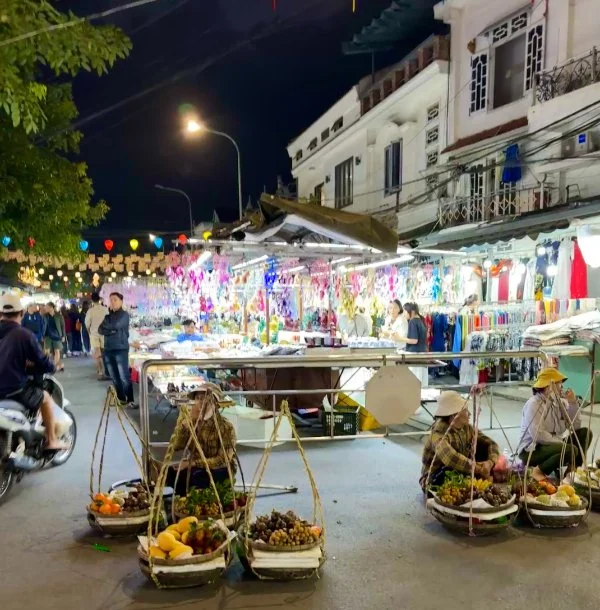
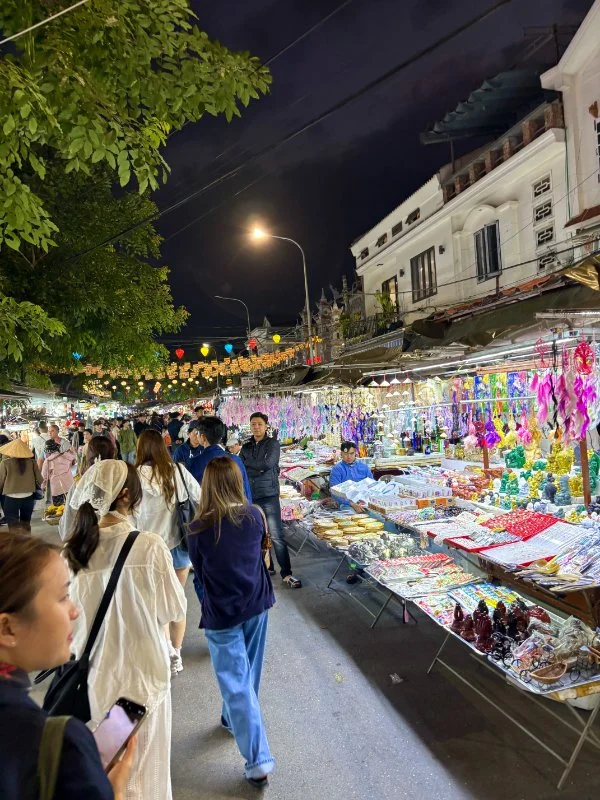
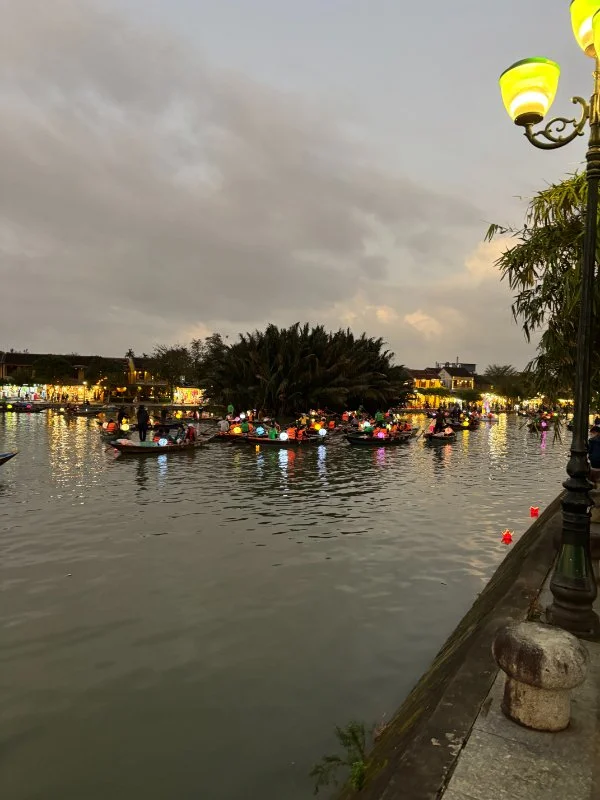
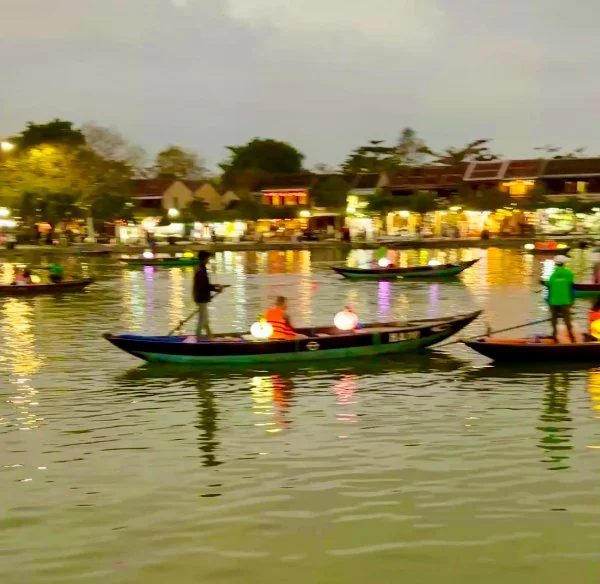
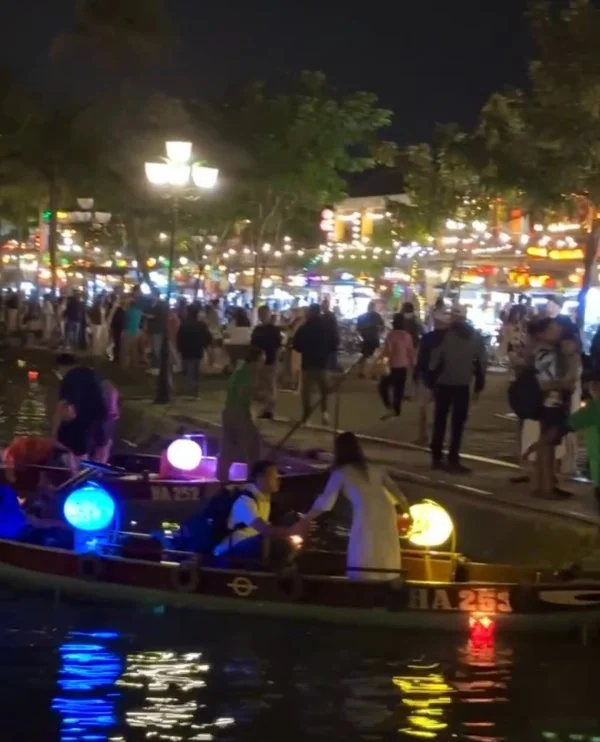
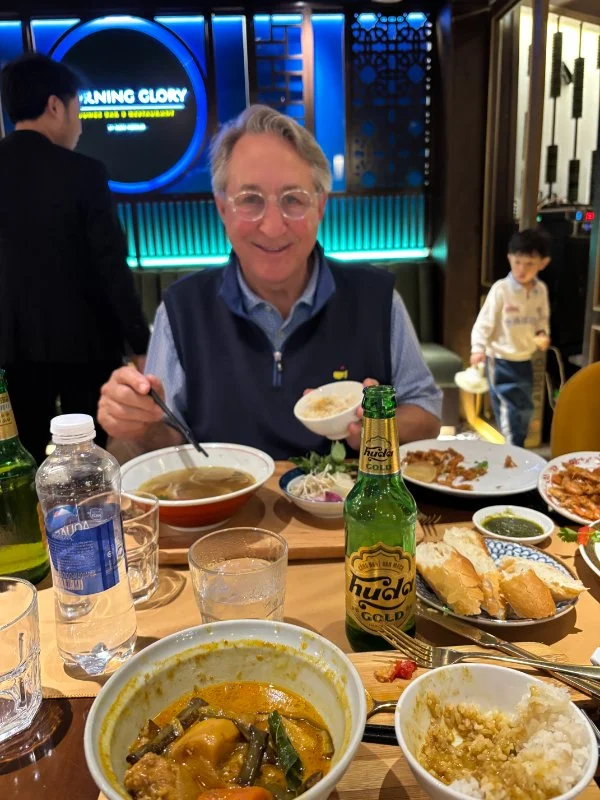
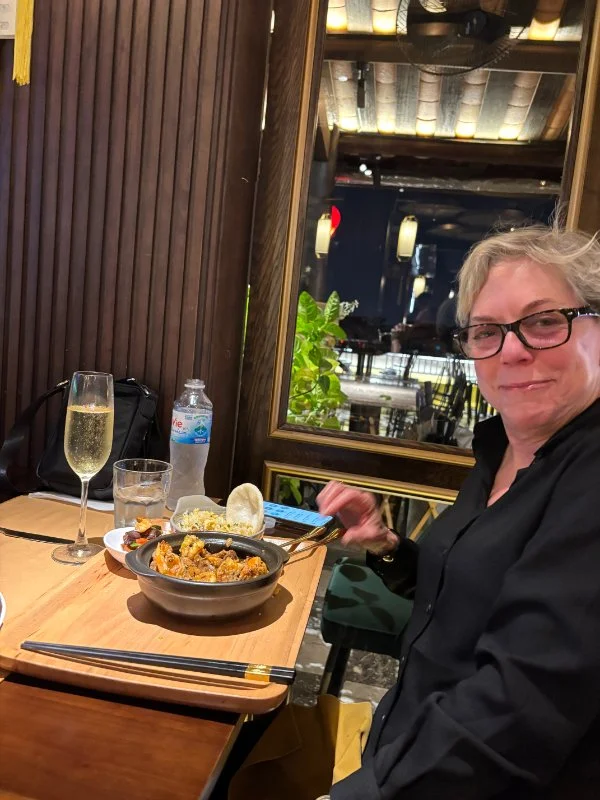
We had dinner that night at Morning Glory, a local restaurant in the Old Town on the Thu Bon River, with a stunning view of the dazzling Night Market and winking lights of the Lantern Festival. We enjoyed cold bottles of Huda, a local beer; Vietnamese chicken curry; and morning glory. Who knew that after rice, morning glory (also known as water spinach) is the most popular food in Vietnam, often stir-fried with garlic and beef or shrimp.

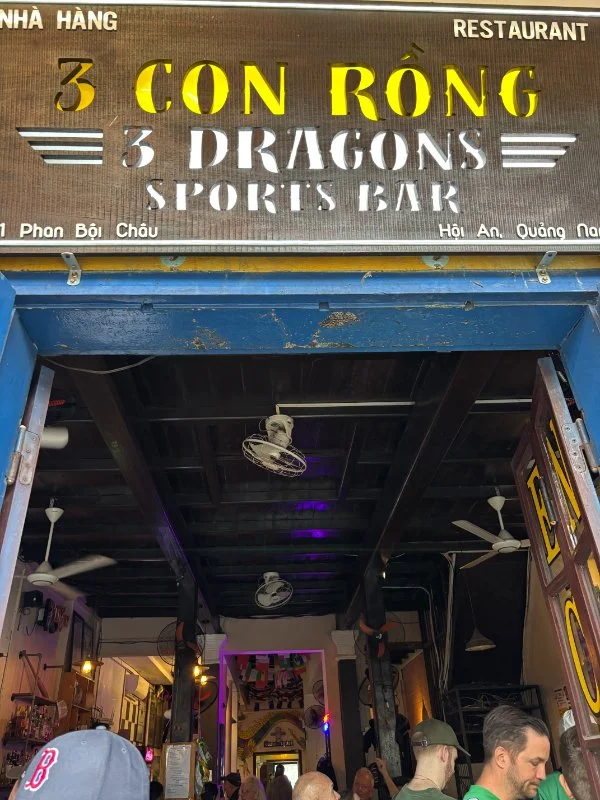
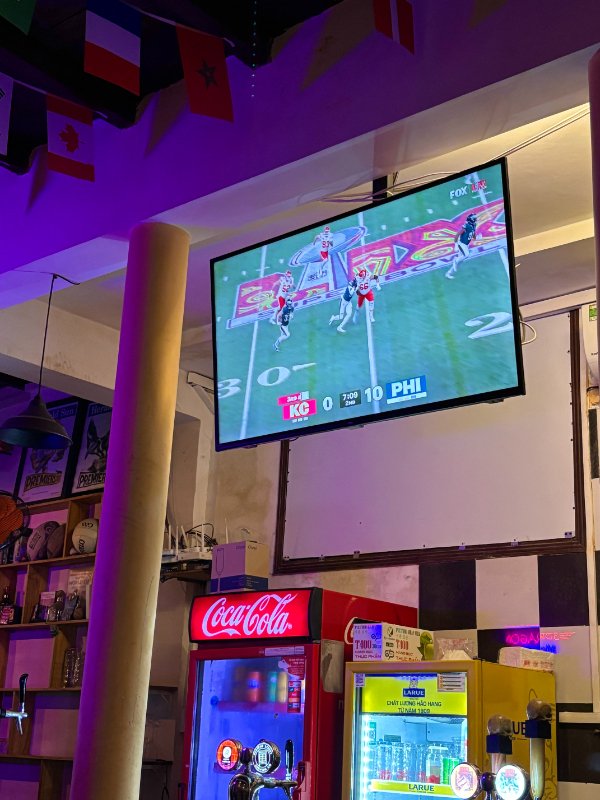
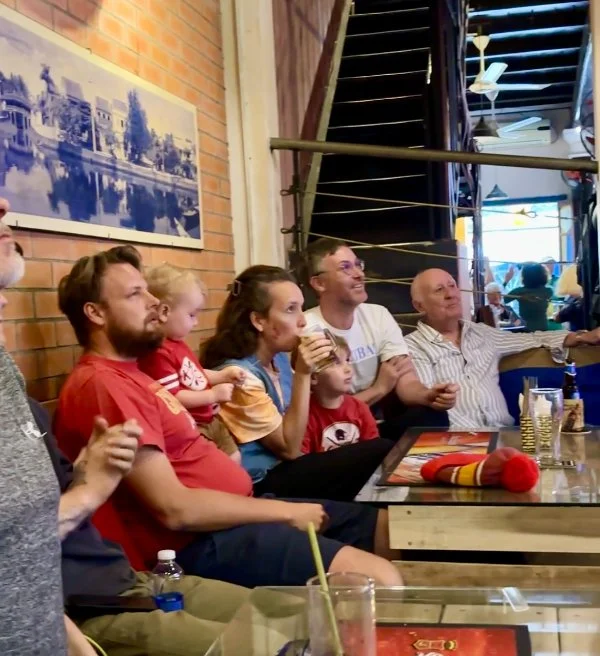
A unique experience in any country is finding expats who want to share in an American sporting event or championship. We happened to be in Central Vietnam when the Super Bowl was being televised (of course, with the time difference, we had to get up at 4:30 am). We found the 3 Dragons Sports Bar just a few minutes from our hotel, where we could watch the game. As soon as we arrived, we grabbed a table with a great view of the widescreen TV in the small bar, which was already occupied by dozens of Americans, Brits, Aussies, and others eager to watch the Philadelphia Eagles play the Kansas City Chiefs. A family with a mom, dad, and two very sleepy children — all dressed in red, gold, and white Chiefs jerseys and hats — was near us. Some rowdy men with mixed allegiances — possibly from the UK — were seated next to us and were already enjoying many local beers: Huda, Bai Hoi, and Saigon, quite enthusiastically as they cheered both teams and ate sausage and egg biscuits and spring rolls — a very mixed breakfast fare.
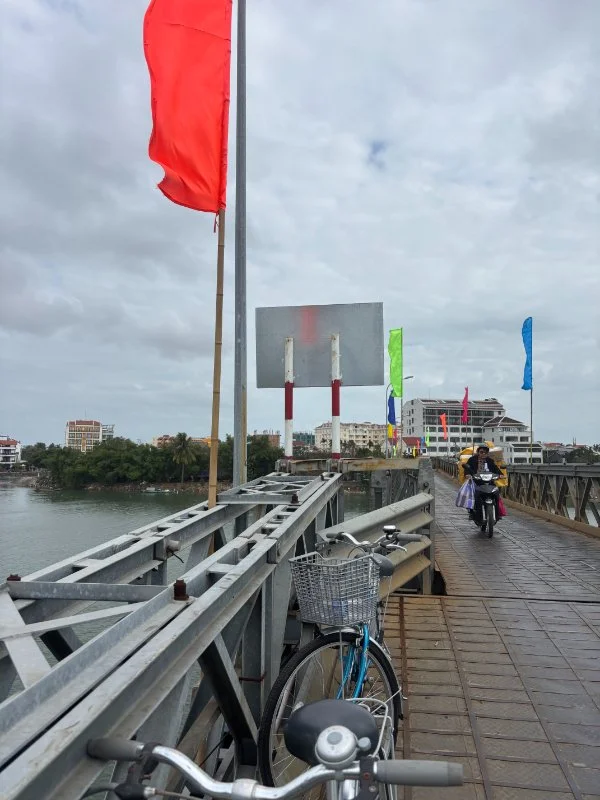
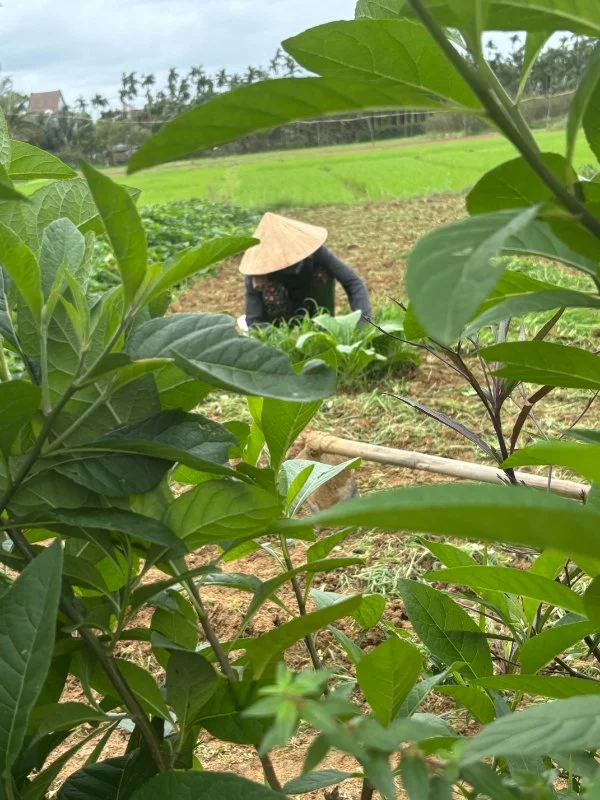
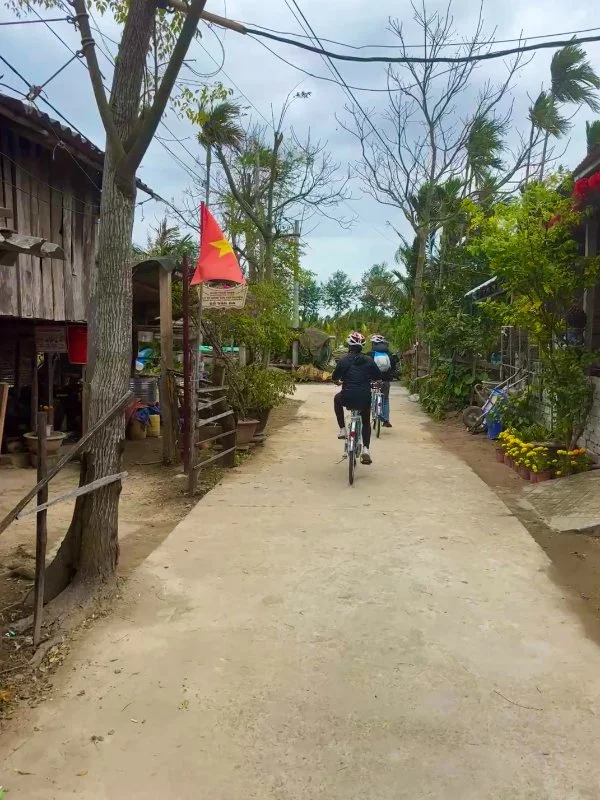
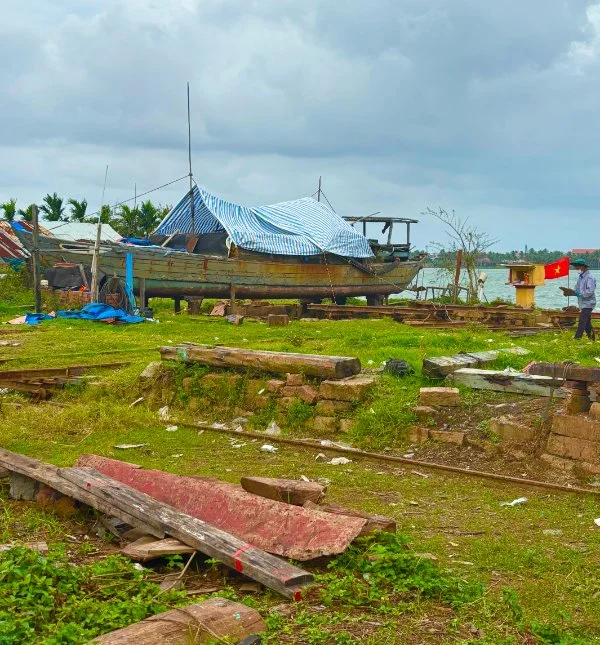
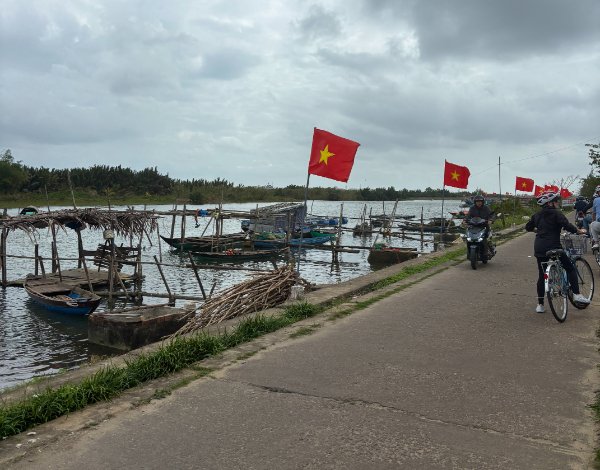
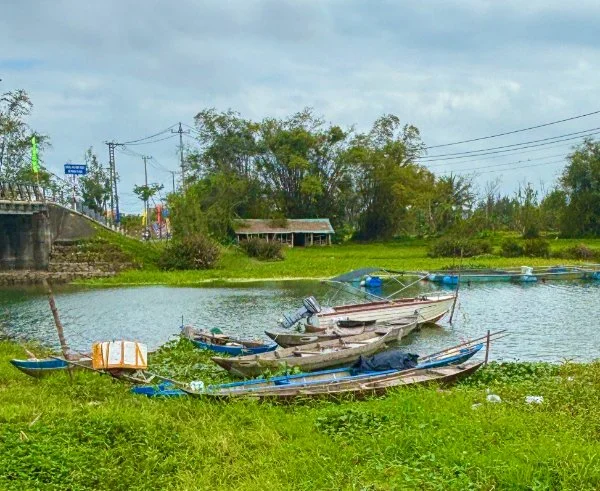
One of my favorite days spent in Hoi An was an immersive cultural experience. After Yen and Wang picked us up at the hotel, we were driven to Duy Vinh Island, about 20 minutes outside of the city. Along the outskirts spread rice paddies and thriving local gardens, and a cluster of small villages, all connected by narrow lanes, bamboo bridges, and even small ferries. This tranquil island commune of Cam Kim is renowned for its expertise in rice paper and pancake making, mat weaving, wood carving, and boat building. We hopped on bikes and were led through the sleepy streets of this rural village, stopping to visit several private homes where the residents were immersed in their various specialties: dyeing and preparing sedge or river grass for weaving mats on a wooden loom; carving small figurines or walking sticks from wood; and rice paper cooking.
The latter was my favorite, and Coco (after watching the elderly gentleman effortlessly turn out sheet after sheet of thin rice paper) gamely sat down at the cooking station, ladled the thin, liquidy rice batter onto the cloth-lined drum of boiling water, and swirled it around to reach the outer edges. The hardest part seemed to be peeling the cooked rice paper off in one piece and then draping it over bamboo mats to cool. In another room, a skilled Vietnamese woman was deftly slicing the rice paper into narrow strips to make the noodles, weighing them, and packaging them in bags to be sold. We were told that this family’s rice paper and noodles were the highest in demand of any in the village.
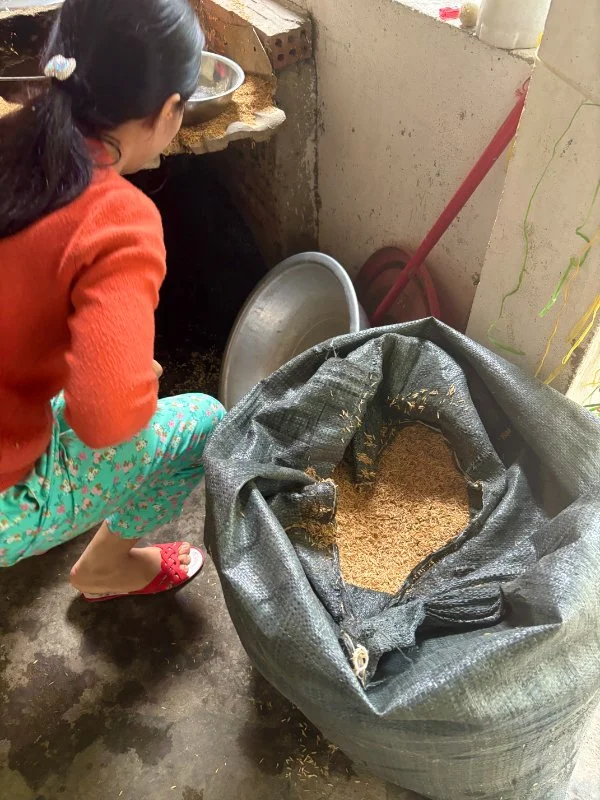

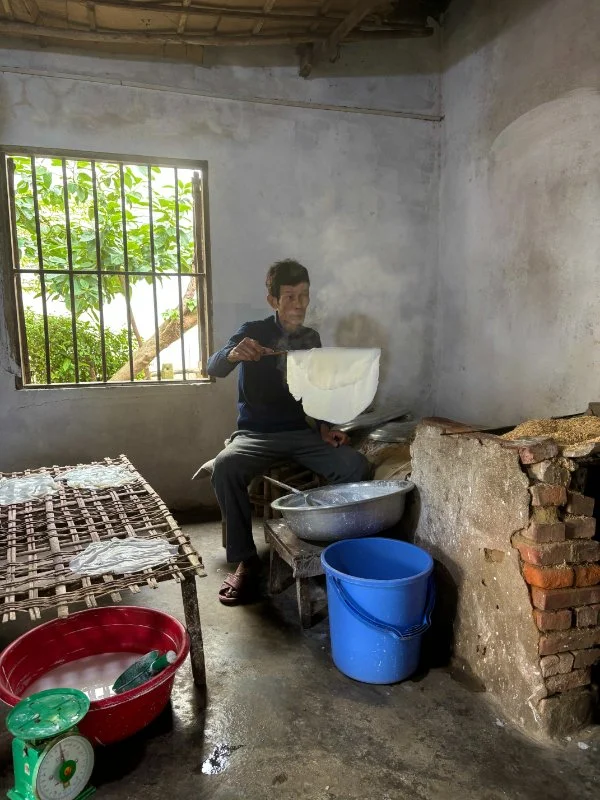
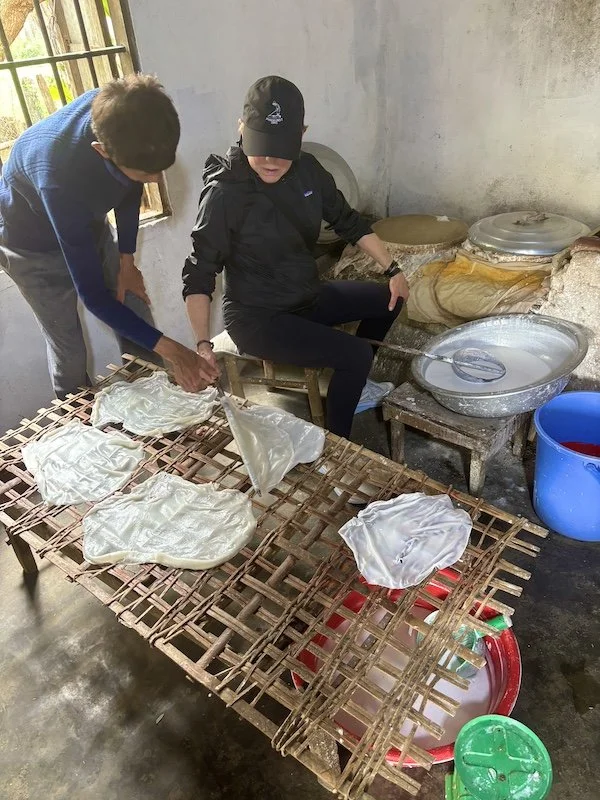
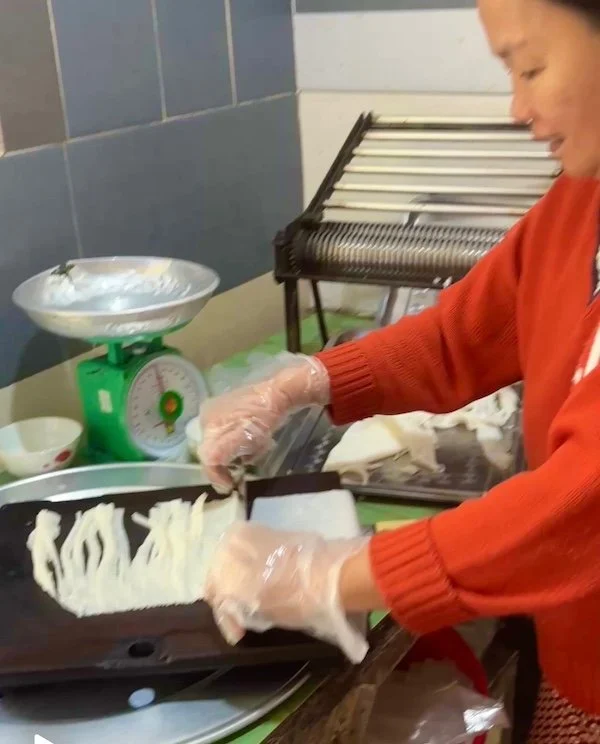
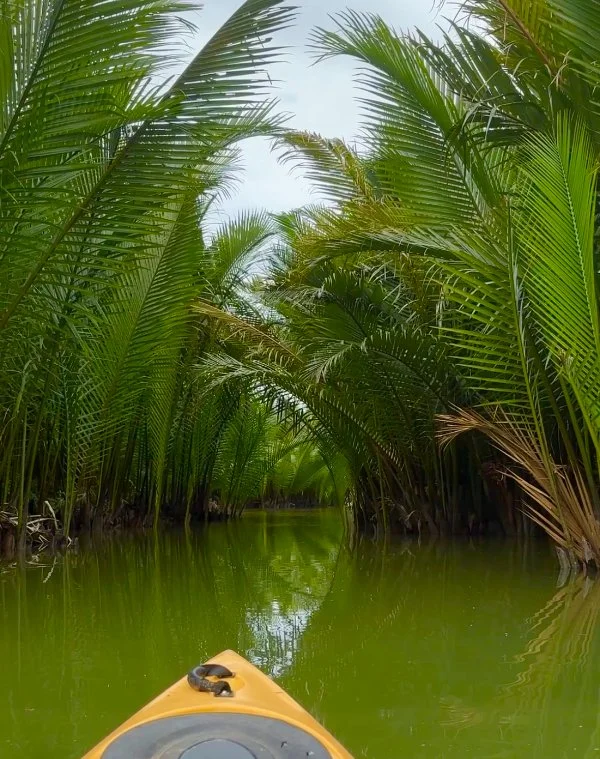
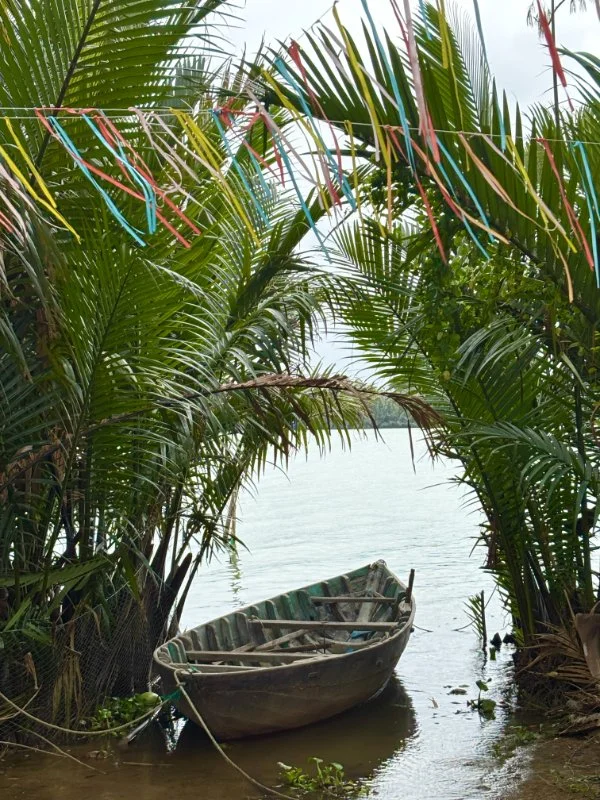
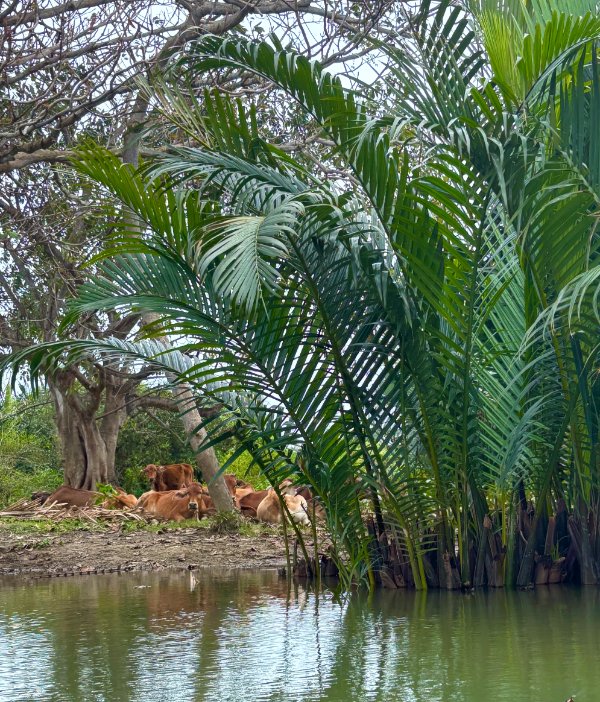
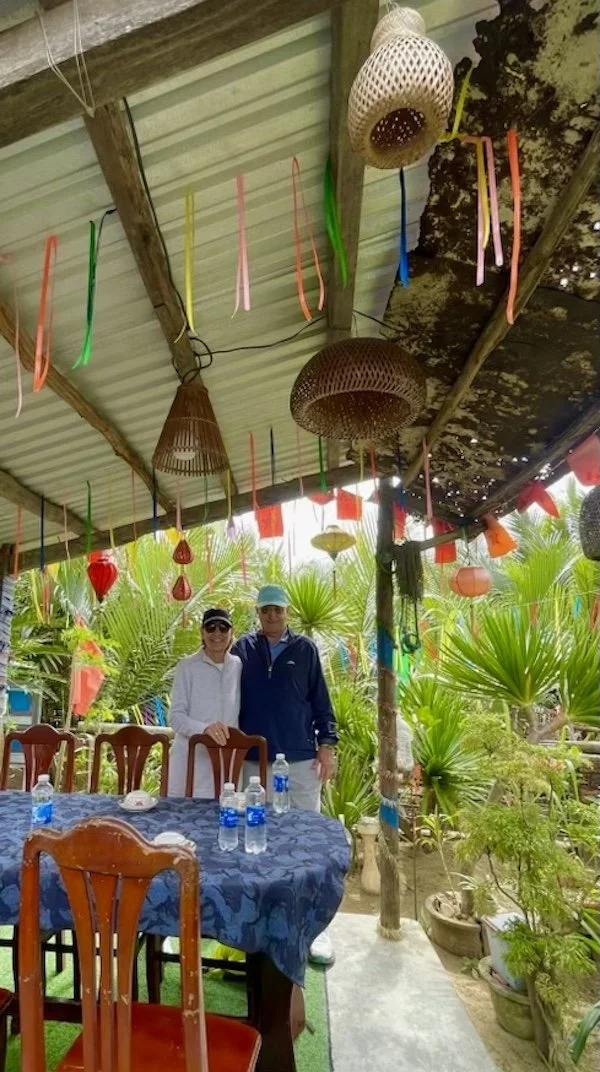
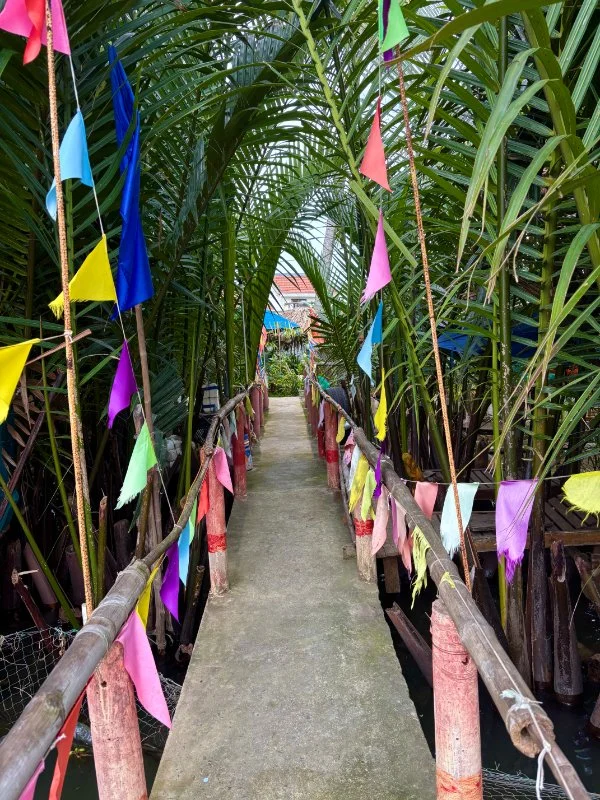
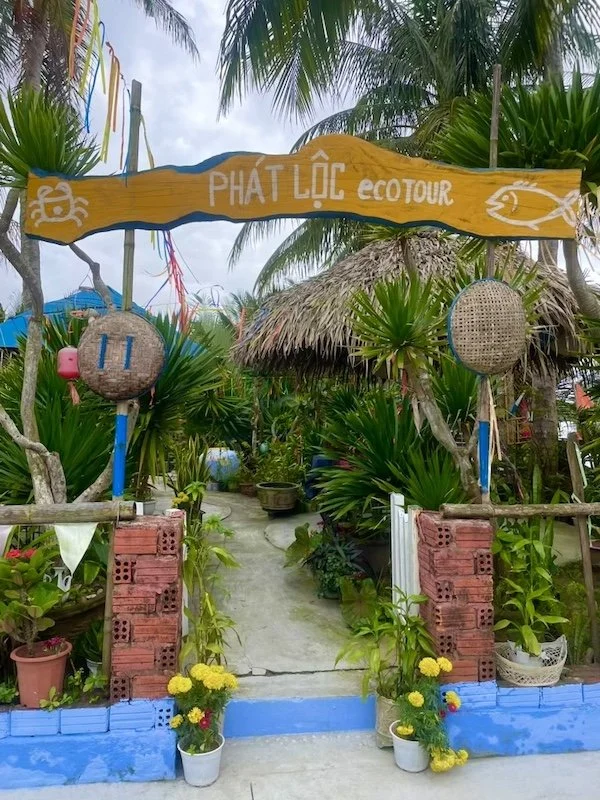
To see more of this idyllic area, we cycled to a boat landing where we boarded kayaks and paddled in coco-palm forests with herds of cattle grazing along the riverbank. In our kayaks, we explored a vast mangrove ecosystem unique to Hoi An and ended at a local eco house restaurant, Phát Lôc, where we enjoyed an incredible lunch of fresh clay-pot fish, rice pancakes stuffed with herbs, minced pork, and green onions, and fresh fruit for dessert.
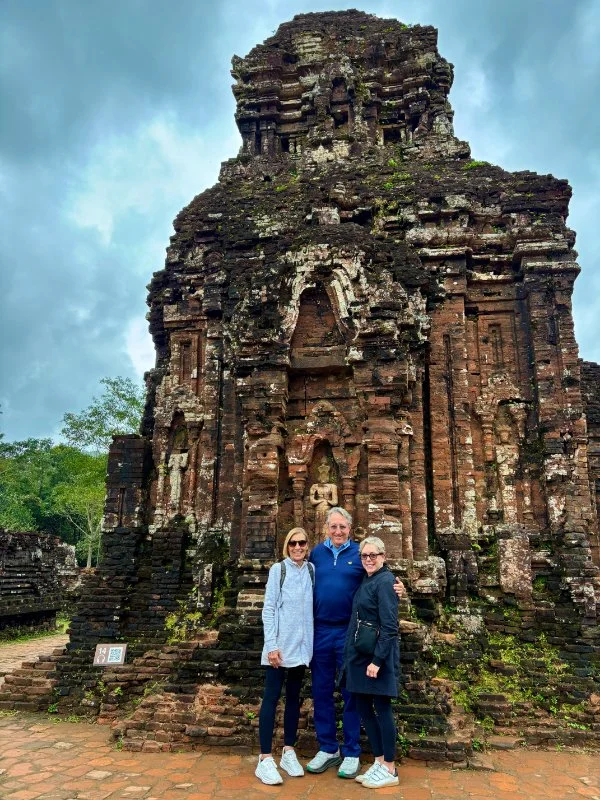
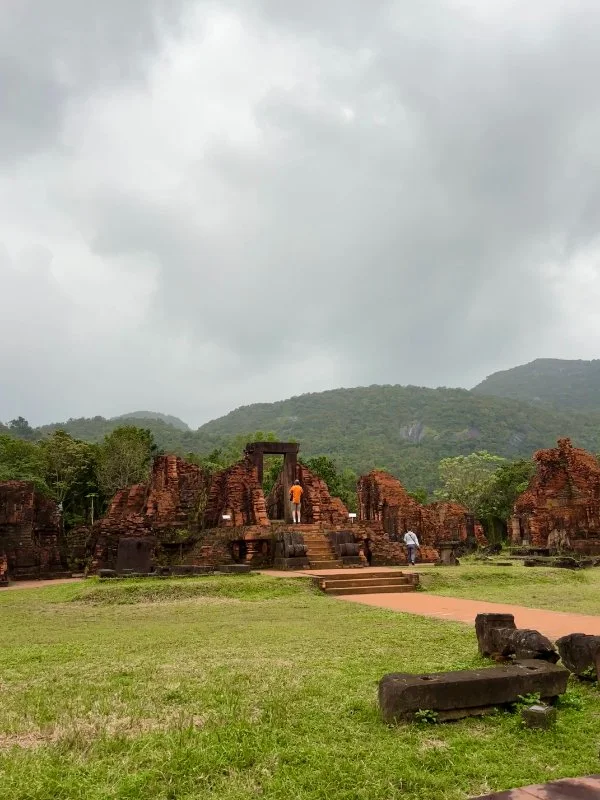
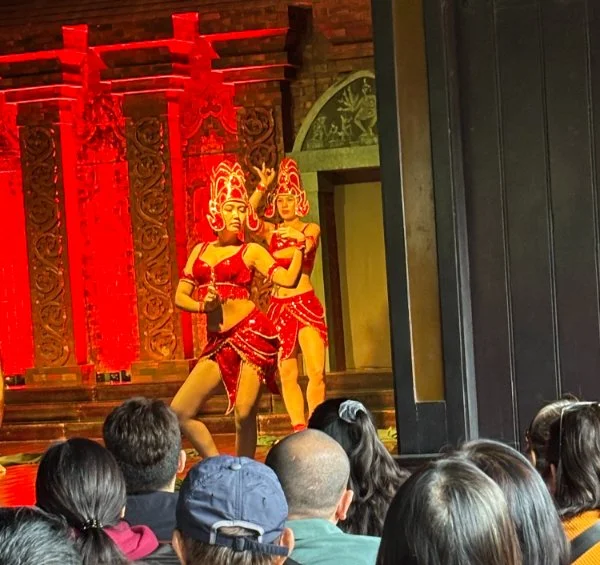
One afternoon we enjoyed visiting one of Hoi An’s most iconic temples, My Son Sanctuary, a cluster of abandoned and partially ruined Shiva Hindu temples built between the 4th and 13th centuries by the Champa kings. The surrounding jungle and mountains are dark and misty, and the brooding overhanging clouds made the site a bit eerie. We learned that this UNESCO World Heritage Site is often compared to the iconic Angkor Wat, a destination we will reach in Cambodia. The scattered buildings of this sanctuary are composed of reddish brick with no visible mortar, featuring bas-reliefs of Hindu gods and sacred elephants and lions, as well as eroding temple ruins used for burials, ceremonies, and worship. At the end of our visit, we watched a Champa cultural dance performance featuring bright traditional costumes and music.
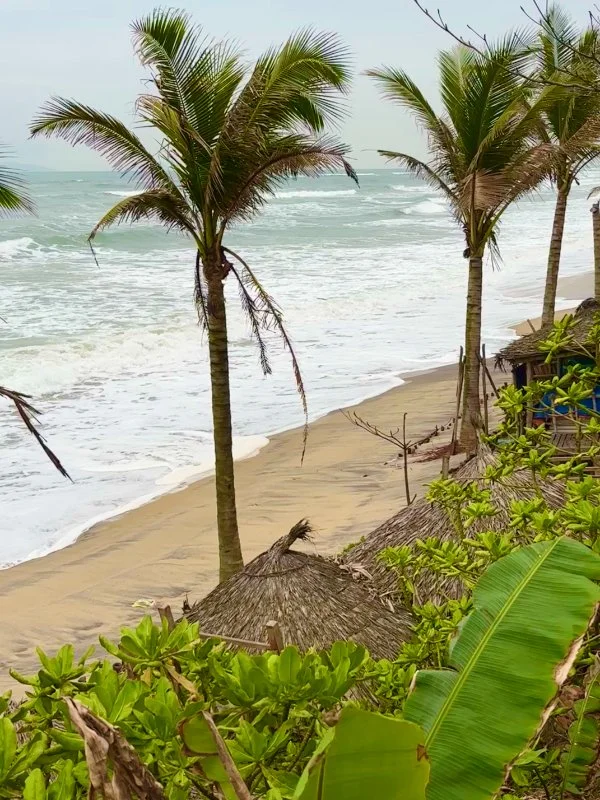
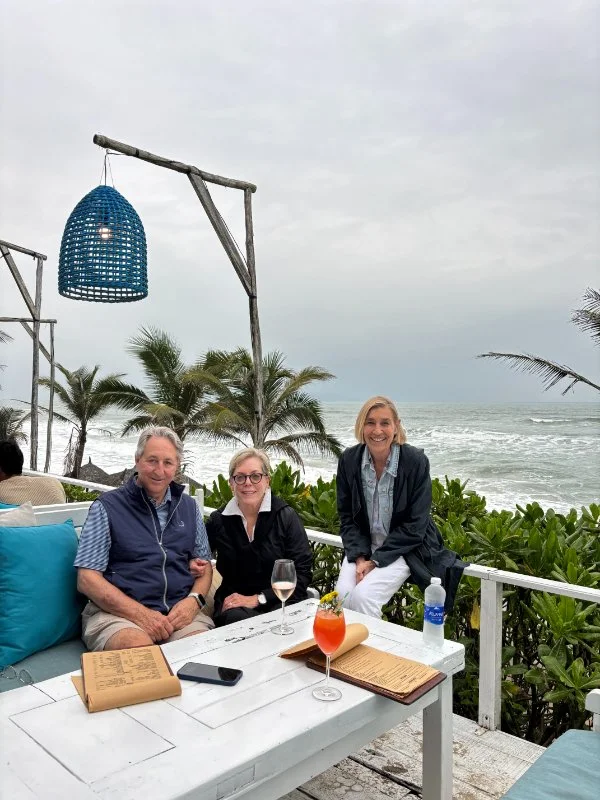
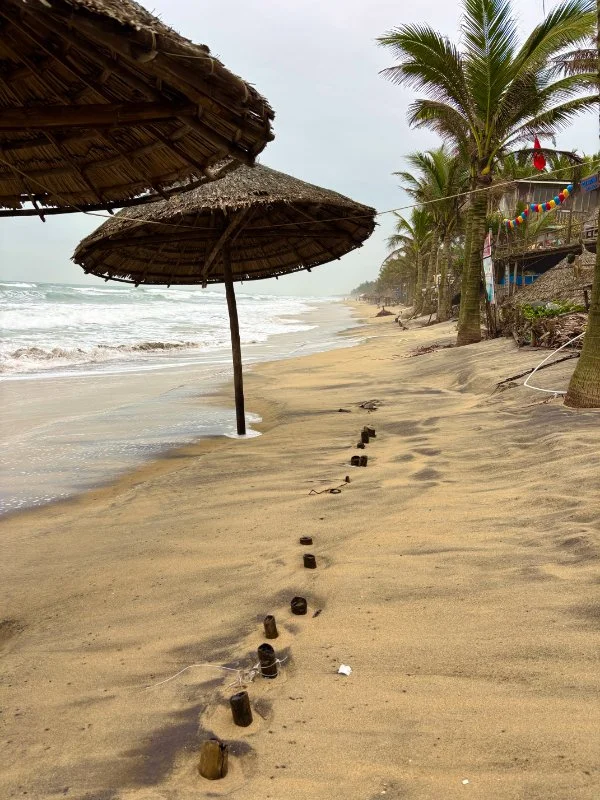
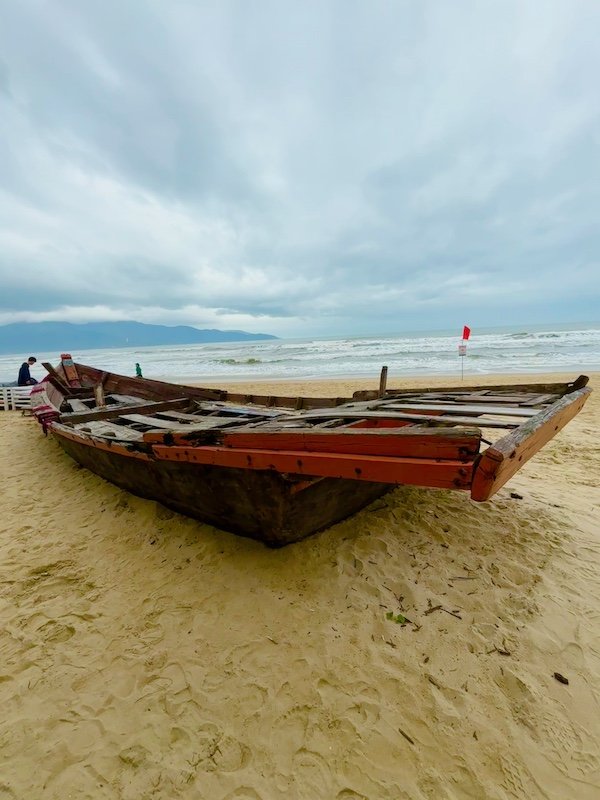
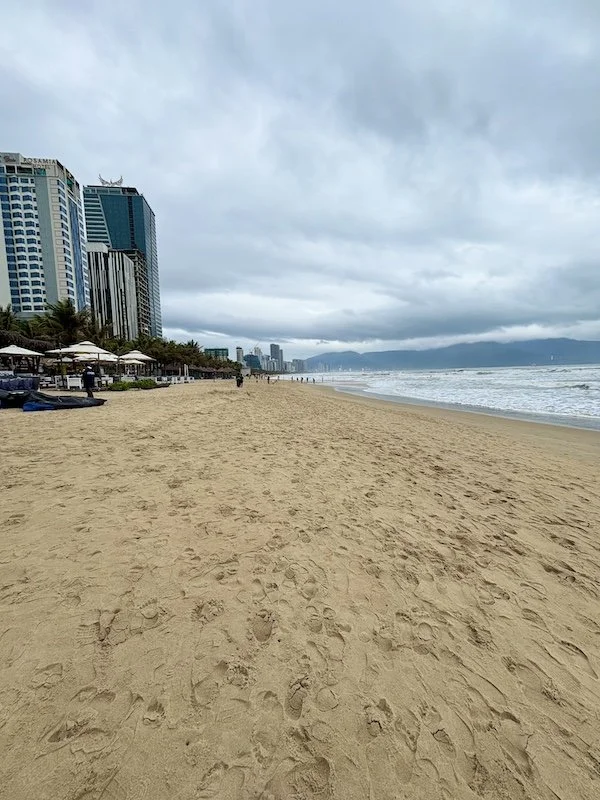
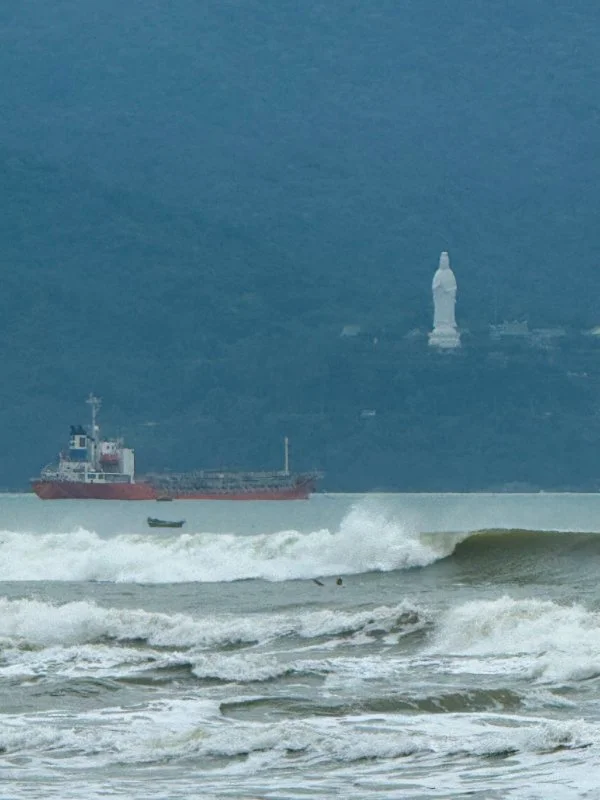
Late in the afternoon Coco and I taxied to the Deck House, a local restaurant on An Bang Beach. There, we enjoyed cocktails and a lovely sunset while waiting for Ray to join us after playing golf at a local course. It was high tide and the sun was setting fast when we arrived, but the beautiful white sand beach, the tall coconut palms, and the quaint thatched umbrellas at the water’s edge made it a postcard-perfect way to end the last day of our Central Vietnam exploration. The only addition to this incredible part of our trip was the brief stop on the way to Da Nang Airport the next morning at the picturesque white-sand My Khe Beach (nicknamed “China Beach” and well-known as the setting of American TV shows about Vietnam, like “China Beach”).
And so we were off to our final destination in Vietnam, flying south to Saigon–or Ho Chi Minh City, as it is officially known. More to come, so stay tuned! And thank you for reading. It fills me with joy to continue doing something David loved so much.