
The Kingdom of Cambodia
Siem Reap…hot (95º+), sunny and humid. Much like Charlotte–but not in February.
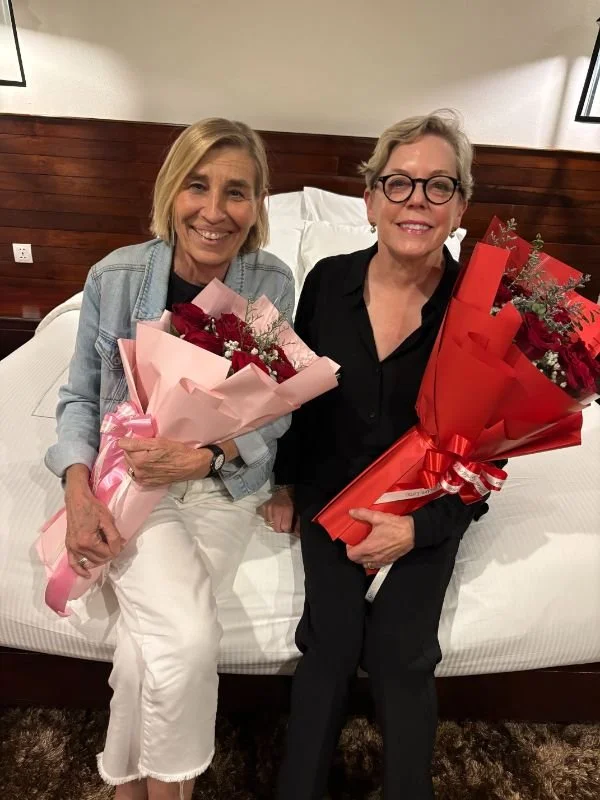
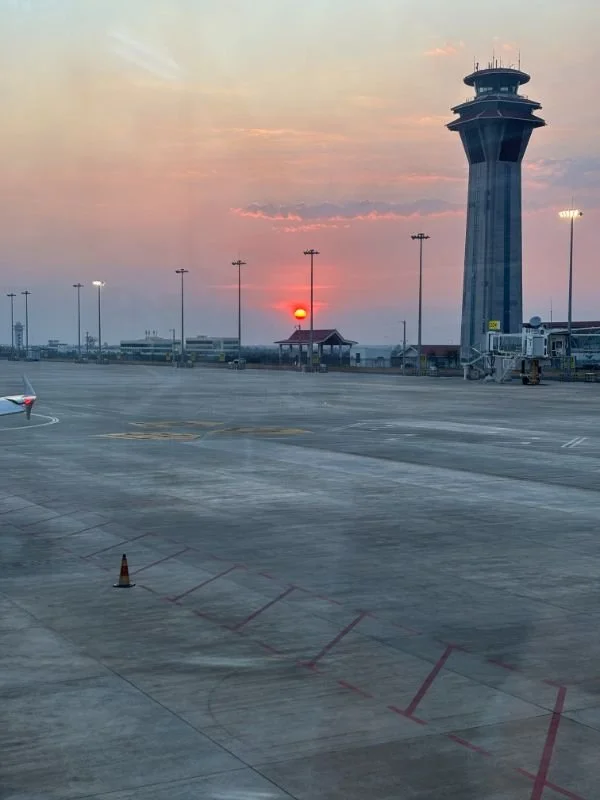
In the late afternoon Ray, Coco, and I arrived at the Siem Reap airport (not a very attractive place — rather austere and militaristic) but quickly and easily paid $30 and received our visas–then made it through immigration, to baggage claim, and out the door — all expeditiously performed–to be met by our driver, Nan. The 45-minute drive to the beautiful hotel, Borei Siem Reap, where we found gorgeous bouquets from our thoughtful children awaiting us in our rooms (it was the day before Valentine’s Day). We dined deliciously at the hotel’s white-tablecloth restaurant, the Ox Club, only to learn later that it was rated Siem Reap's top restaurant.
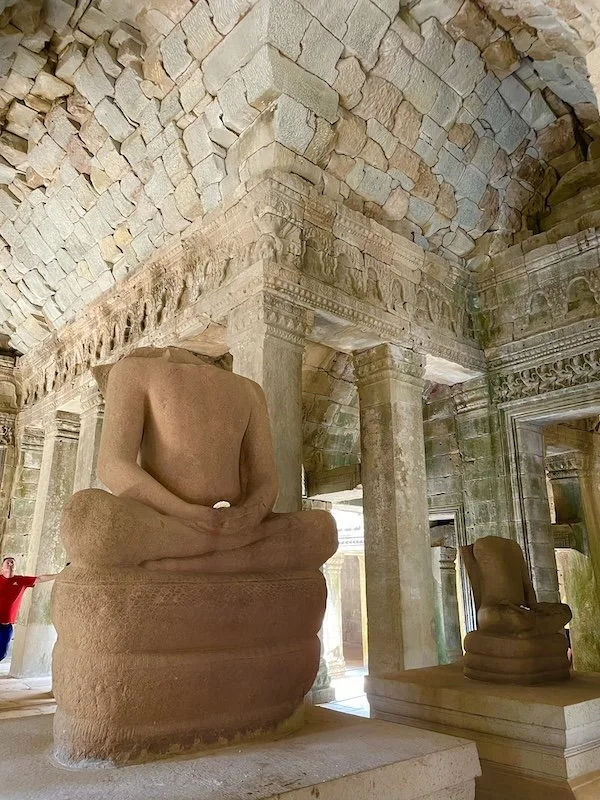
Our long-awaited dream visit to Angkor Wat finally happened — but I don’t think any guidebooks or documentaries could prepare us for the reality. This is a destination for millions of visitors from all over the world who want to explore Angkor Wat and the other abandoned temples constructed by the Khmer Empire from the 9th to the 15th centuries. It began as a Hindu temple dedicated to Vishnu and later became a Buddhist site.
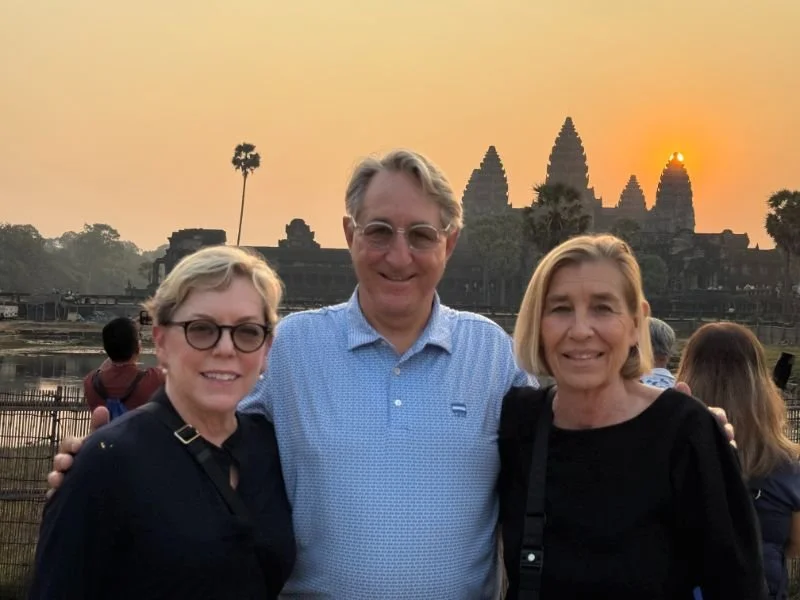
We were picked up by our guide and driver at 5 am and driven 30 minutes to the world’s largest religious building. Its name means “Defeat of Siam,” referring historically to the many wars and conflicts between the Khmer and the Siamese (Thai). Most good guides know to take their guests there well before sunrise and to enter through the quieter back entrance while the throngs are herded to the front. Ours did just that, and we walked about 15 minutes in the pitch dark on a gravel road.
We finally stopped in a field with a crumbling stone wall and boulders, where we found seats to wait for the dramatic lightning of the sky to reveal the dark silhouettes of the magnificent temple towers. We were not disappointed and soon discovered our eyes needed to absorb the beauty of the sunrise behind the main building without our phone’s camera being lifted. But, of course, we had to try to immortalize this amazing sight. Where we stood, in front of a moat, allowed us to see the temples — the impressive main one in the center flanked by the smaller ones — and their reflections in the water.
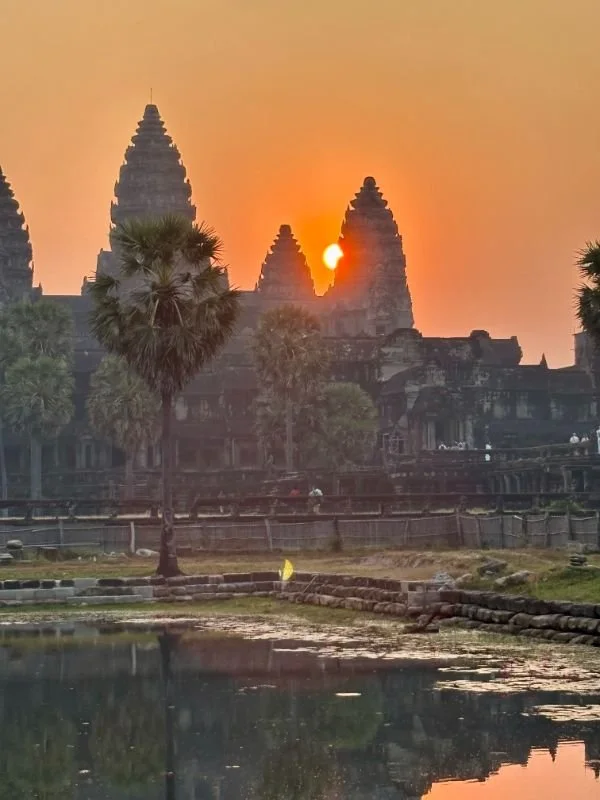
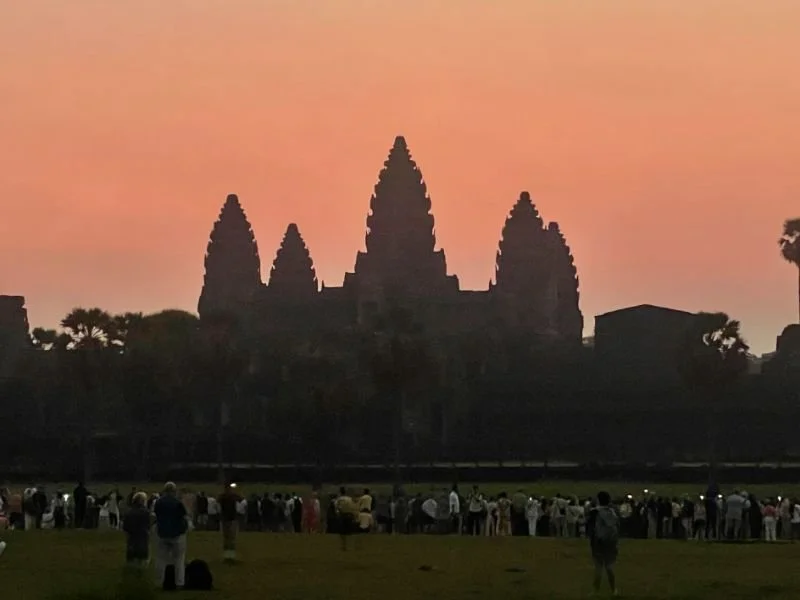
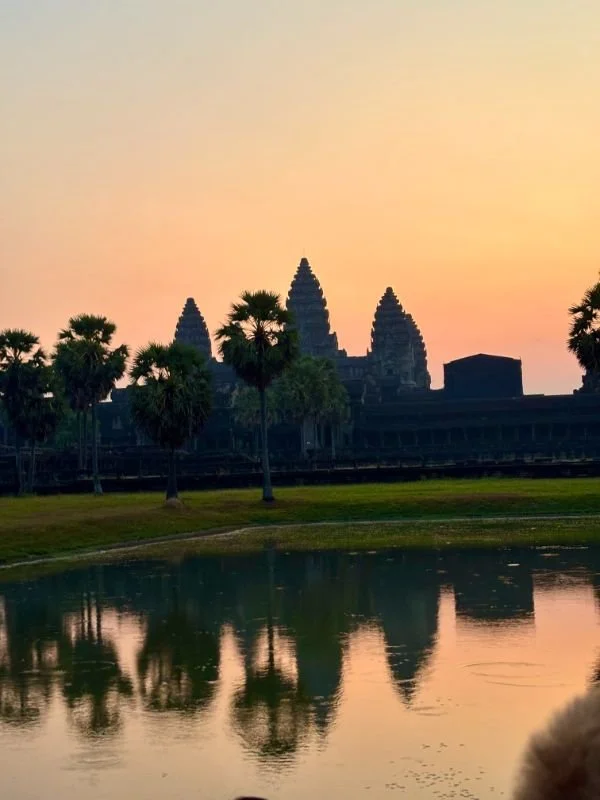
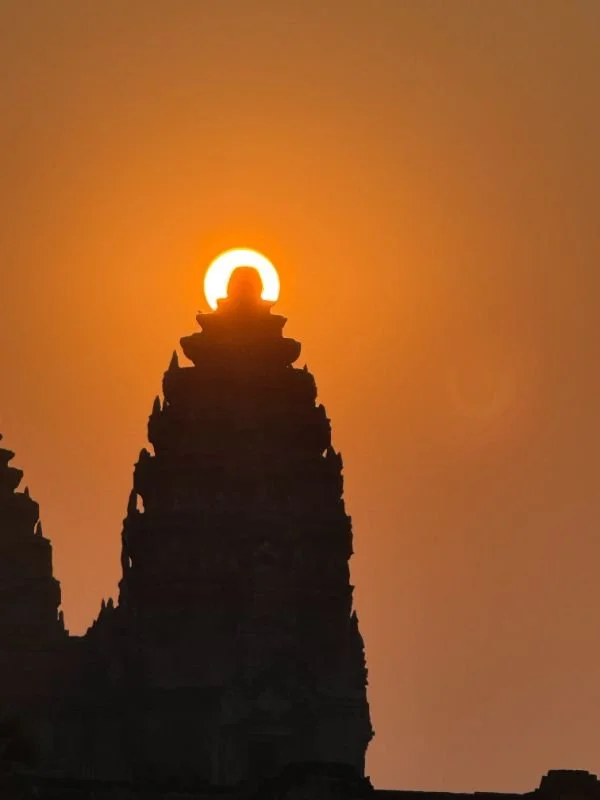
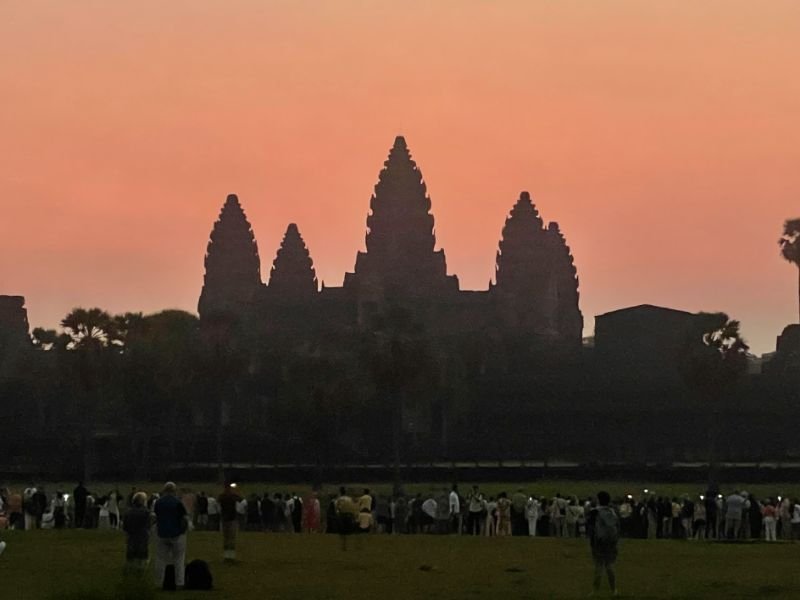
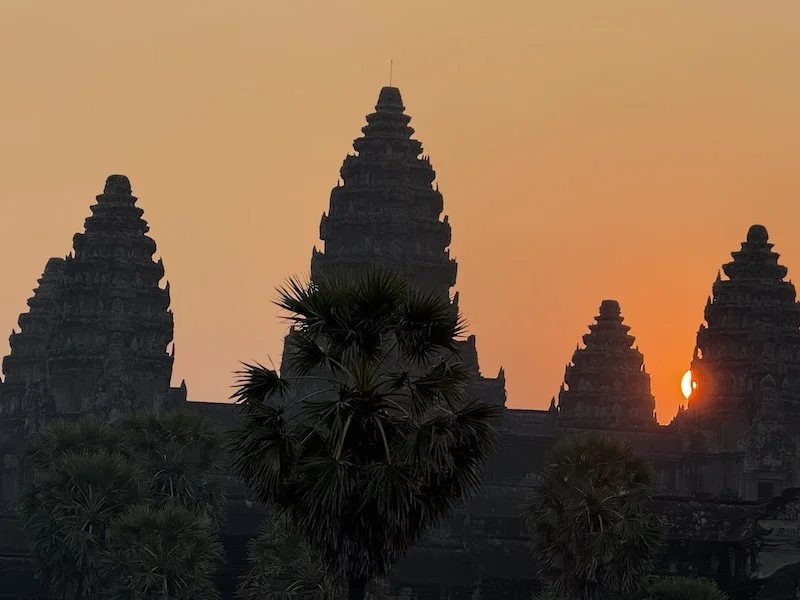
When the sun had risen and our eyes had absorbed all the beauty, we joined hundreds of other people to slowly and respectfully cross the moat by the stone bridge and walk into the center of Angkor Wat, the main temple. We had read up on the history of the temples, but our guide added some details that we didn’t know. Its grand scale and layout symmetry is what hit me first when the sun illuminated it fully.
The temple towers were actually shaped like lotuses, and the enormous moat that surrounds the site has hundreds and hundreds of bas-reliefs depicting all sorts of historical events, mythological figures, and heavenly dancing nymphs, called apsaras. We learned that there are almost 2000 of these apsaras carved into the walls, and the figures wear 37 different hairstyles! It’s interesting to note that Angkor Wat was never completely abandoned and was always occupied in some way, so it has not deteriorated as other abandoned temples might.
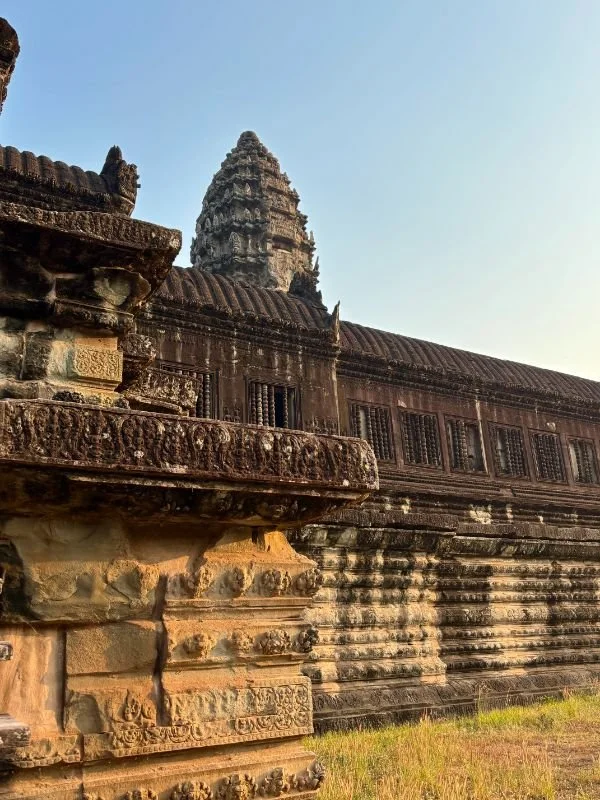
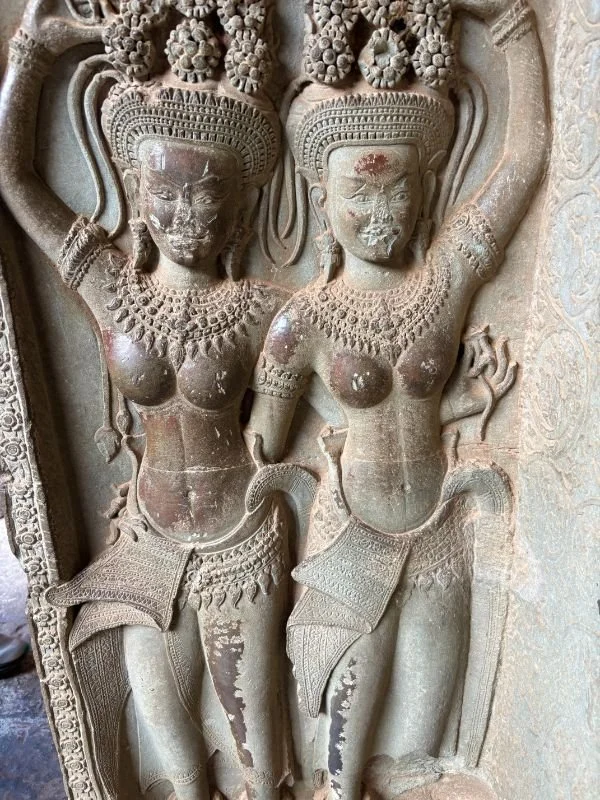
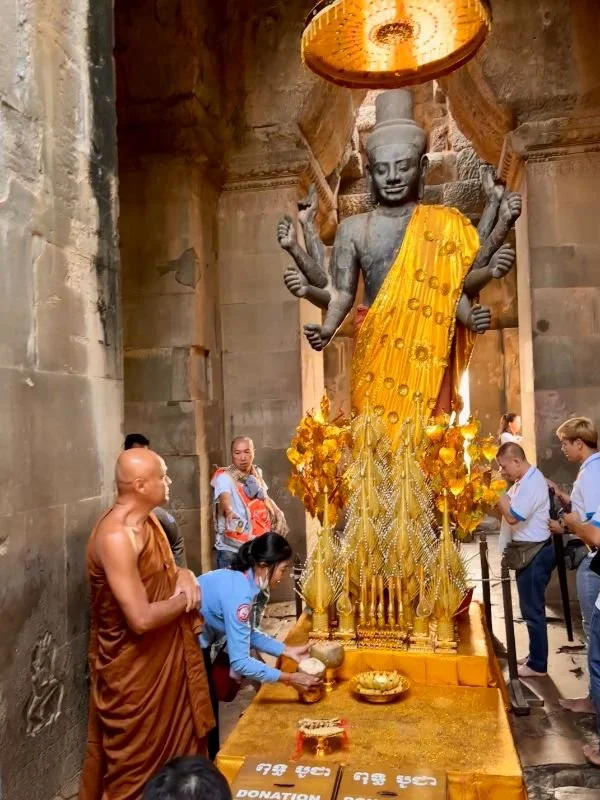
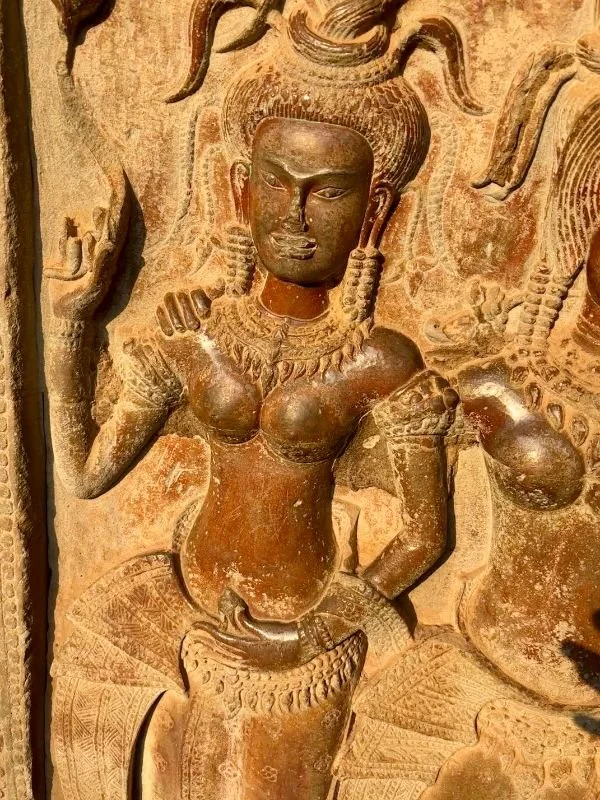
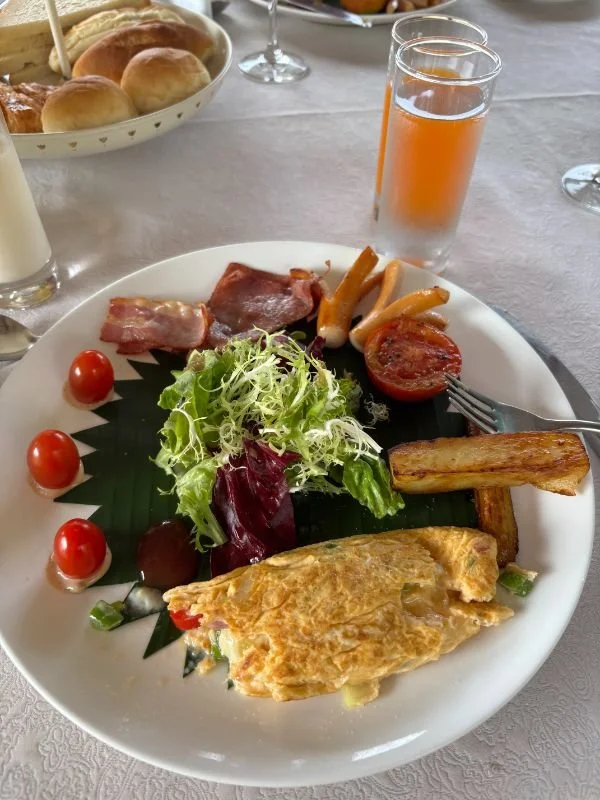
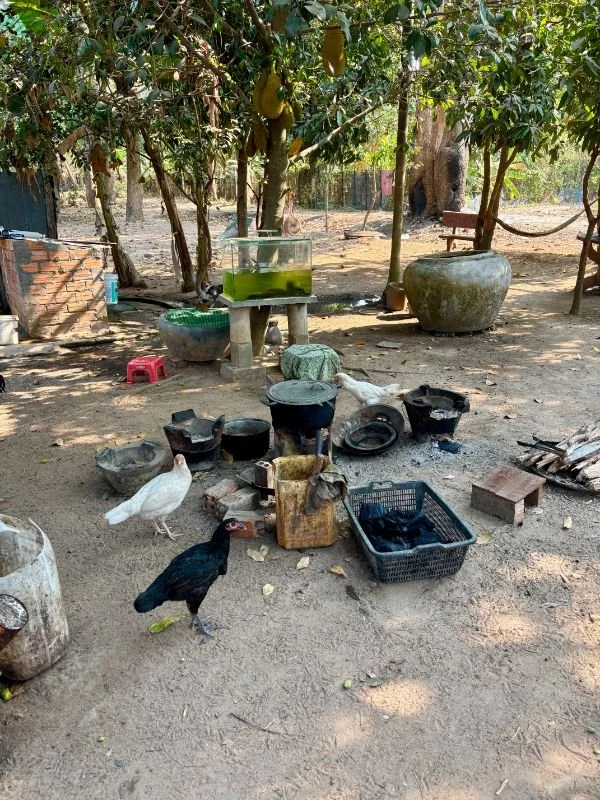
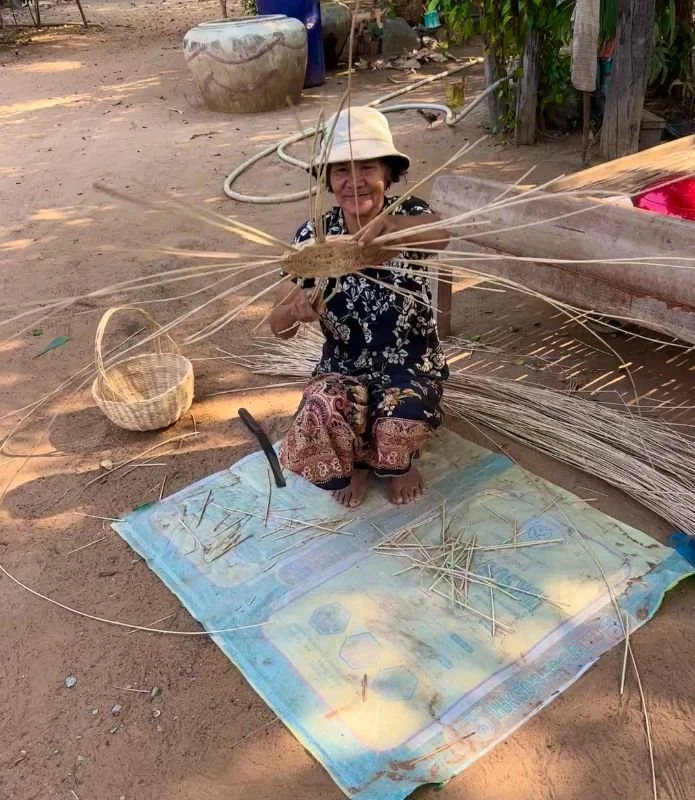
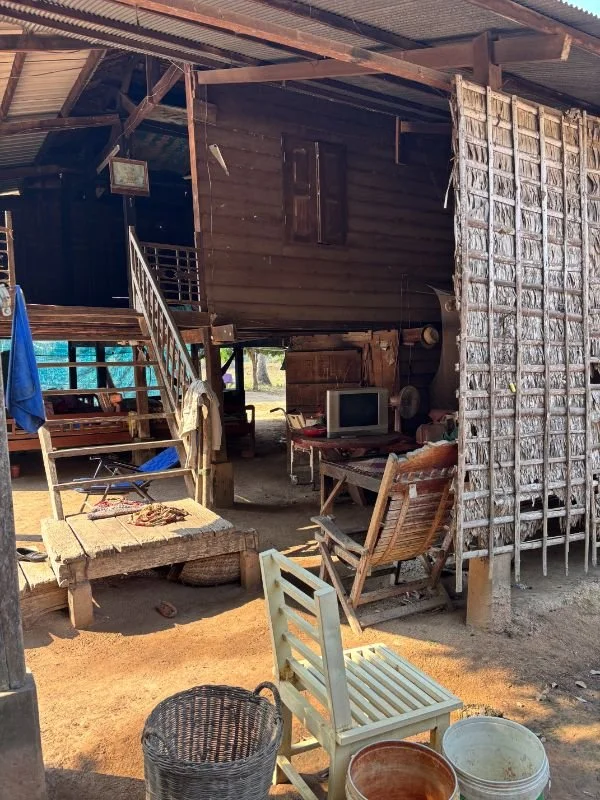
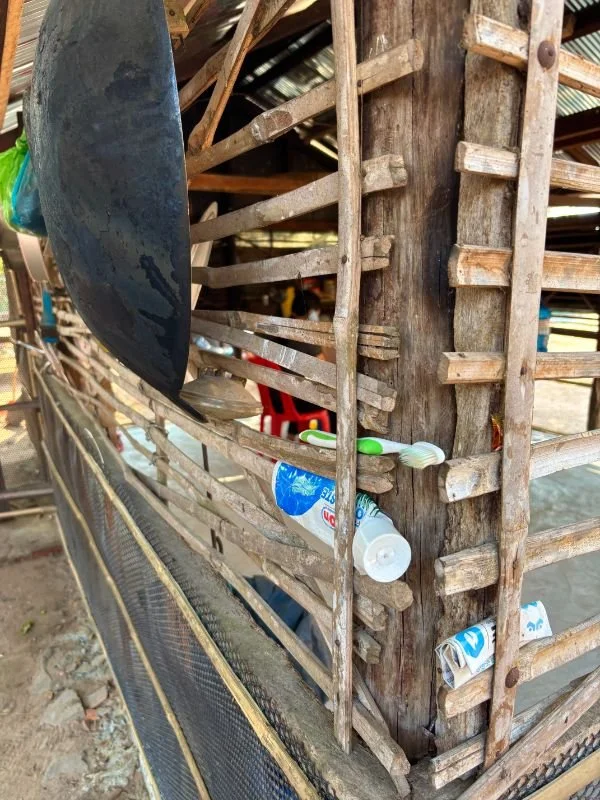
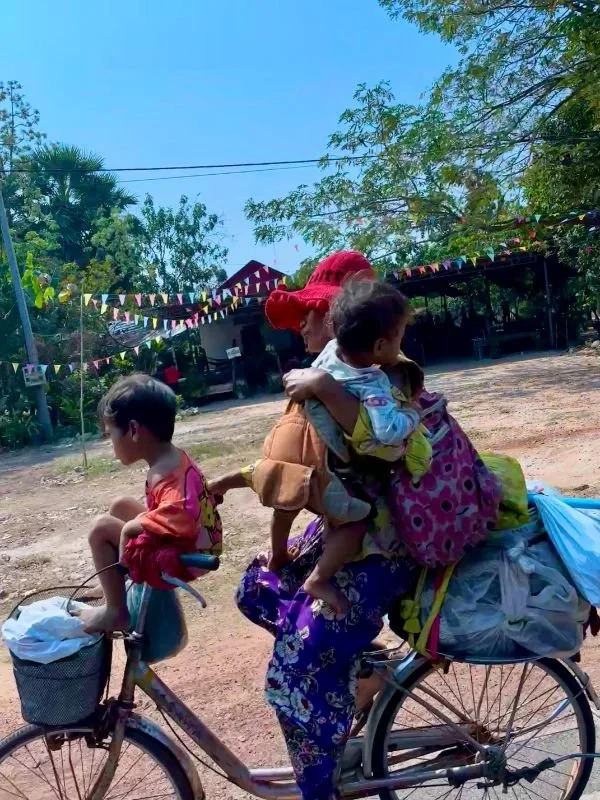
After another hour of wandering around the enormous grounds and into temple rooms, we were transported to a local family’s home in Tuek Vil for an al fresco breakfast with wonderful farm-fresh offerings: eggs, bacon, tomatoes, fruit, bread, juices, and teas. Afterwards, we strolled through the wandering chickens and watched a grandmother weaving a giant basket with her hands and feet. We enjoyed getting first-hand glimpses into daily life in the little village and the residences built on stilts to keep out roaming critters and high water.
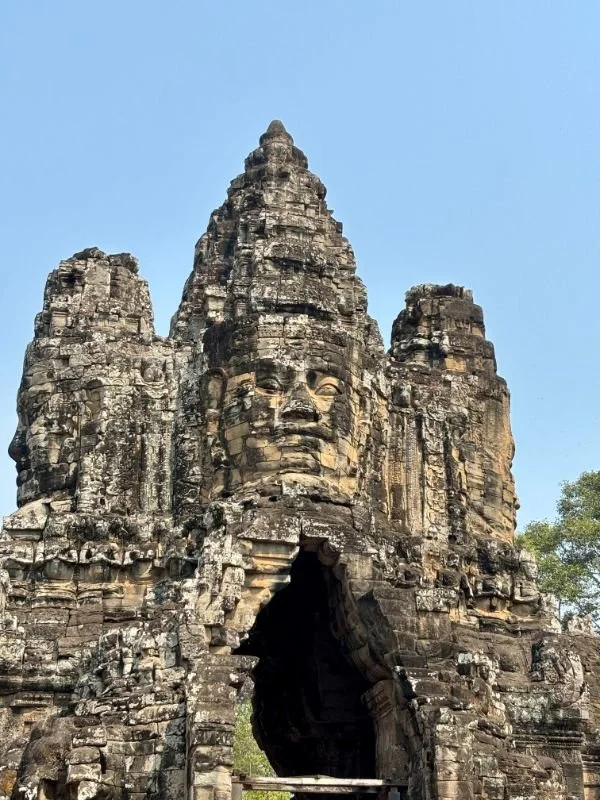
We spent the rest of the day at another impressive temple: Angkor Thom, the last great capital of the Khmer Empire in the 12th century. Although not nearly of the same scale as Angkor Wat, it has some similarities: massive stone walls, a wide moat, a beautiful temple of Bayon in the middle, decorated with peaceful smiling stone faces. The Ta Prohm (the filming location of “Lara Croft: Tomb Raider” with Angelina Jolee) is a very recognizable temple. Giant banyan trees and their sprawling roots and branches create a surreal atmosphere among the temple ruins.
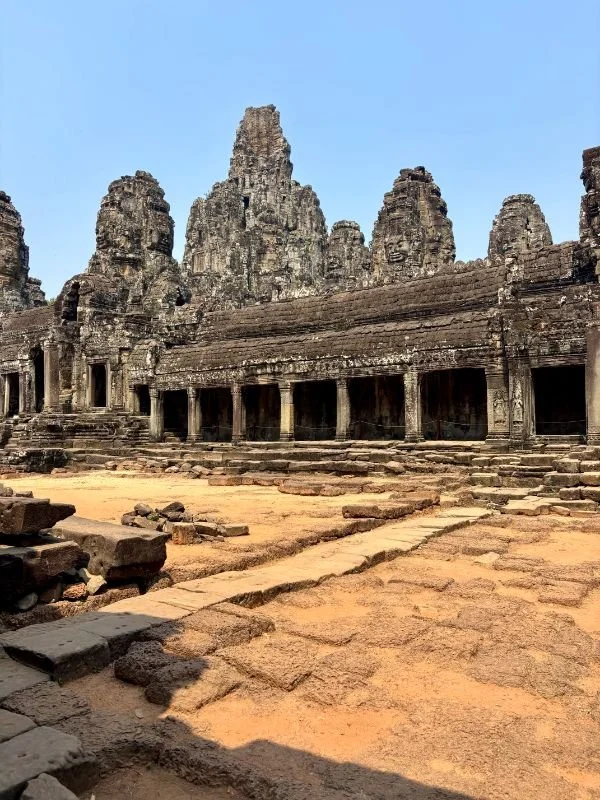
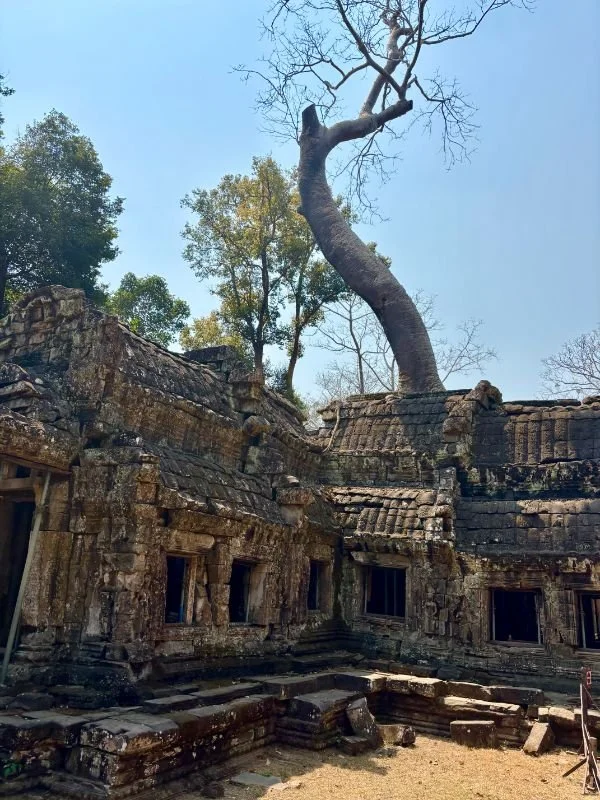
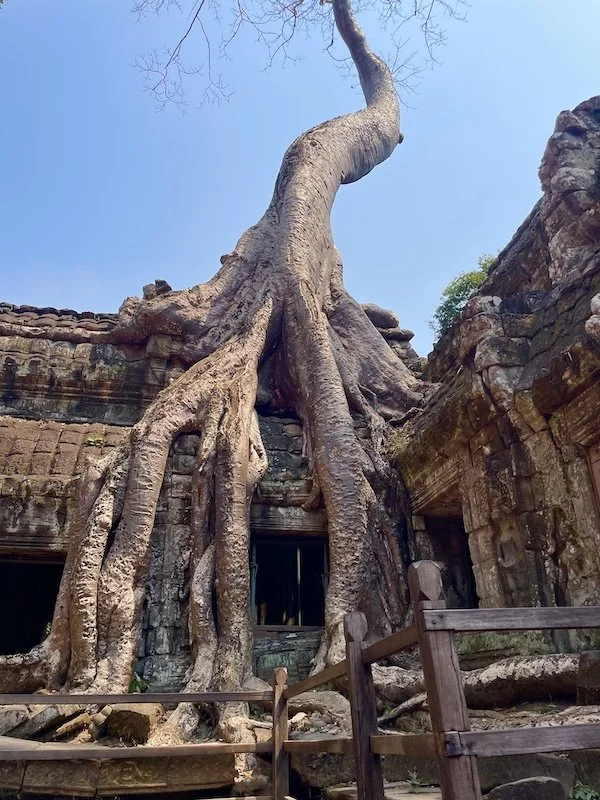
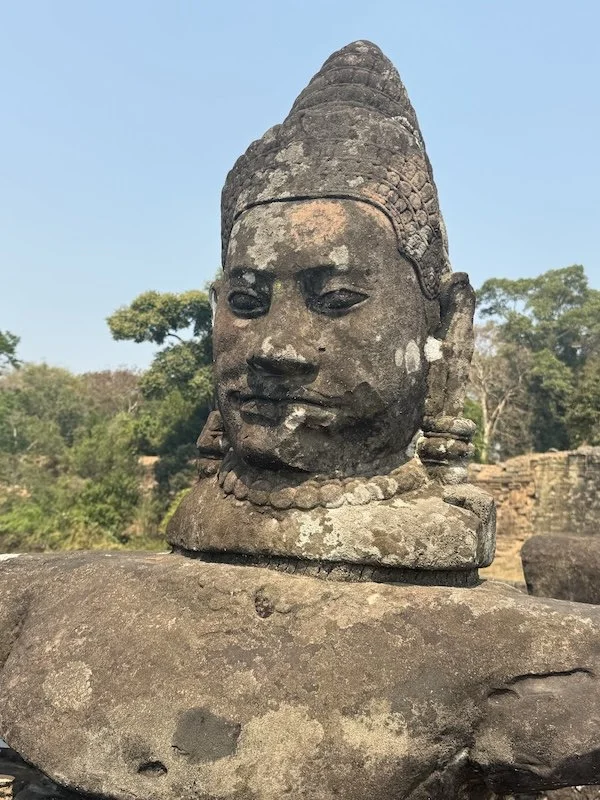
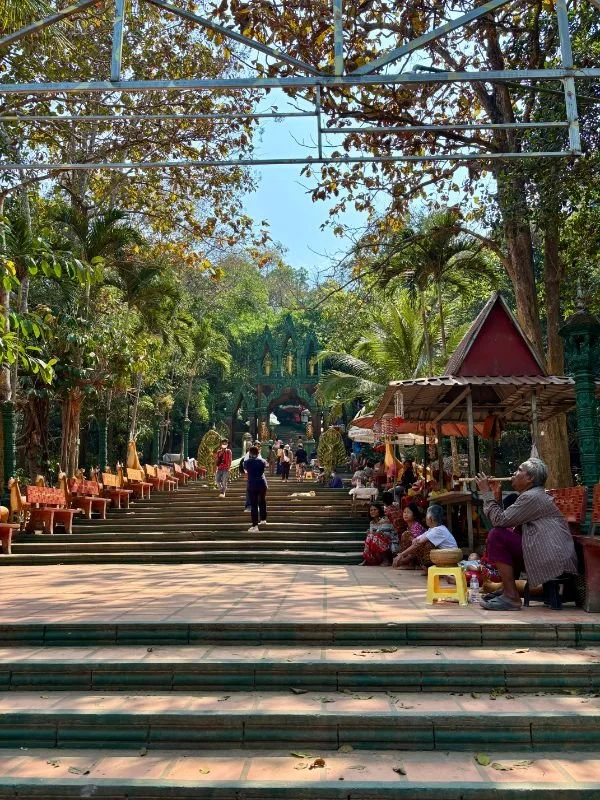
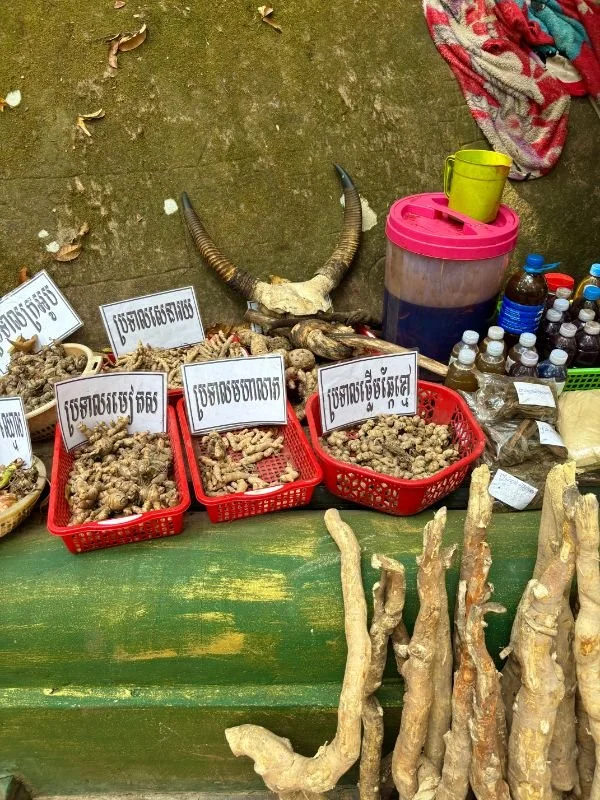
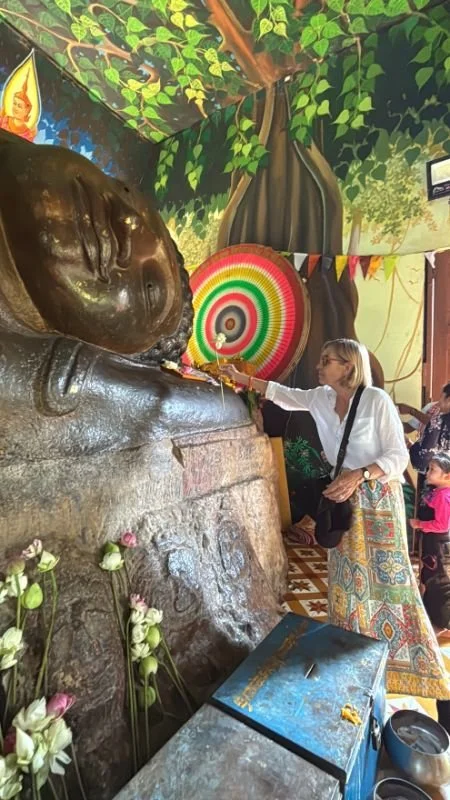
For me, the following day was one of the best days yet! While Coco enjoyed a little R&R and spa time at the hotel, Ray and I ventured out with Nan, driving first to the Kulen Mountains, about 25 miles northeast of Siem Reap, to Phnom Kulen, a holy mountain home to the huge reclining Buddha in peaceful repose. Walking up a long stairway to the top of the mountain, we passed many shops selling food, incense, flowers, and trinkets, so before entering the sacred space in a long line of solemn pilgrims, we bought flowers to place around the sandstone sculpture as we made our silent wishes.
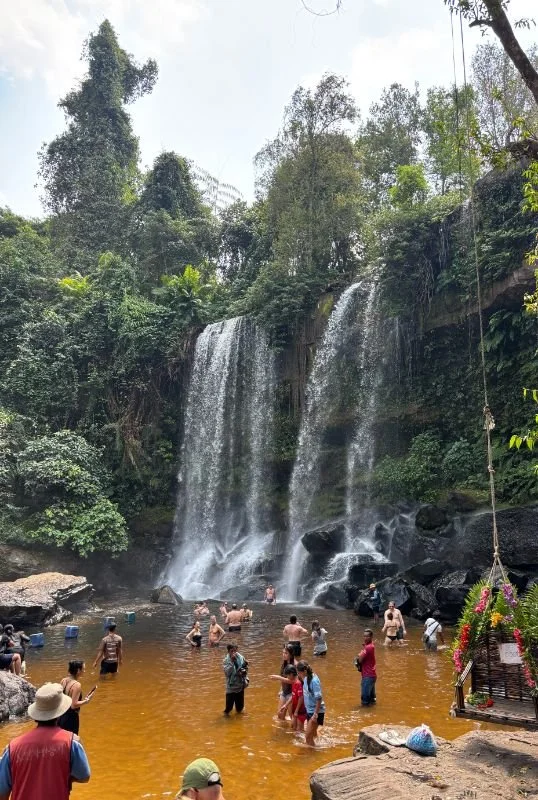
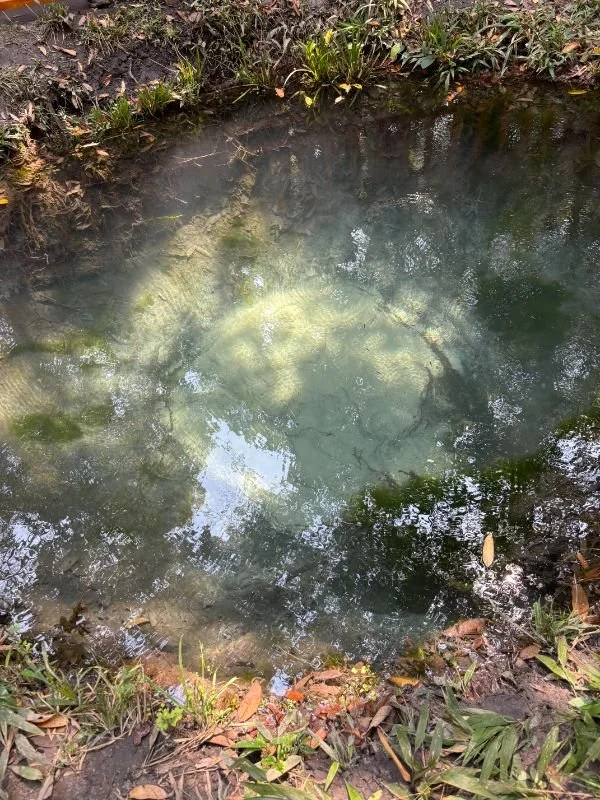
Leaving the Reclining Buddha, we walked back down to the River of One Thousand Lingas, where a pure bubbling spring flowed gently over 1000 images (representations of the Hindu god Shiva) carved in rock. Pilgrims wash their hands in the clear water to purify the body and mind. Nearby were waterfalls tumbling into pools where children and adults were frolicking.
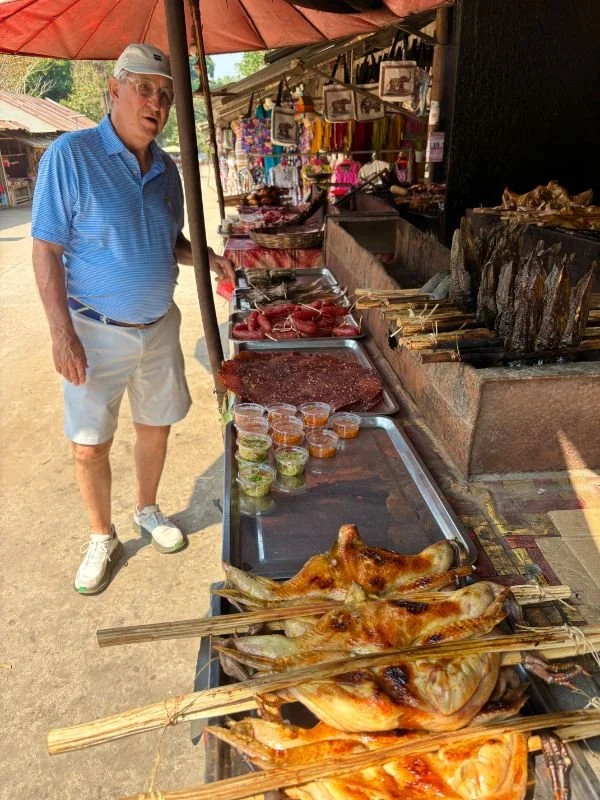
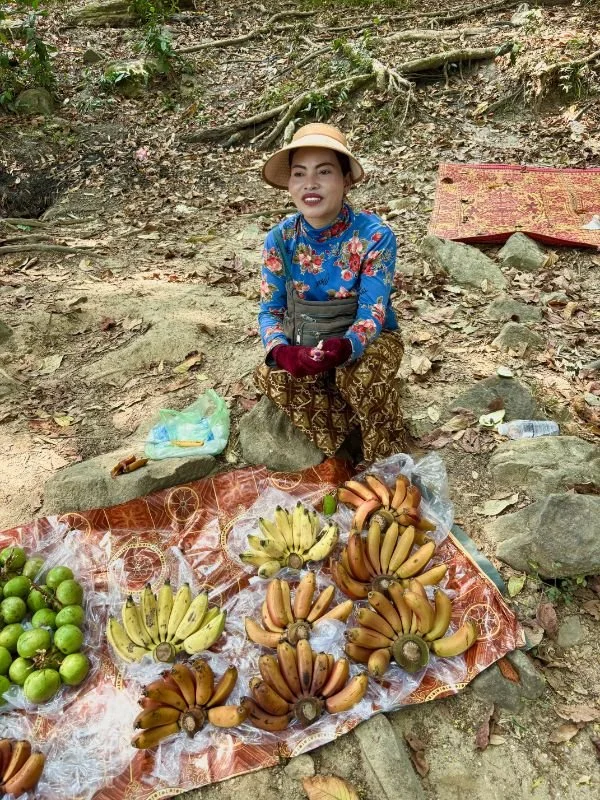
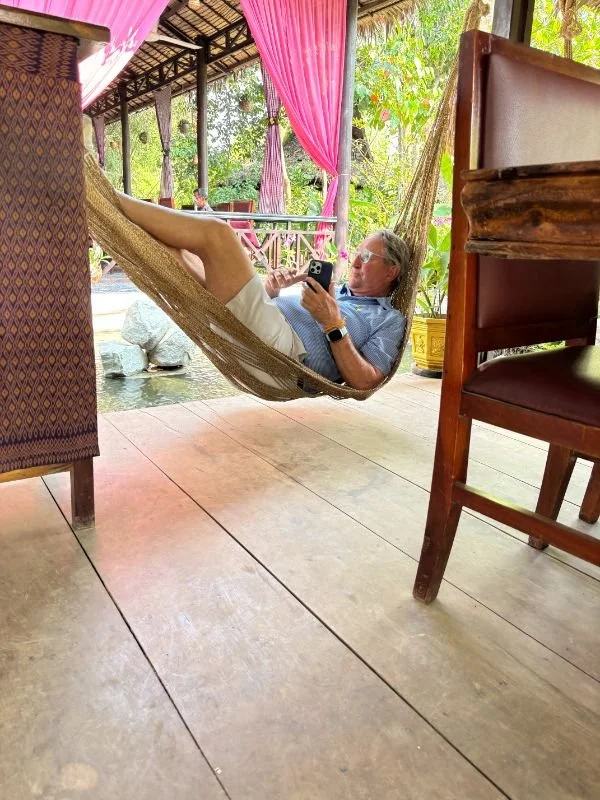
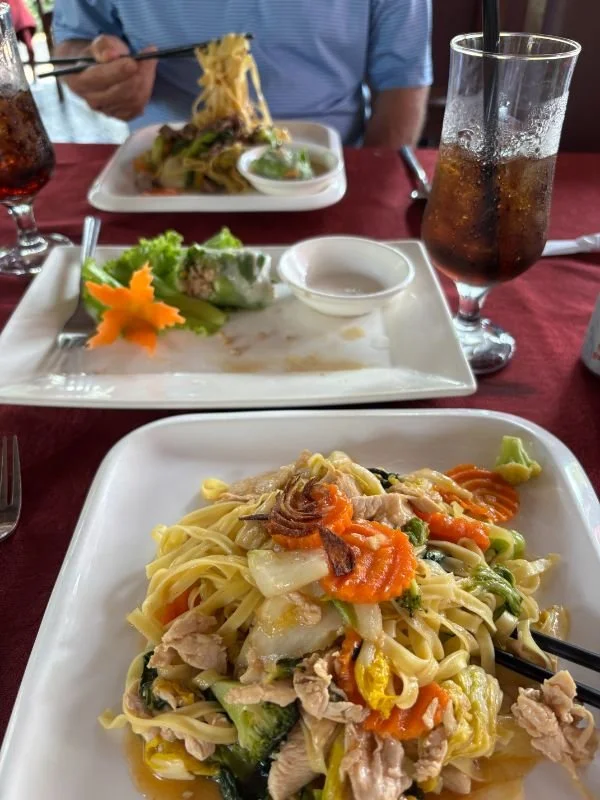
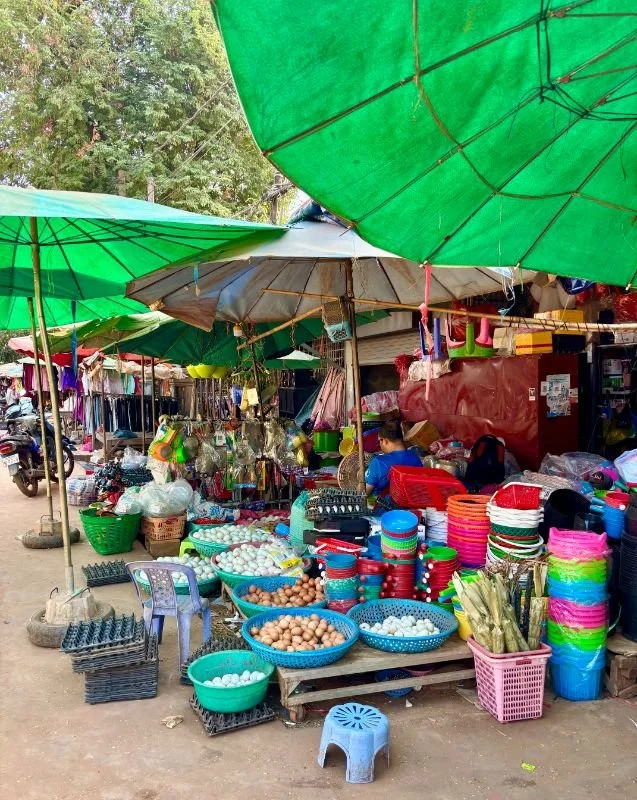
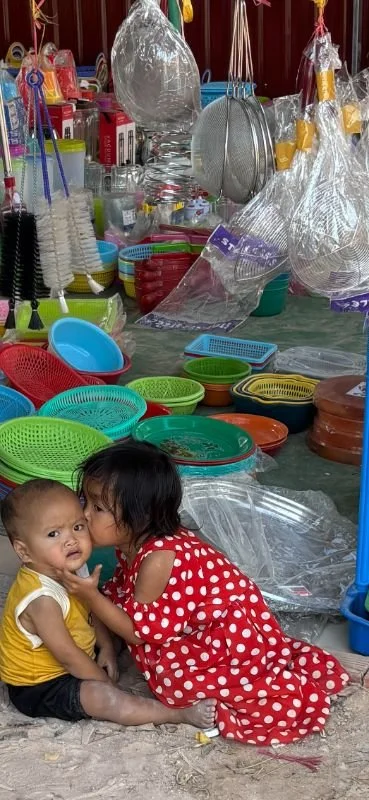
As always, we were treated to a sumptuous outdoor lunch of spring rolls, noodles, chicken, fish, and fruit, followed by the opportunity for a 45-minute siesta in one of the many hammocks hanging in the gardens near a stream. On our way to our next destination, we stopped at a small village to visit its well-known vegetable and fish market that seemed to sell every imaginable household item as well. The sights, sounds, and smells were electrifying!
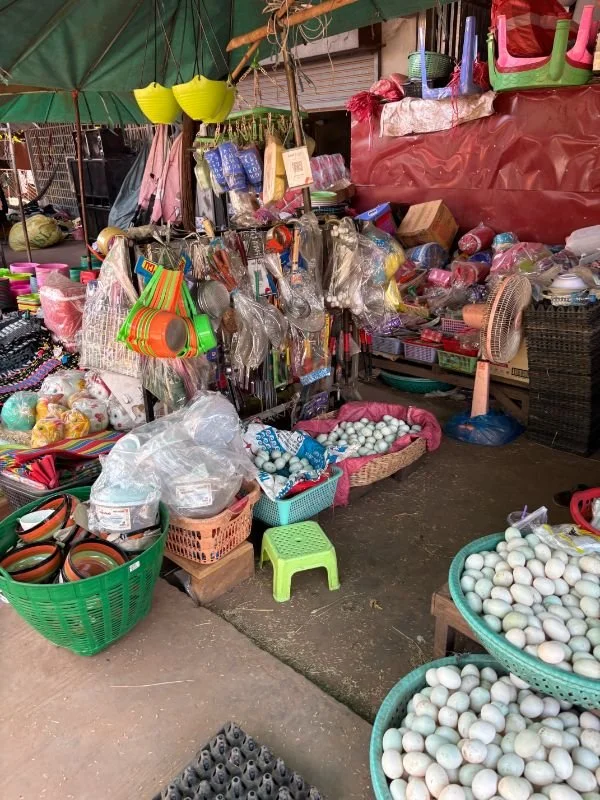
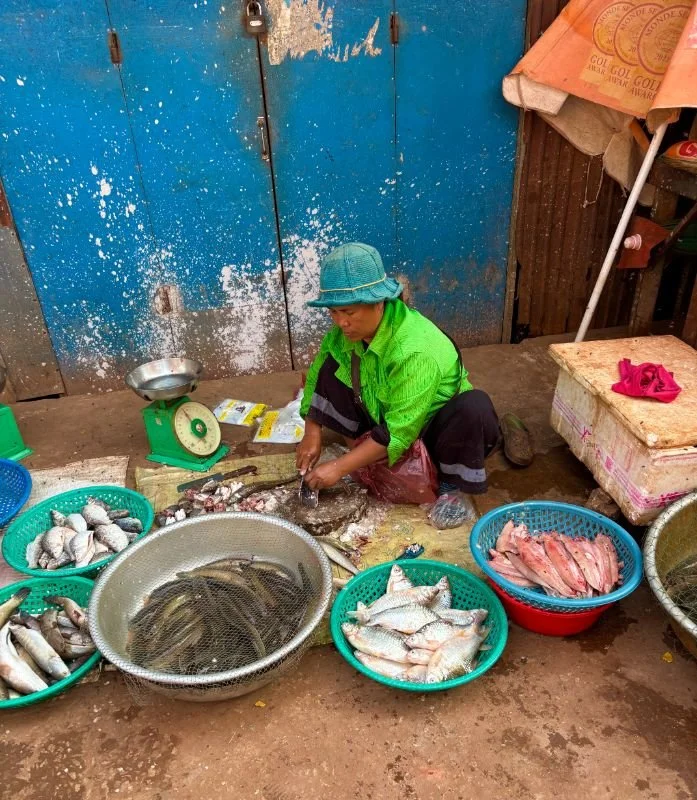
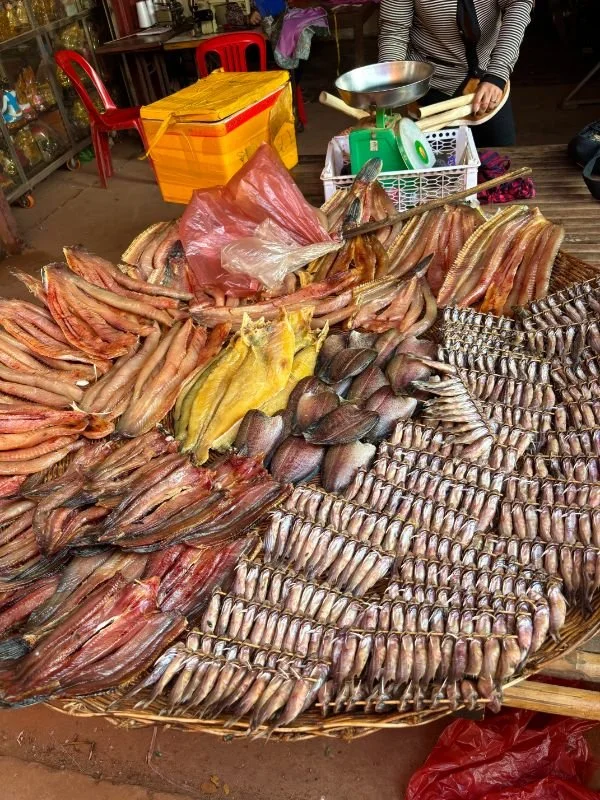
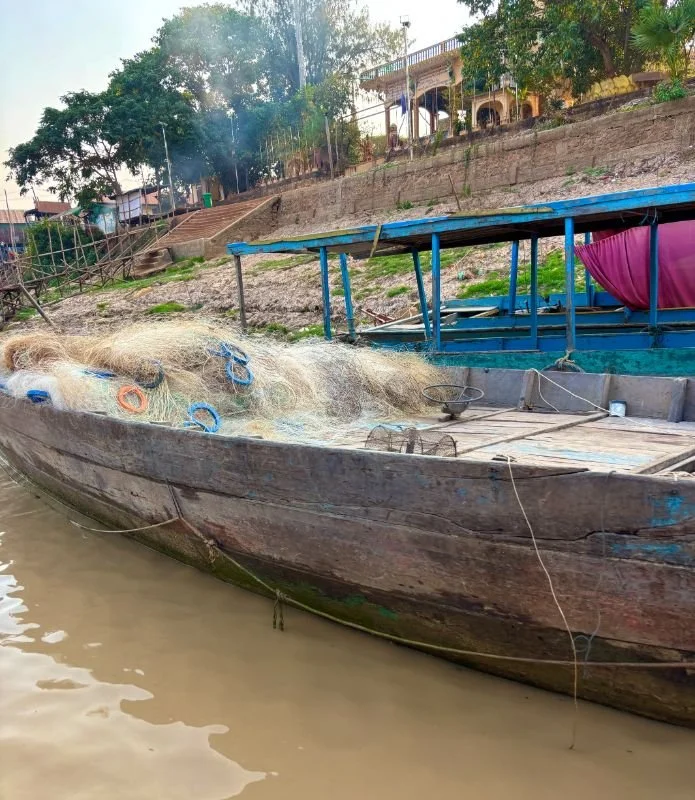
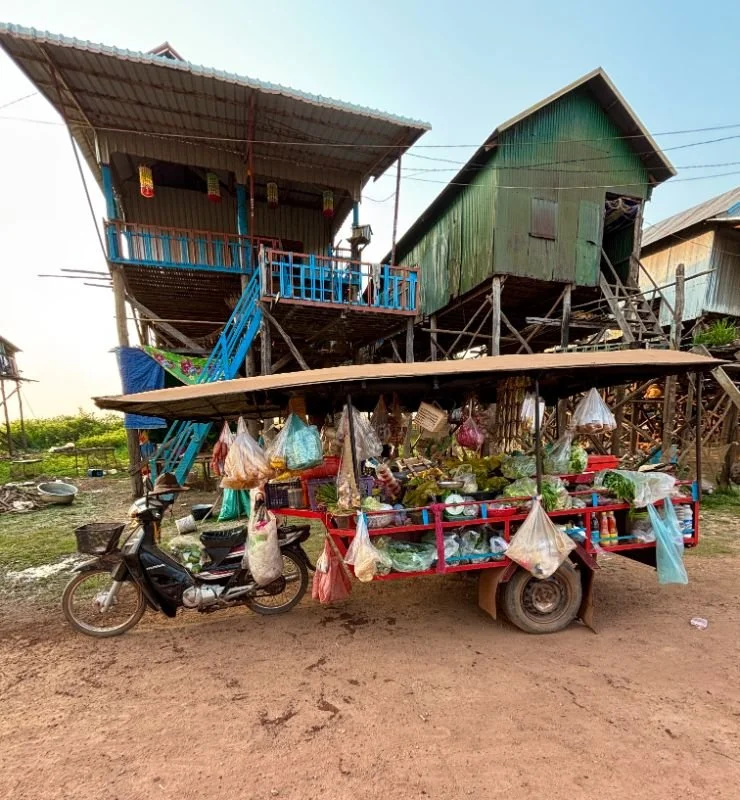
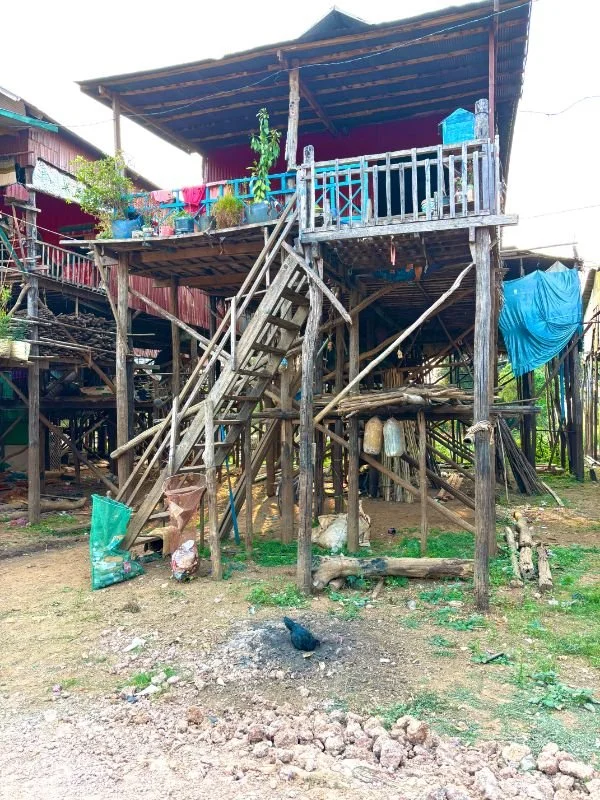
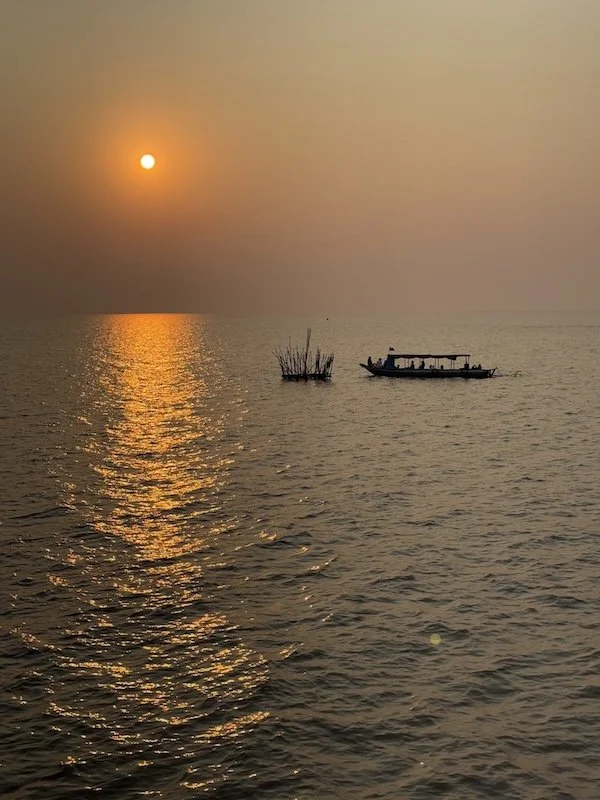
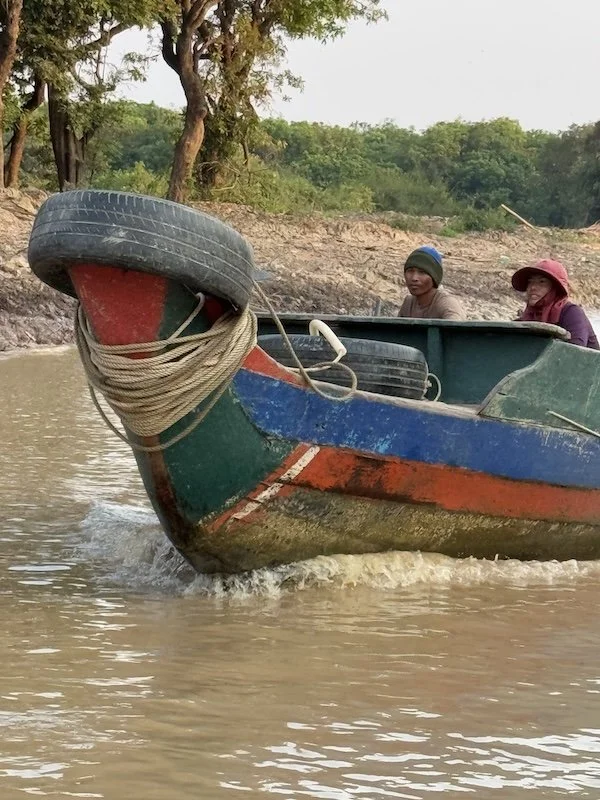
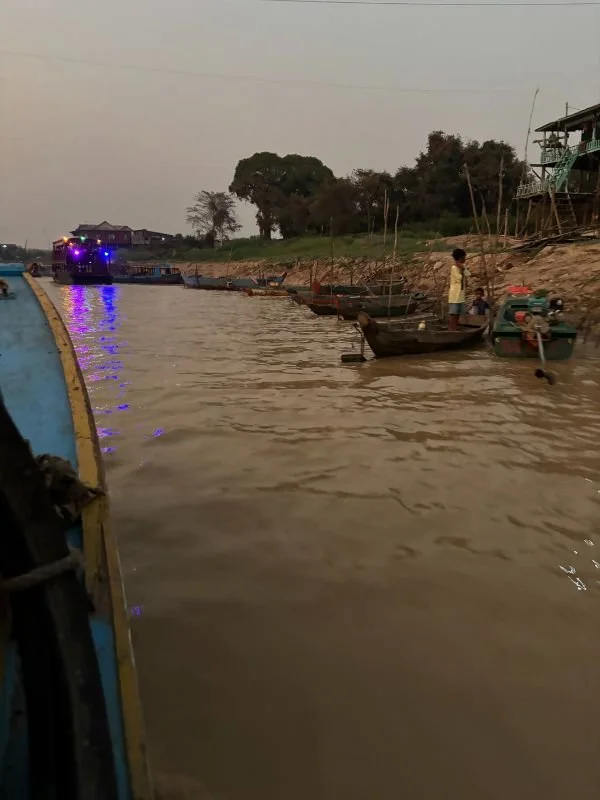
The best part of the day for me was the afternoon at Pampong Pluk “floating Village.” We traveled there in a long private sampan, piloted by a kind woman who knew the river well. She navigated muddy waters and shallow channels past many, many fishing boats tied up to the banks. Past tall stilt houses with few people visible but clothes drying on lines and sticks and cooking pots hanging on porches, and (to my great surprise and dismay) piles and piles of garbage piled underneath.
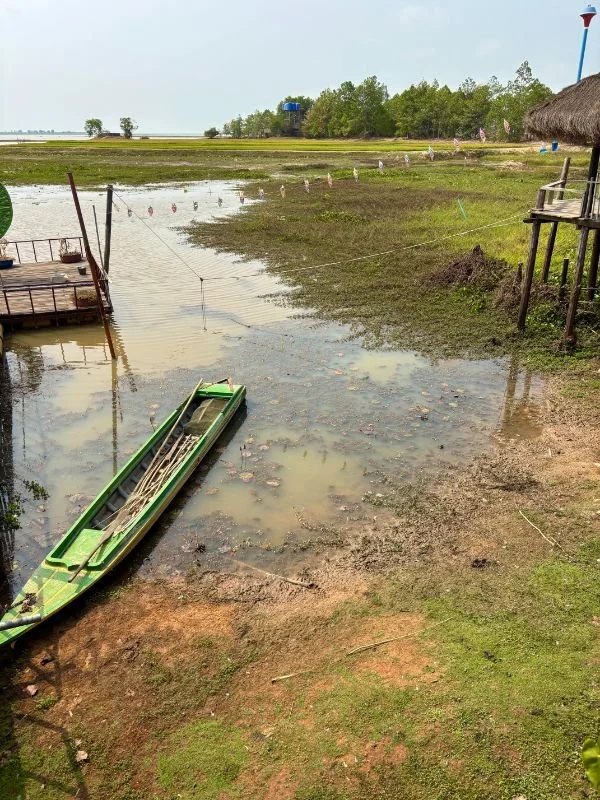
Hammocks were strung, mangy dogs wandered or slept in the middle of dirt roads, houses were in various stages of disrepair: old wooden stilted structures that looked as though a gentle breeze could knock them over in a moment. When tides are high, the water levels rise above the banks so high that the houses appear to be floating; thus, the name “Floating Village.”
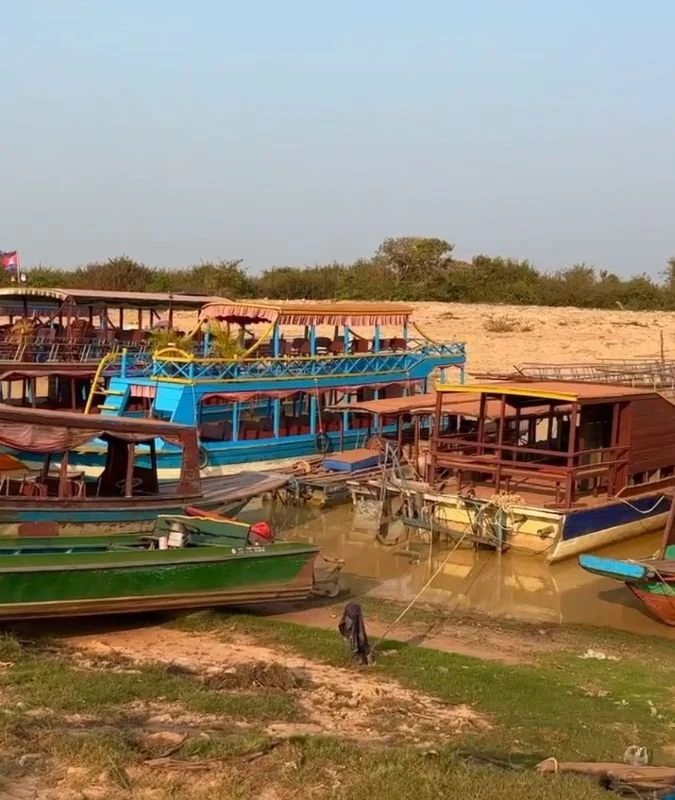
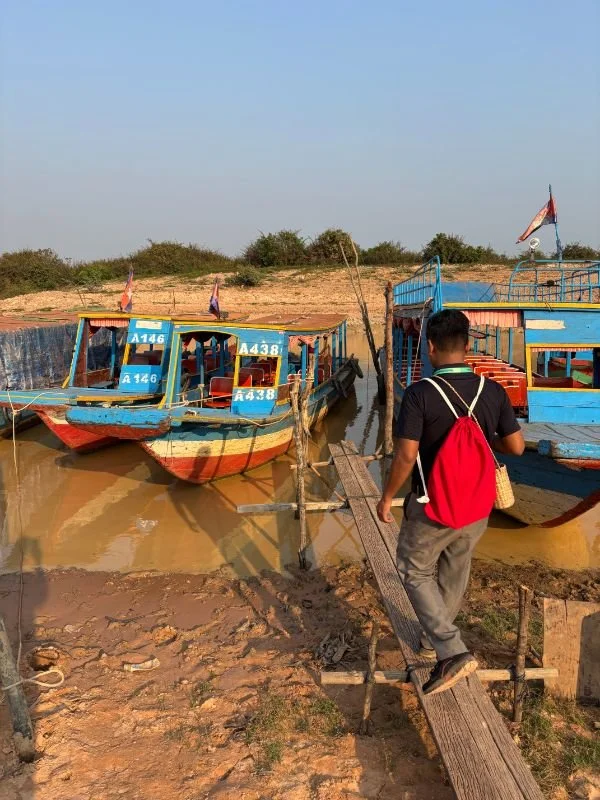
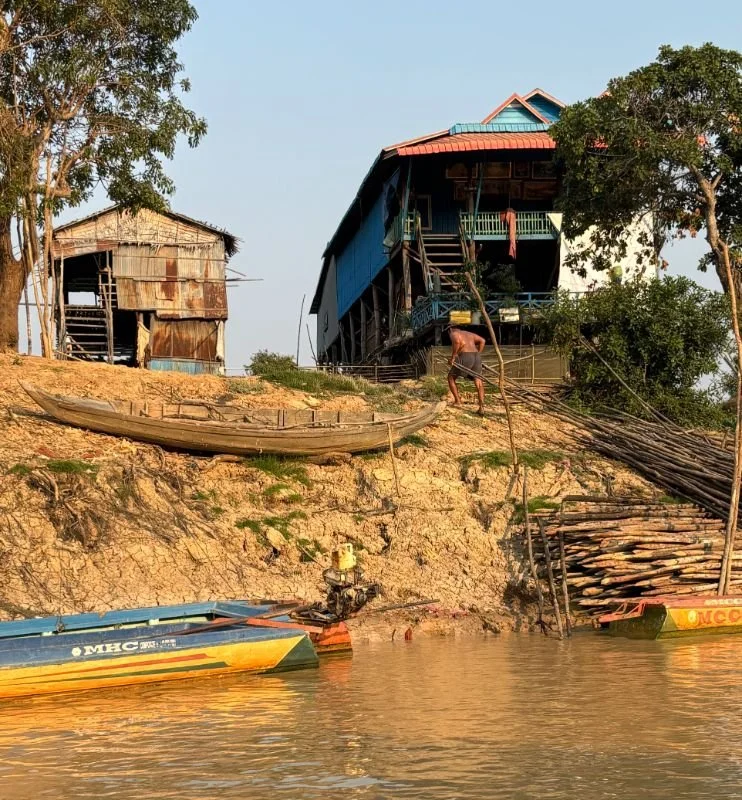
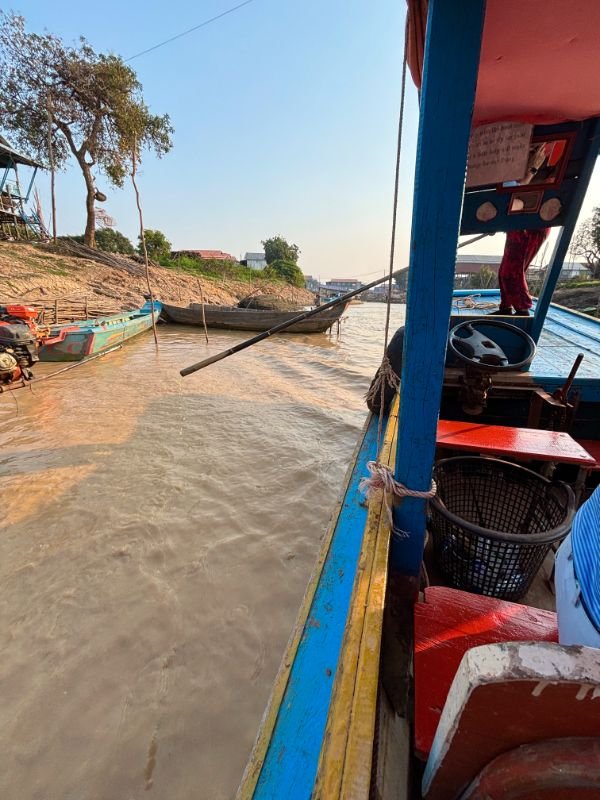
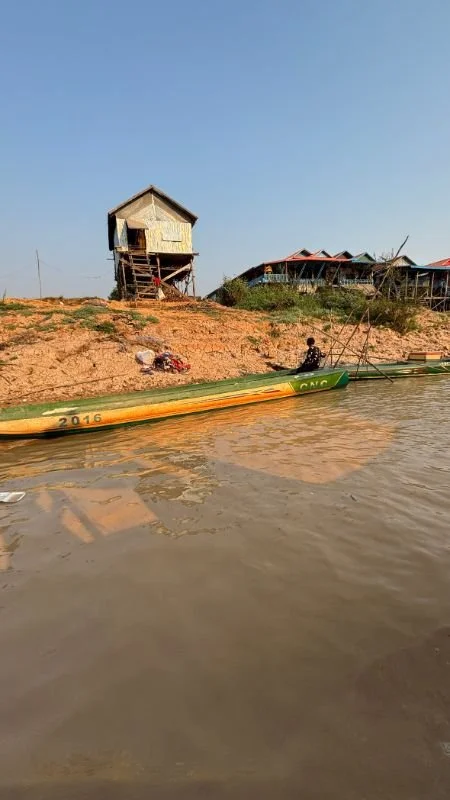
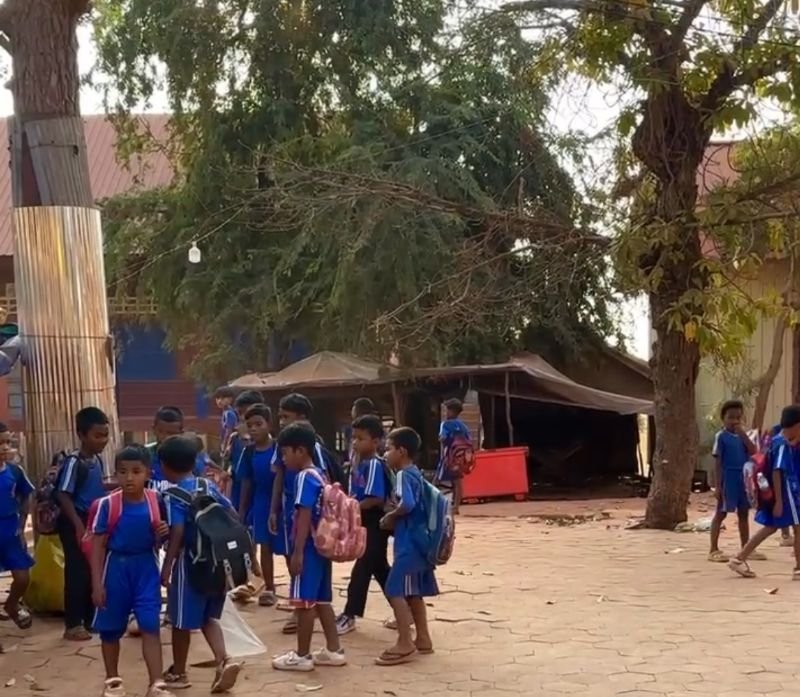
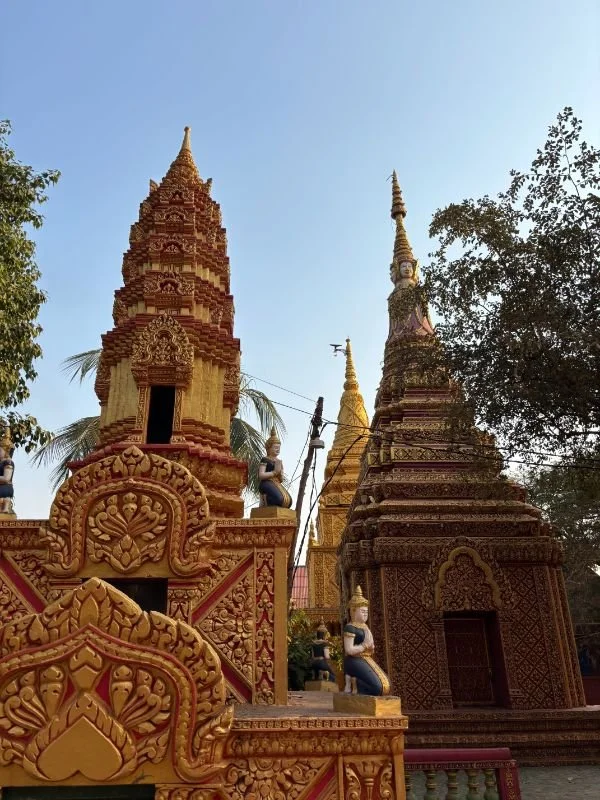
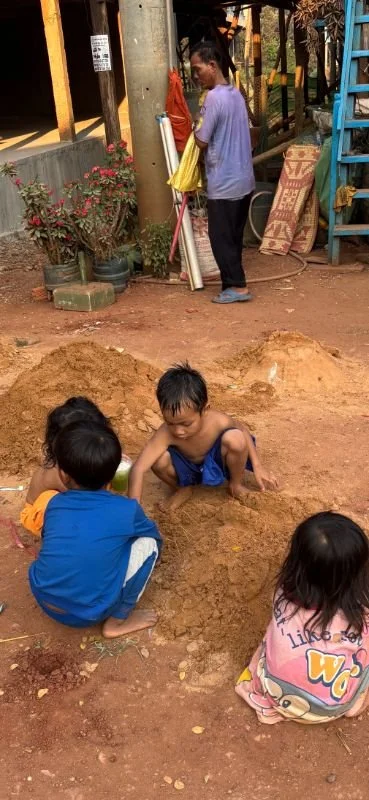
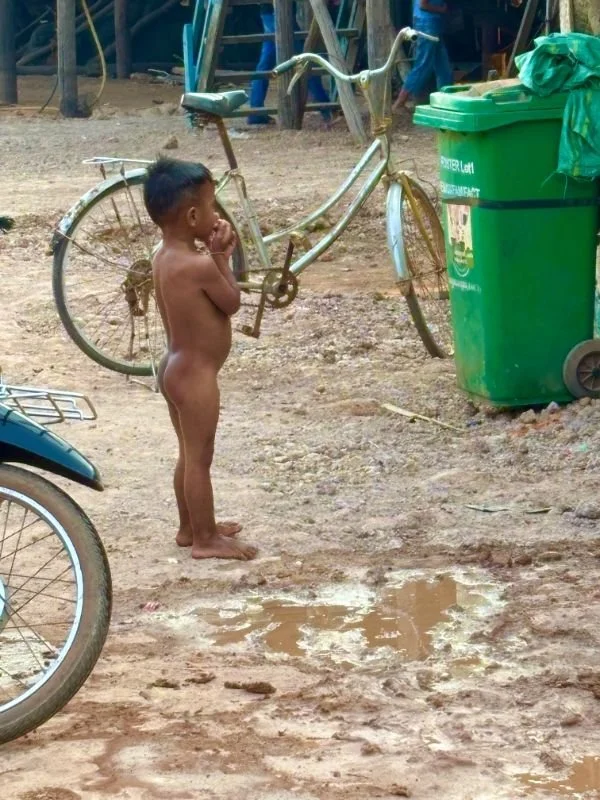
We arrived at the floating village just as children were being let out of school located in the local temple. Many began clamoring around us, begging and trying to sell us pencils and trinkets. We spent an hour or so walking the hard-packed clay streets, marveling at how happy the children were — many of them naked or barely clothed — running along the road, playing in piles of dirt and oblivious to us, chasing scruffy dogs.
Outside the homes on stilts, we saw makeshift gardens in old tires, torn fishing nets hanging from bamboo beams, and the most surprising thing of all: a mobile 7/11 tuk-tuk selling bamboo sticky rice, candy, vegetables, pots and pans, string, and everything else the people in the village might need.
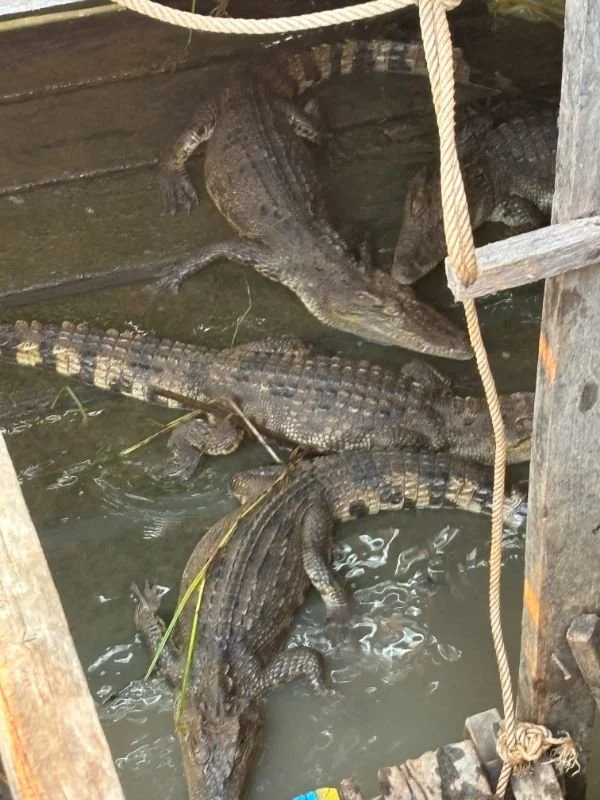
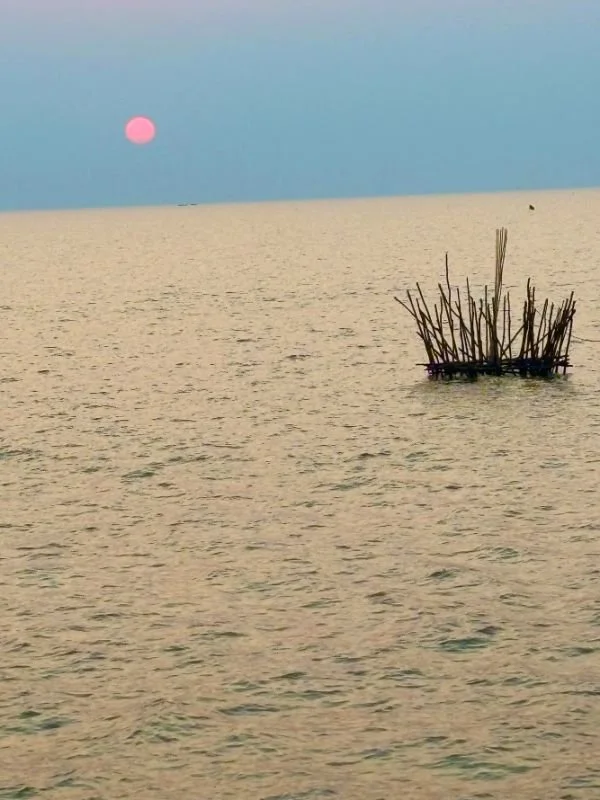
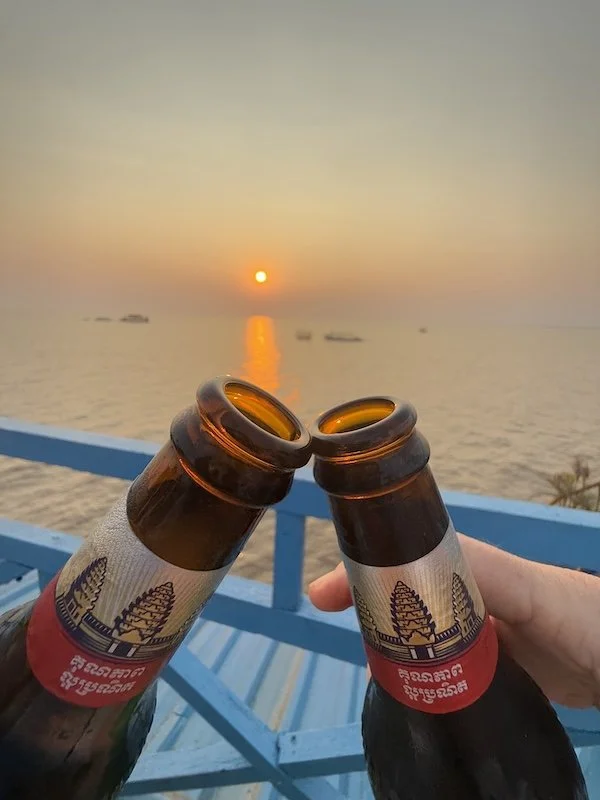
Around 5 pm, we walked back to the pier and boarded the sampan and motored through the muddy channels to Tonle Sap Lake, where we docked at a floating restaurant filled with tourists and school kids, all taking plastic seats along the railings to get the best sunset views. Ray and I squeezed in, grabbed cold local beers, and while we waited for the glorious sunset, we watched crocodiles in a water pen below deck.
Night came quickly after the sunset, and we motored slowly through the creeks and canals to our waiting car and driver. Then back to the hotel, arriving well after 8 pm. Such a long and tiring day, but so full of fascinating sights that I wouldn’t have missed it for anything!
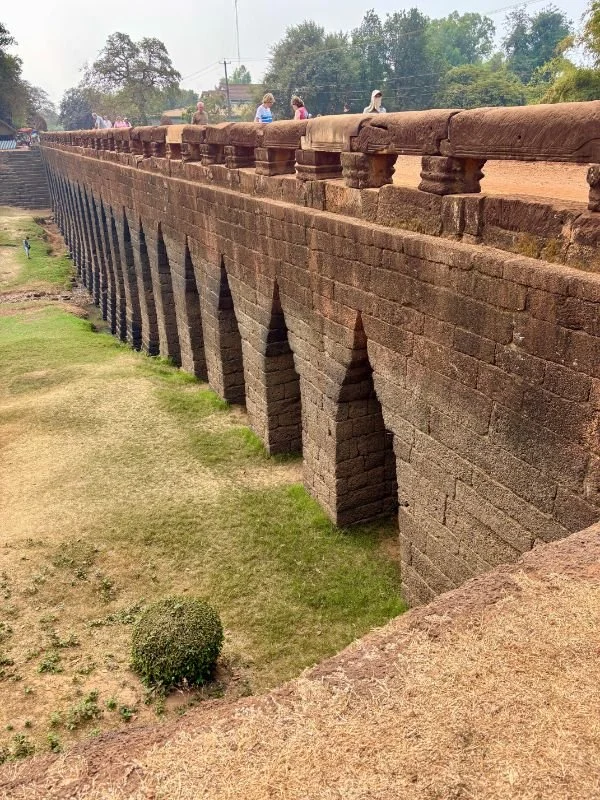
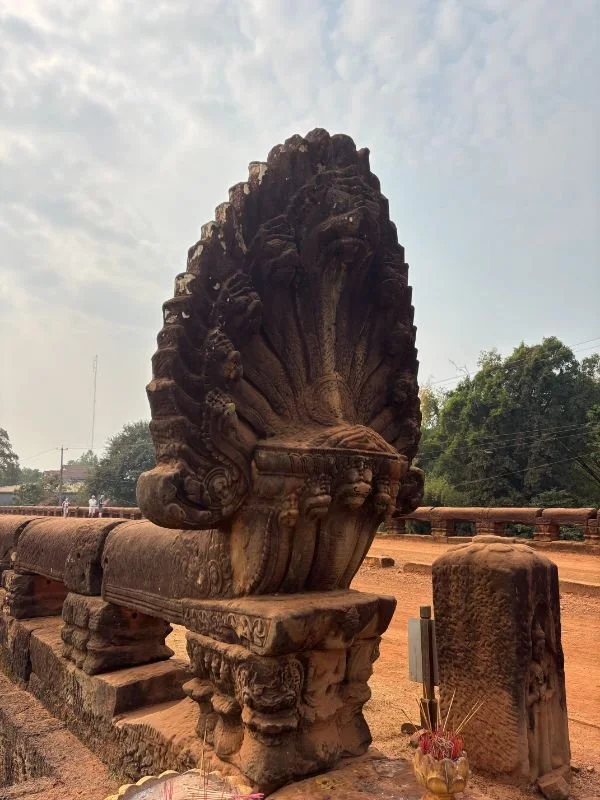
Today’s agenda was concise: drive 6 hours southeast across the country to Phnom Penh, stopping at an ancient bridge, Spean Kamong Kdel, a 12th-century bridge built with advanced architectural engineering for its time, with more than 20 narrow stone archways. It’s a marvel that it stands intact at all today.
We arrived in Phnom Penh, the capital of Cambodia, mid-afternoon, having learned much about this vibrant, bustling city with its French colonial architecture blended with the Khmer heritage from our guide on the long drive. Founded in the 14th century, it was originally a safe haven for those escaping Siamese aggression and a major religious and (later) political center.
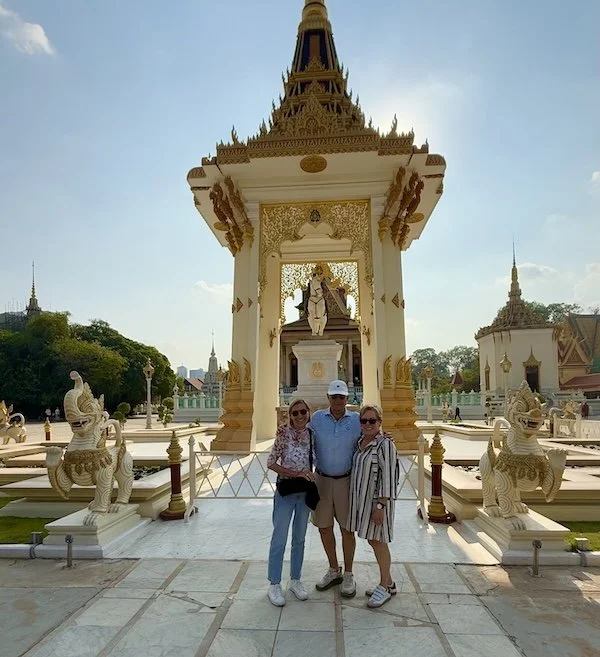
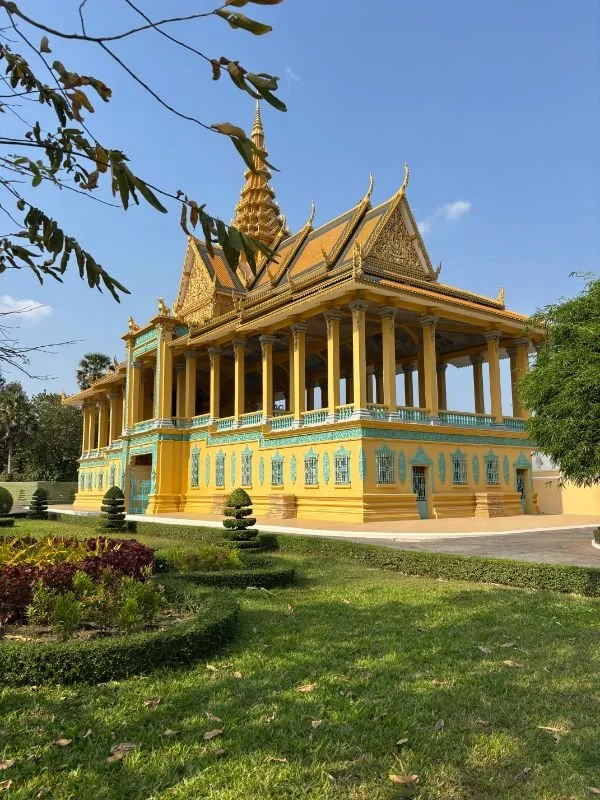
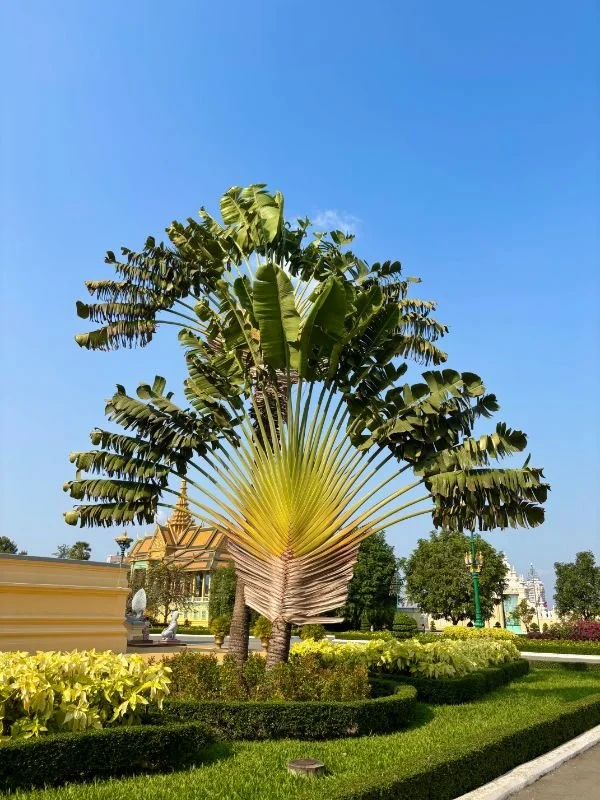
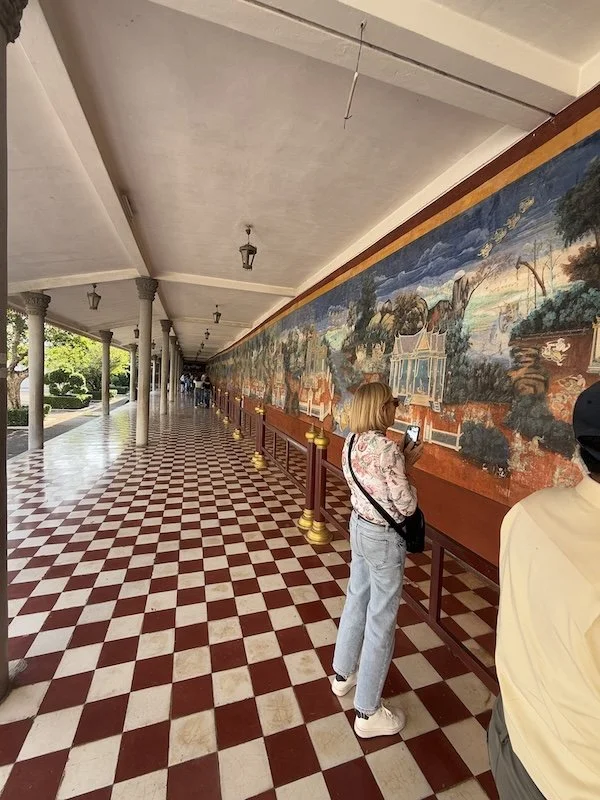
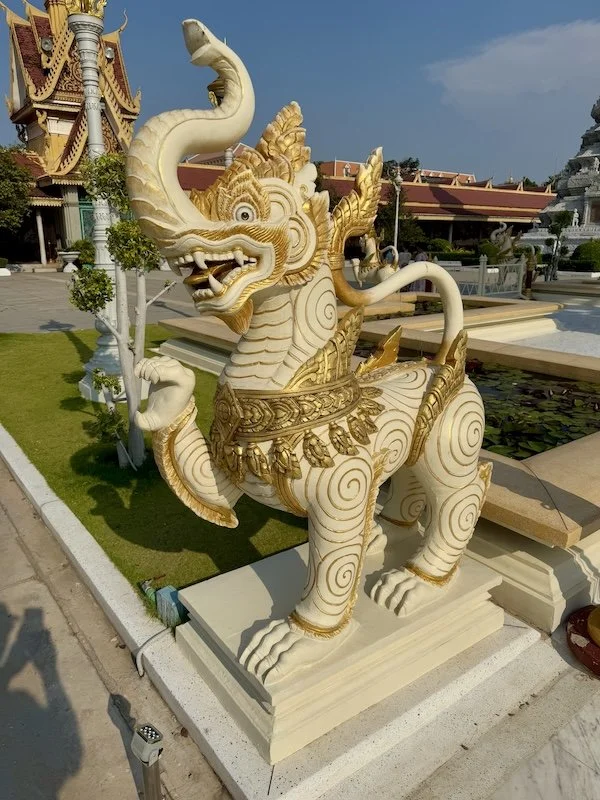
It was sweltering when we left our air-conditioned car and walked onto the grounds of the Royal Palace, a majestic gilded structure where Cambodian King Norodom Sihamoni lives today. We ventured in and out of various rooms and temples. One of the most impressive was the Silver Pagoda, named for its silver floor, covered with 5 tons of gleaming silver (but now mostly covered with rugs for protection). Over half of the precious artifacts that once resided here have been plundered, but many spectacular jeweled objects still remain and can be viewed. No photos are allowed, so these precious treasures remain only in my mind.
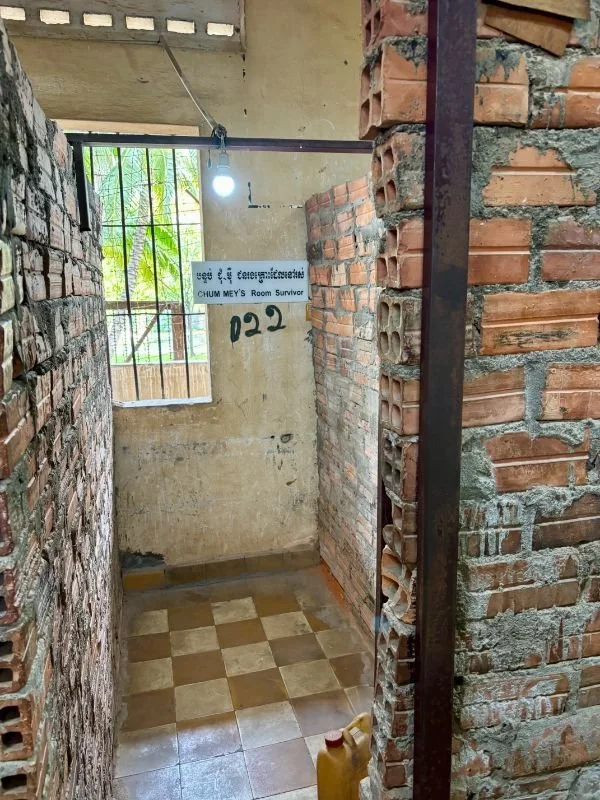
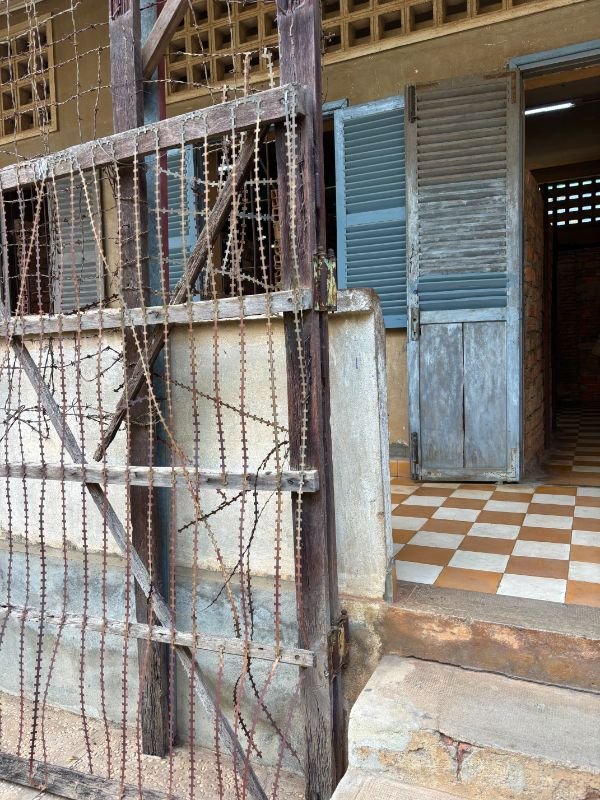
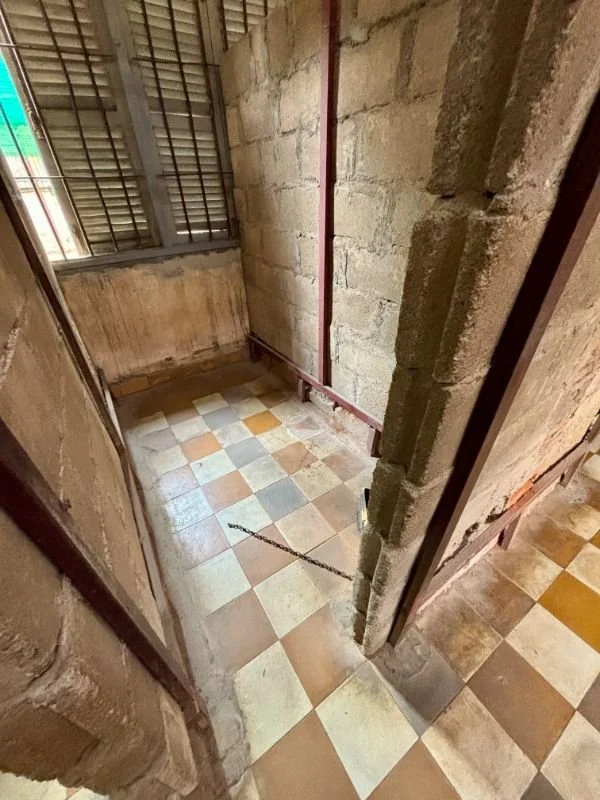
Instead of visiting what we thought would be a rather uninteresting site–the Sosoro Museum, highlighting Cambodia’s monetary history–we asked the guide if we could see the Tuol Sleng Genocide Museum. It was one of the most powerful and sobering places we had visited thus far on our Southeast Asian journey. Once a high school, it was taken over by Pol Pot and turned into a prison called Section 21 (S-21), a secret detention and torture center.
Between 1975 and 1979, 12 to 20 thousand people were imprisoned here; most of the handful of survivors were later sent to the Killing Fields, on tomorrow’s itinerary. Like the Nazis, the Khmer Rouge took thousands of harrowing photographs of the prisoners, many showing before and after torture conditions. In addition, detailed records were kept of torture and barbarian acts on men, women, and children. These black and white photos of prisoners — some from Australia, New Zealand, and the US — lined almost every prison cell we visited. The museum also displayed interrogation and gruesome torture rooms with original equipment intact. We all found this experience to be emotionally intense and overwhelming.
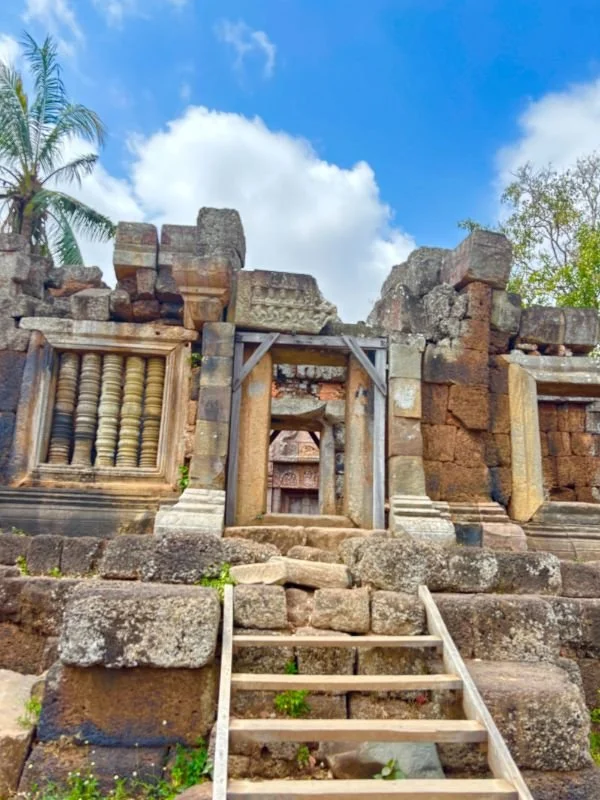
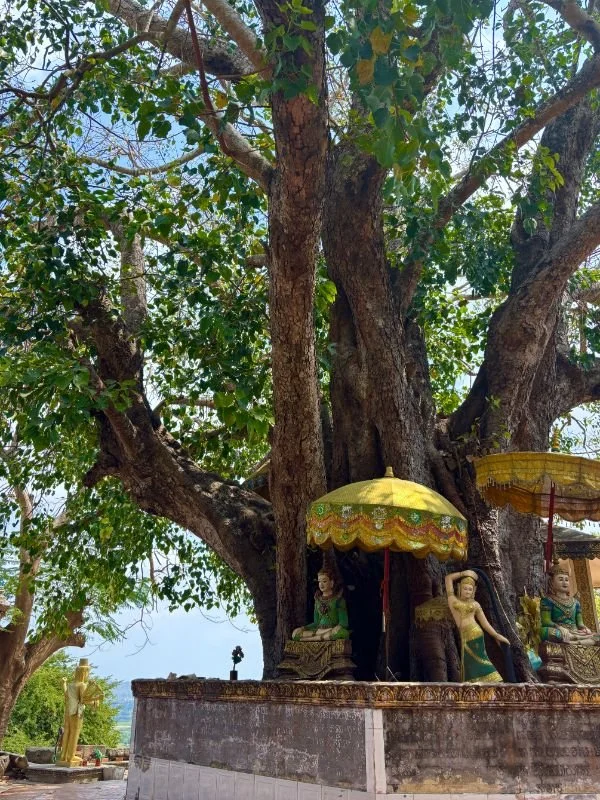
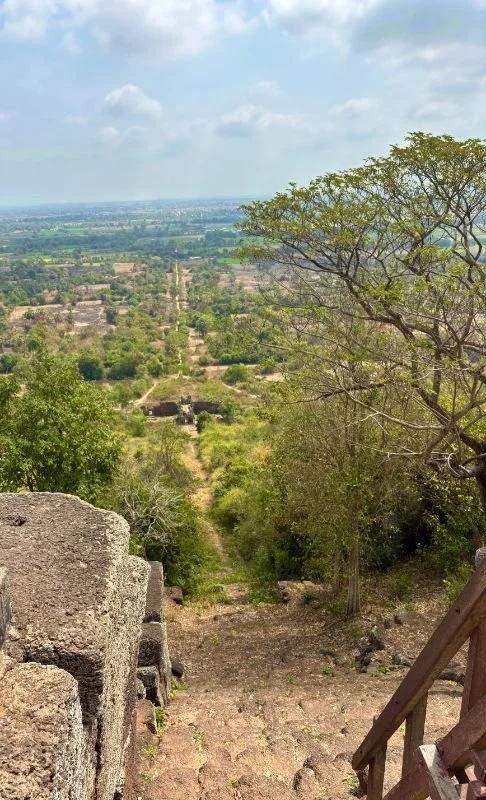
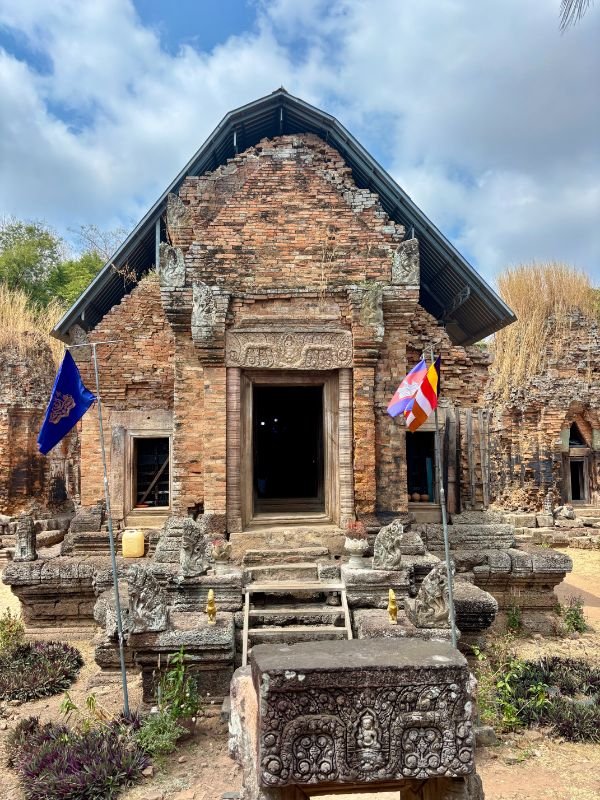
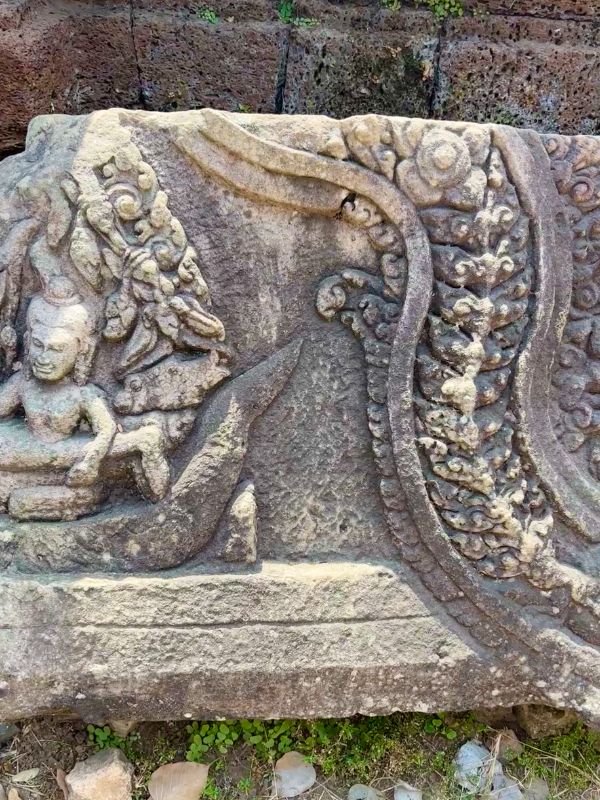
On our last full day in Cambodia, we left Phnom Penh and traveled about an hour south to Ta Prohm and the well-preserved remains of this ancient temple constructed about 1200 by Angkor’s famous king Jayavarman VII. In a serene lake setting, it was a sanctuary for Hindu deities. From there, we drove to Phnom Chisor, an 11th-century temple in the Angkor era, with a temple built on the crest of a hill with panoramic views of the green countryside. Coco, Ray, and I climbed the 503 steps to see this stunning view. Today, the temple (with a library, monks’ quarters, and a school) is active, and Buddhists make pilgrimages here on religious occasions.
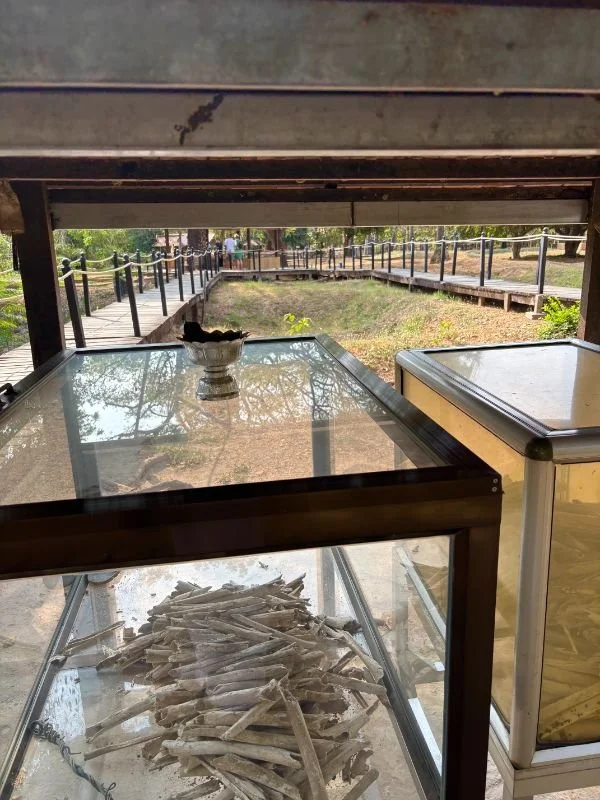
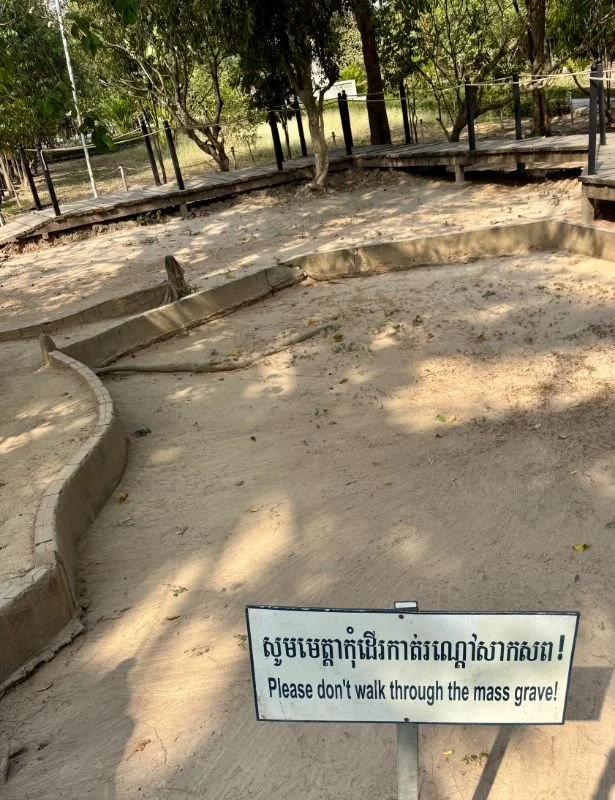
Just as the Genocide Museum hadn’t been on our itinerary, neither was The Killing Fields. But we asked to see it, so our guide graciously substituted it for a visit to a zoo! We’d all seen the 1984 Oscar-winning movie with Sam Waterston, who plays Sydney Schanberg, a New York Times reporter who arrives in Phnom Penh in 1973 to cover the civil war between the Cambodian national army and the communist Khmer Rouge. The locale itself, Choeung Ek, was a former orchard and is viewed by traversing fields and graves via boardwalks.
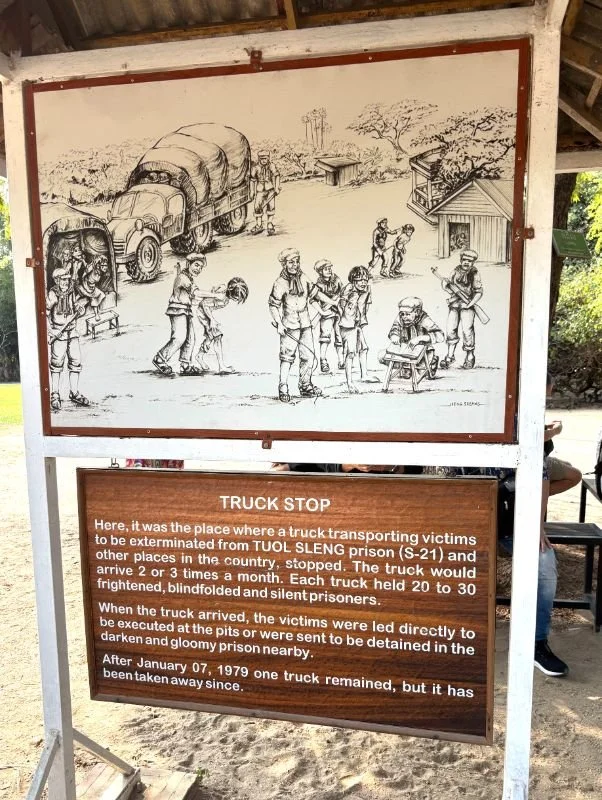
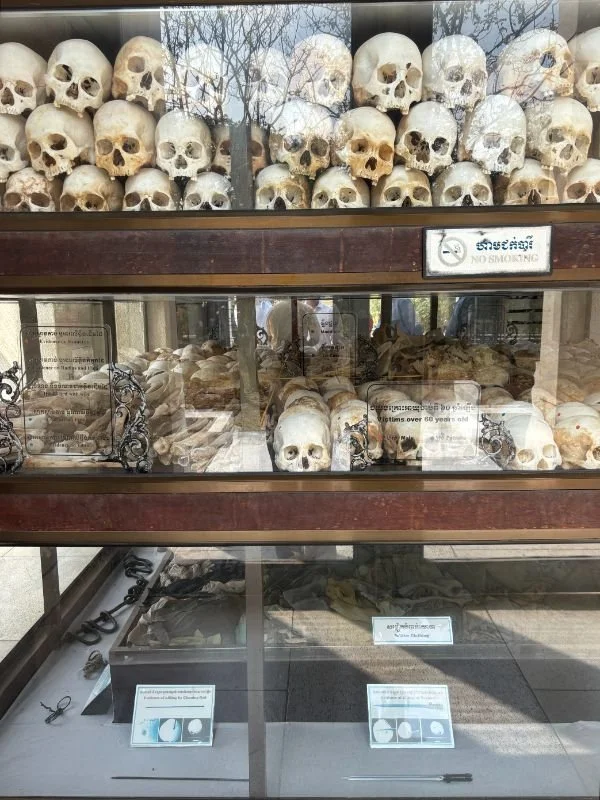
We stopped along the paths to read explanations and view shallow graves as well as boxes of bones, skulls, and clothing: remains of 8,985 people found (some of them still bound, gagged, and blindfolded). This is where 20,000 prisoners on S-21 (which we toured on our first day in Phnom Penh) were taken and killed, usually with pickaxes because bullets were too precious.
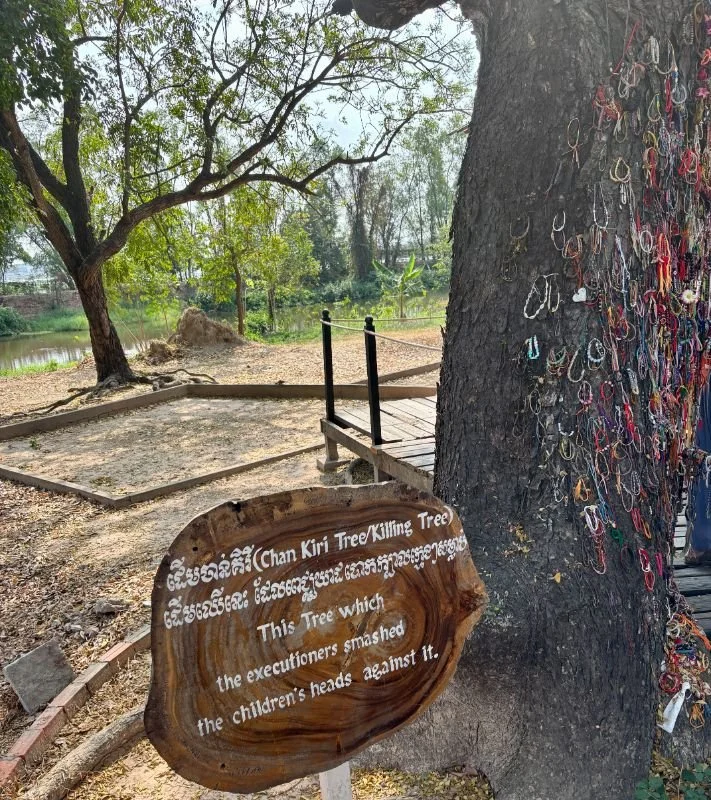
Especially gut-wrenching were the bracelet-adorned “killing trees,” where babies and children were brutally thrown against. Another chilling reminder was a memorial stupa with 800 skulls arranged by sex and age. This site was one of the most terrifying museums I’ve ever seen, and its visual images will probably stay with me forever.
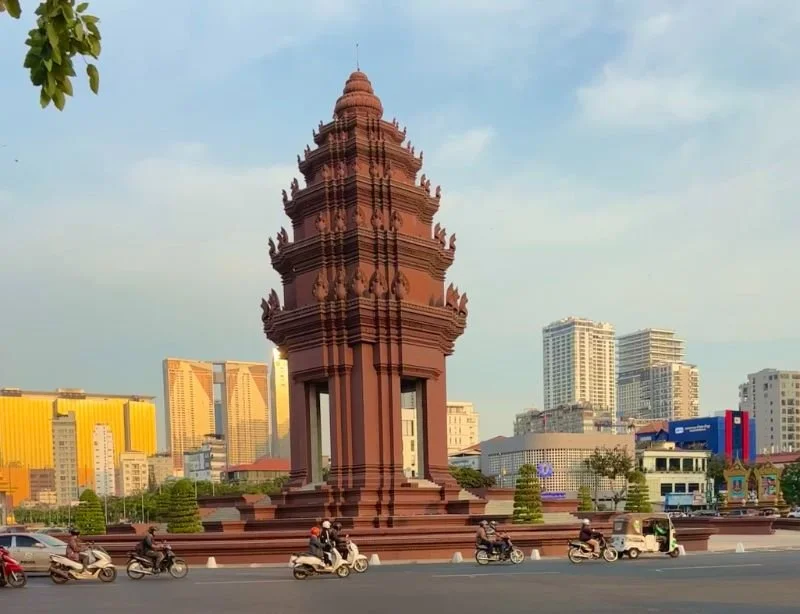
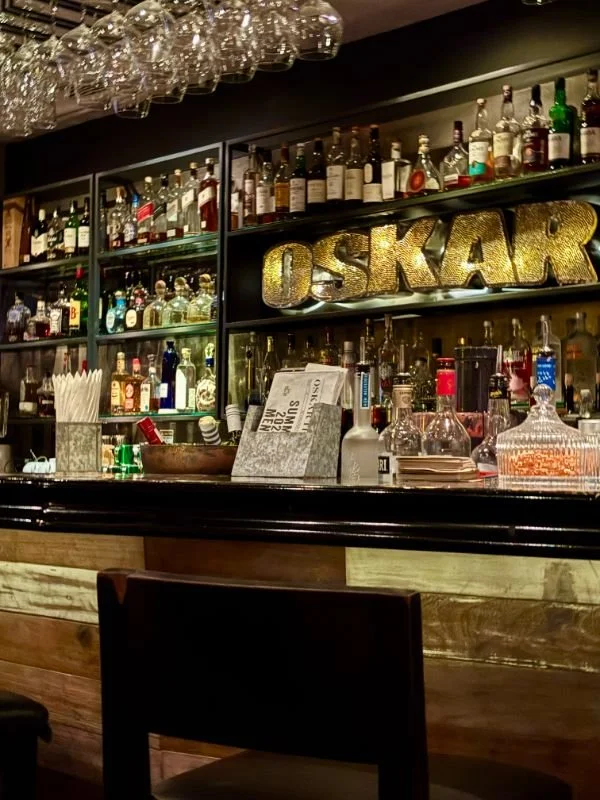
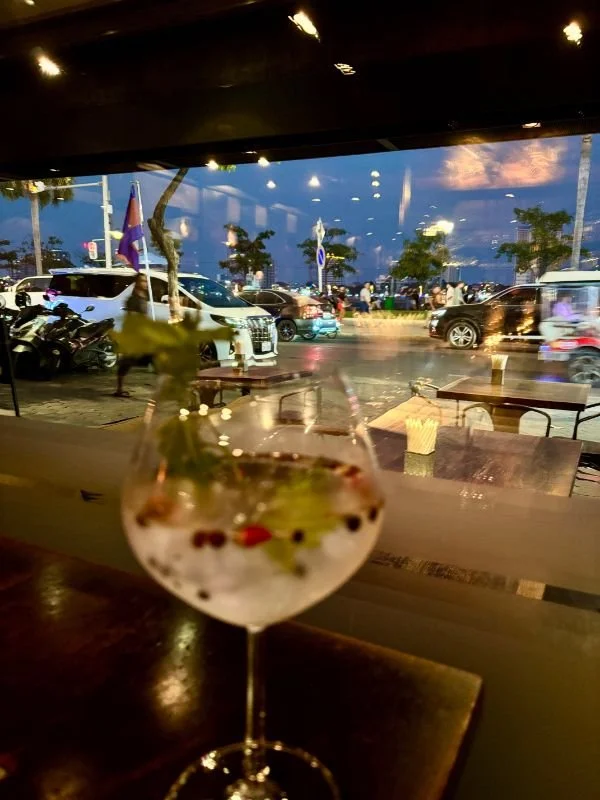
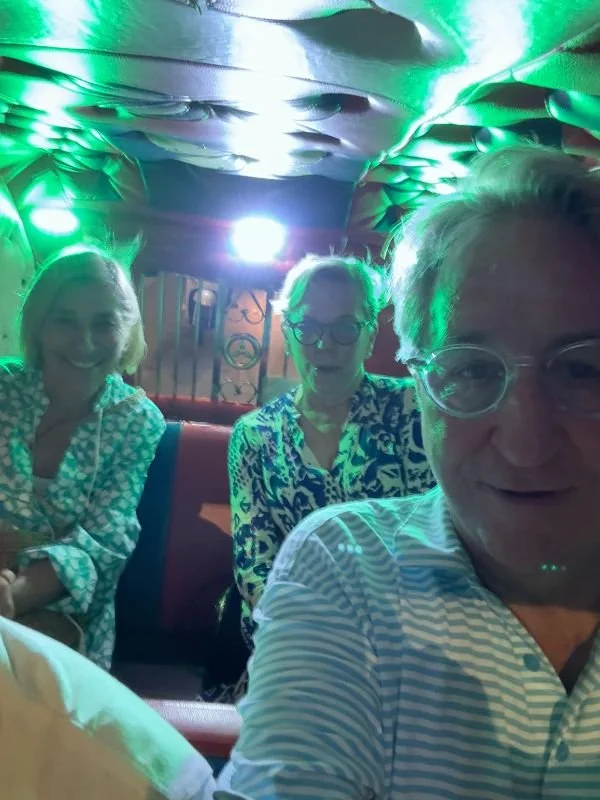
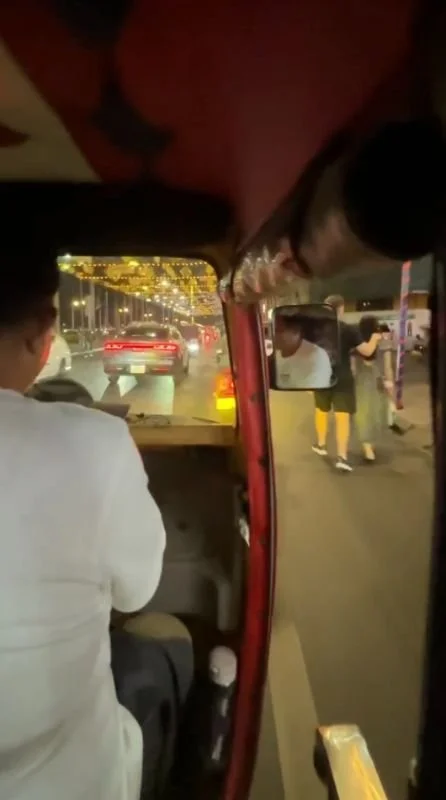
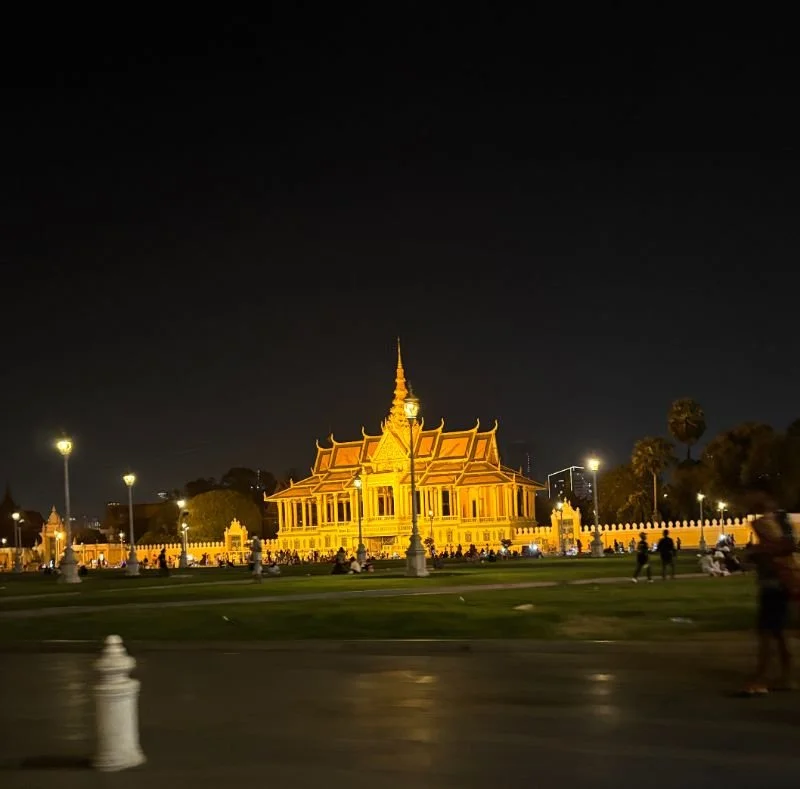
Our last night couldn’t have been more different emotionally and visually. We walked to the vibrant Night Market, navigating the busy streets of Phnom Penh with Google Maps to a French/Cambodian restaurant, Oskar Bistro. After lingering over a delicious dinner and feeling too full and tired to walk, we took a crazy tuk-tuk ride back to our hotel past the shimmering lights of the Royal Palace and through the brightly-lit streets of Cambodia's largest city.
Our visit to Cambodia was a journey through stunning beauty and intense sorrow. In Siem Reap, the awe of ancient temples like Angkor Wat and the quiet rhythm of life in floating villages reveal a culture rich in history, spirituality, and fortitude. Yet this beauty is inseparable from the country’s more recent violent past. Visits to Tuol Sleng Genocide Museum and the Killing Fields crushed me with the immense suffering of the Cambodian Genocide — a stark reminder of the violence and terror the country endured. But the whole trip left me with a deep respect for the resilience and dignity of its people.