Bangkok: Just a Taste of Thailand
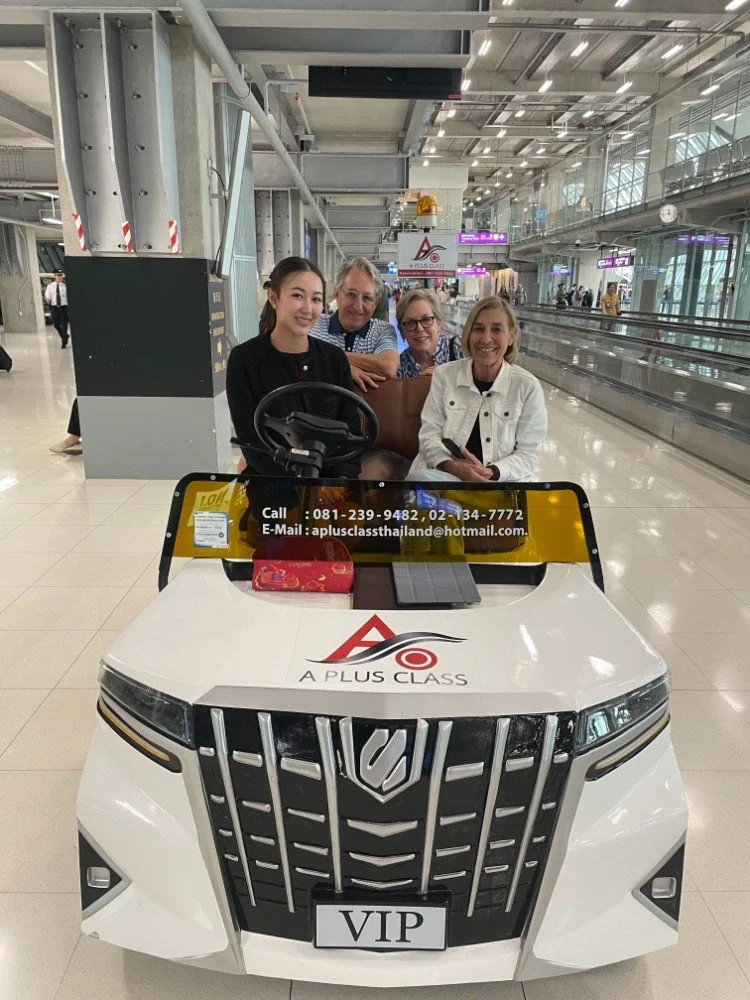
Cambodia was hard to leave, but the thought of visiting Thailand for a few days was exciting. When we arrived in Bangkok, we were unexpectedly met by two airport reps who whisked us away in a golf cart to immigration with no line. We sped to baggage claim to retrieve our bags, and finally through the nearly empty customs area to our waiting guide and a comfy van.
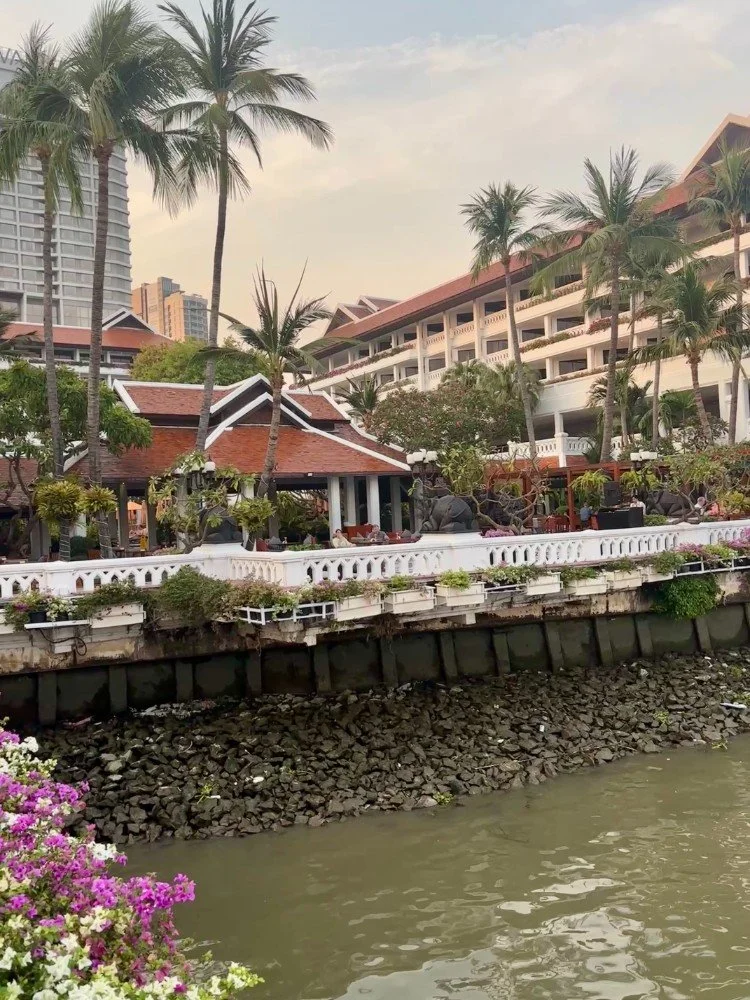
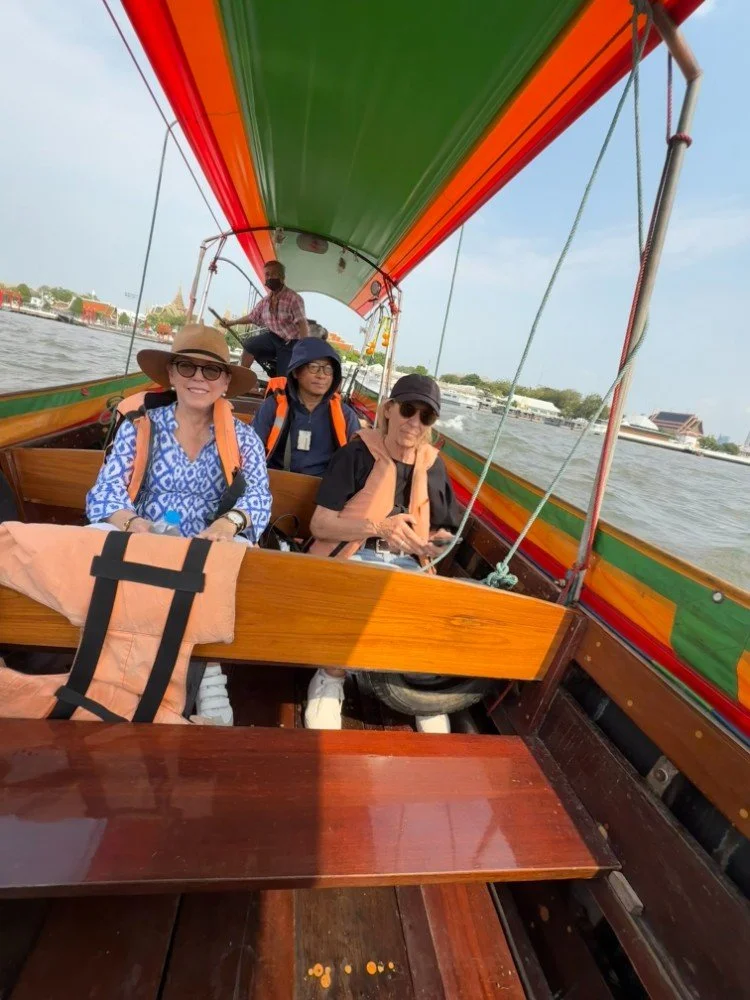
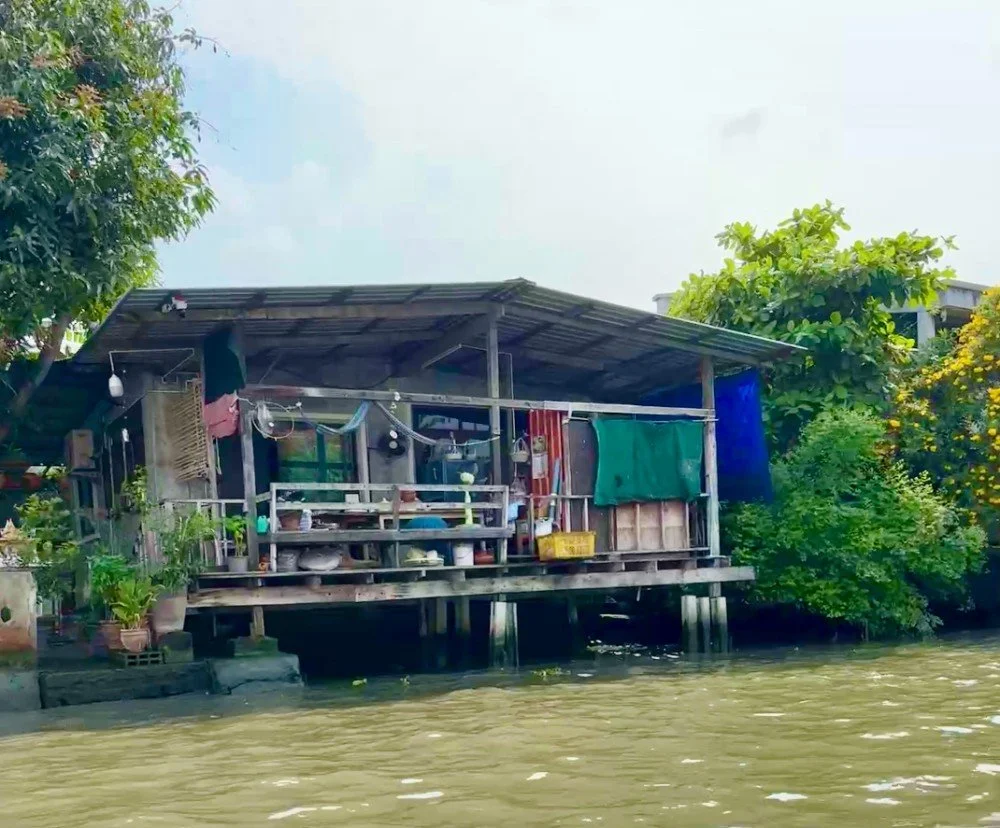
The Anantara Riverside Hotel was gorgeous, but we didn’t linger. A half-day introduction to Bangkok awaited. Ken, our guide, and Jun, our driver, transported us to the Chao Phraya River to board a traditional longtail boat (It could easily have held 20 people, but it took only us) to explore the canals of Bangkok, often called the Venice of the East. We were a little shocked to see the riverside houses that lined the polluted river. Most were shoddily constructed, filthy, and much garbage and debris floated in the river.
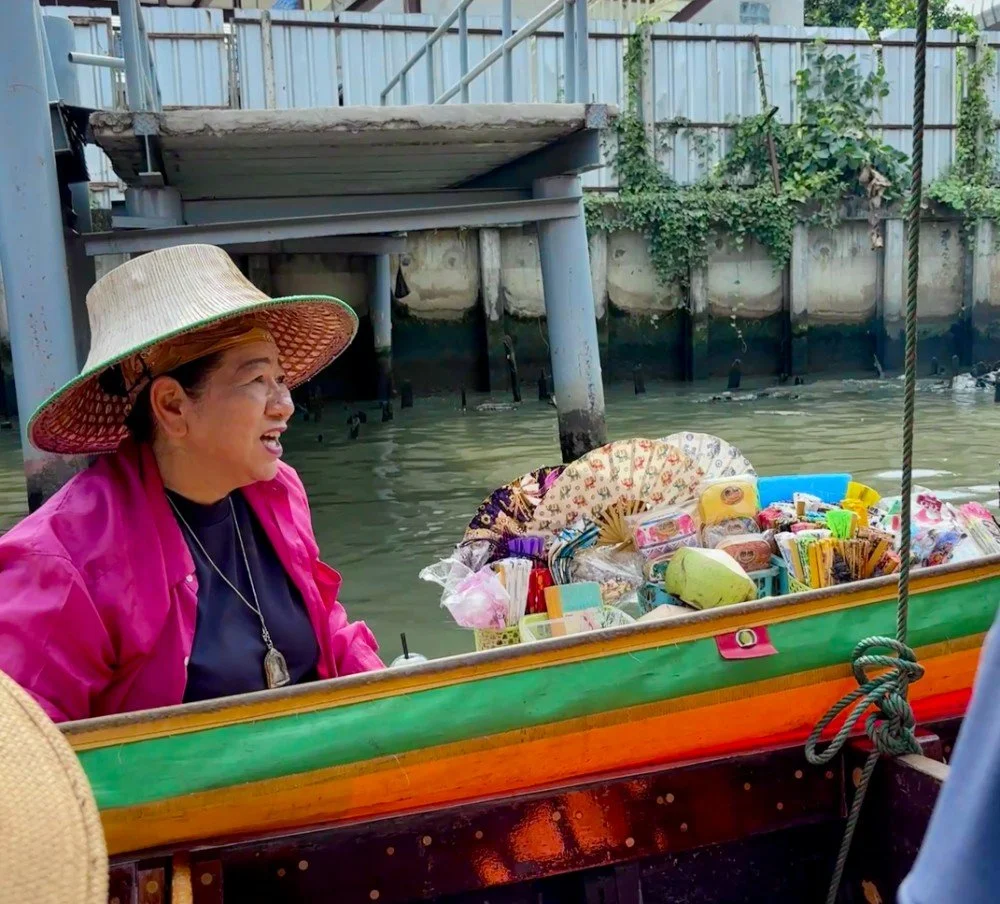
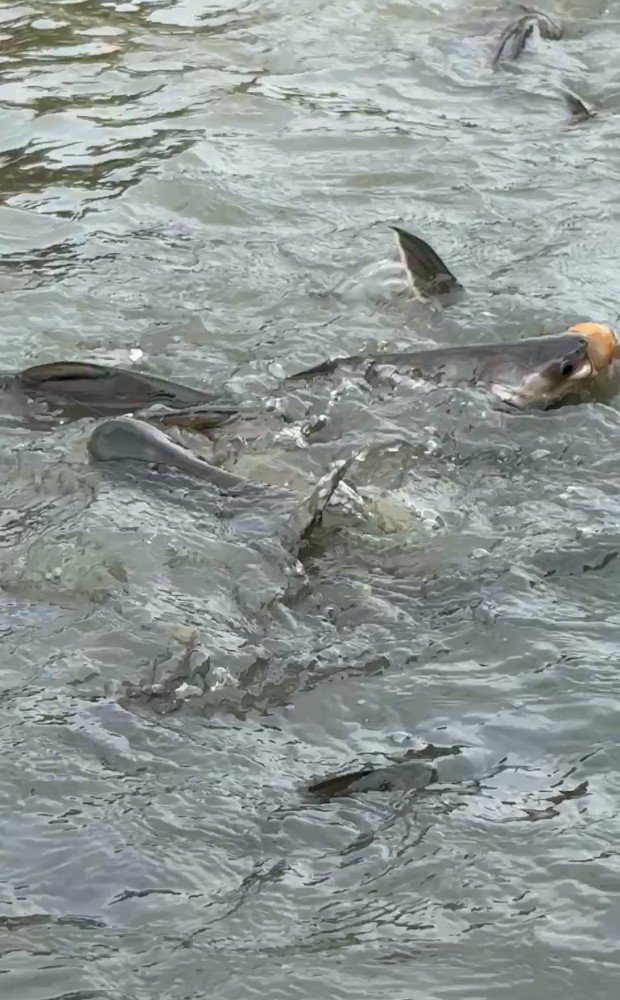
We were told that the river was once much more polluted, with hundreds of ferries, cargo ships, and commercial vessels, as well as wastewater runoff from riverside hotels, restaurants, and temples. But as we discovered later, the small canals seemed much browner and dirtier than the more open areas we visited later. On this canal experience, we fed huge local catfish that jumped from the water open-mouthed as we threw pieces of bread bought from small “grocery” boats that cruised up beside us.
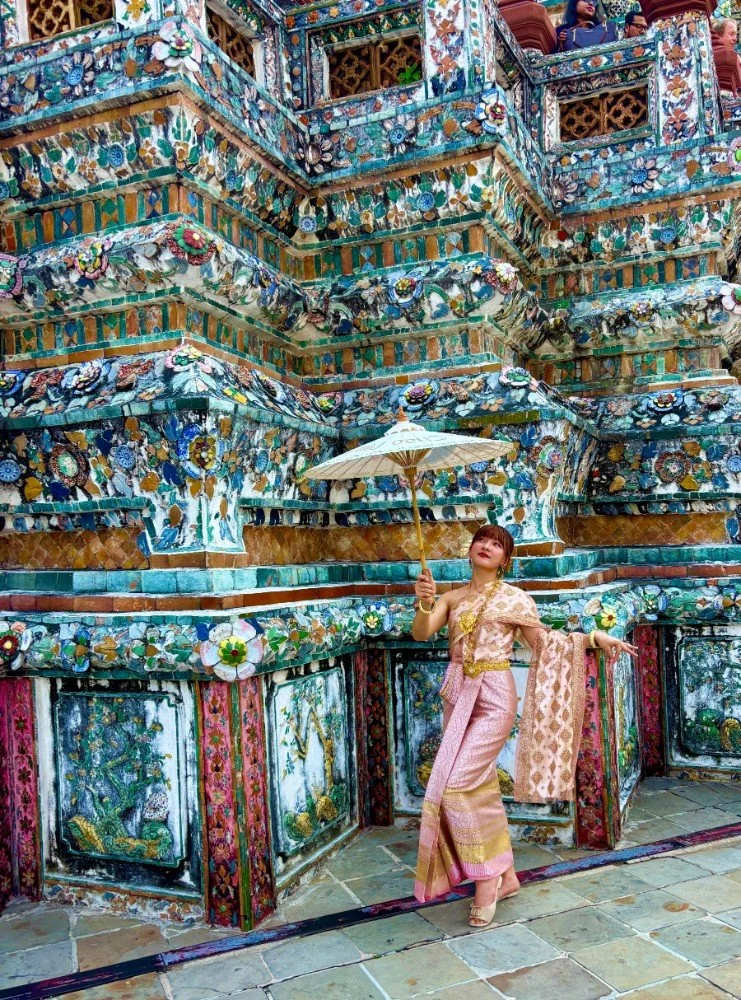
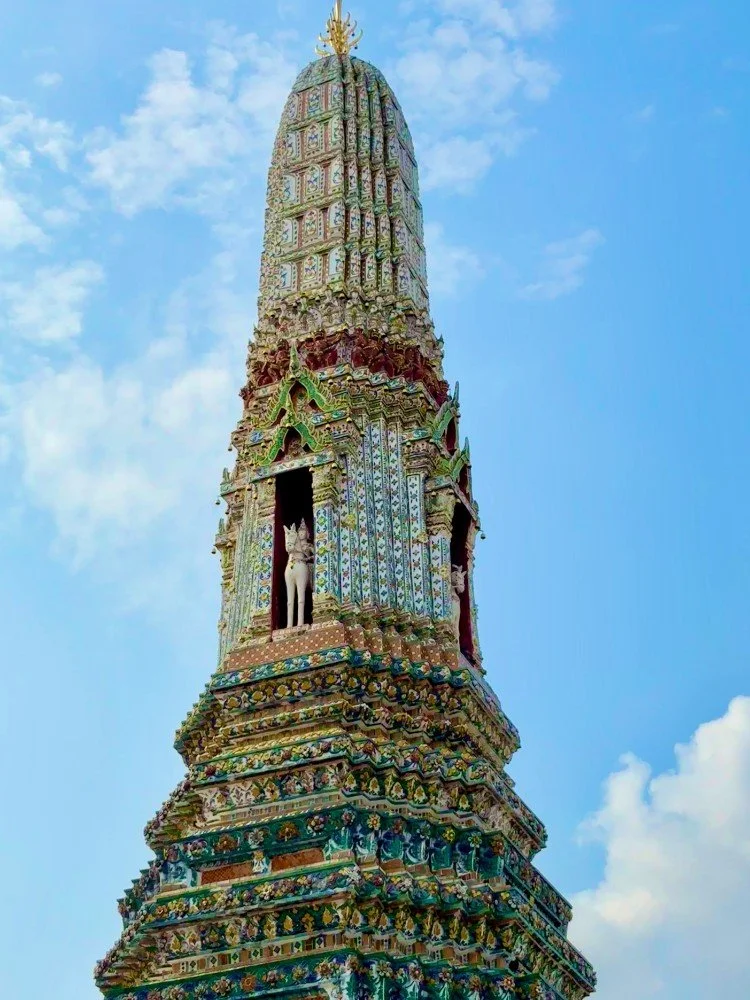
We disembarked at the iconic Wat Run Temple (the Temple of Dawn), constructed in the 13th century and known for its stunning Khmer-style spire, beautifully adorned with seashells and colorful porcelain tiles. Inside is a tiny emerald Buddha, perched up high. A monk discovered it encased in sandstone, and when he saw the green peeking out, he mistook it for emerald (hence the name), but it was actually jade.
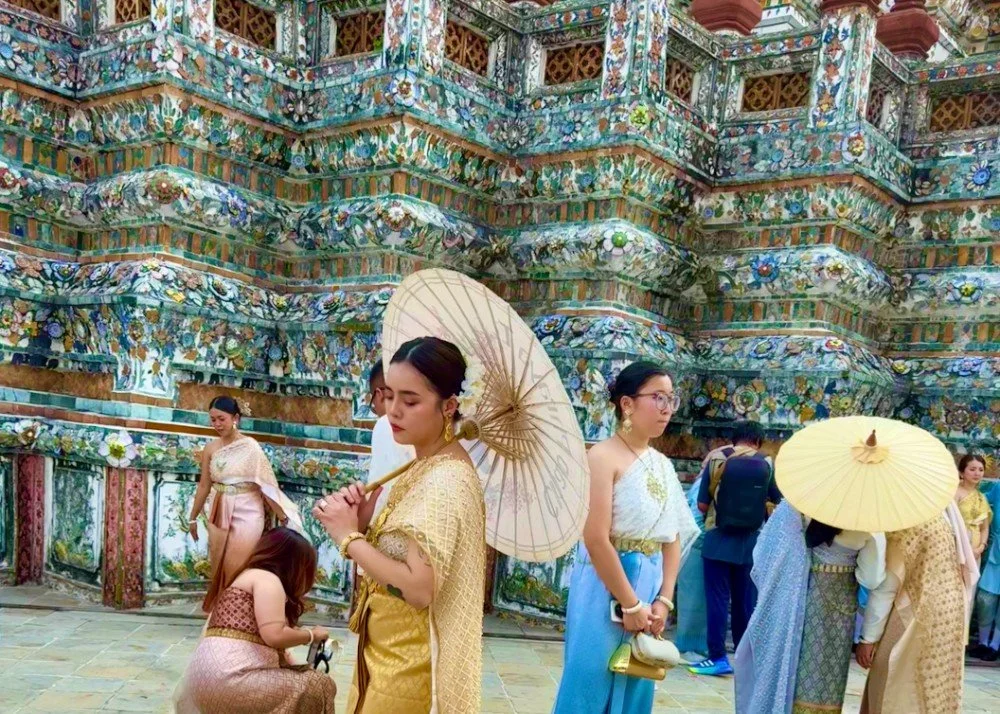
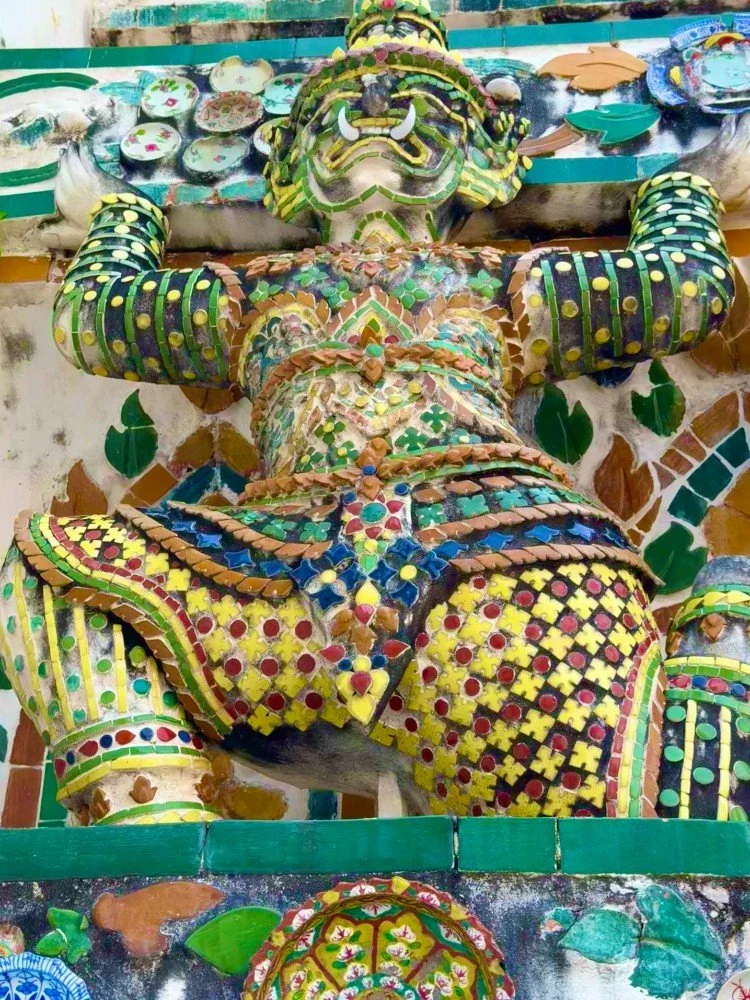
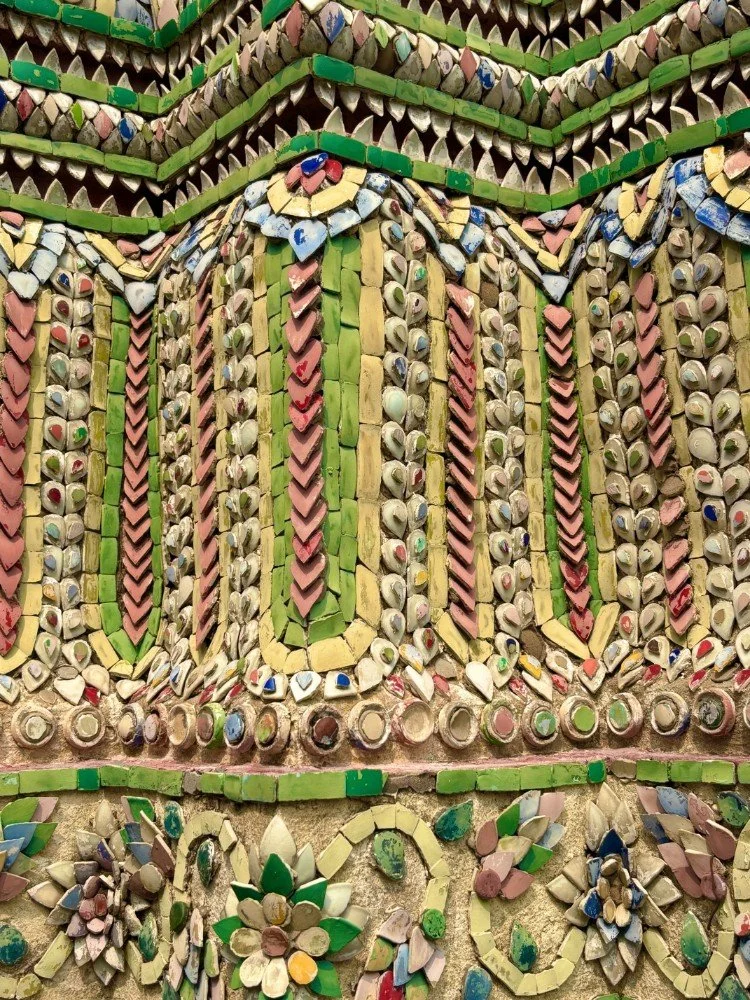
All the temple buildings are staggeringly beautiful — covered in vibrantly colored fragments of Chinese porcelain (plates, bowls, and other ceramic pieces that were damaged or unused and repurposed to decorate temples). Many women wearing silk chut thai (the traditional Thai dress) posed for photos in front of the colorful temples.
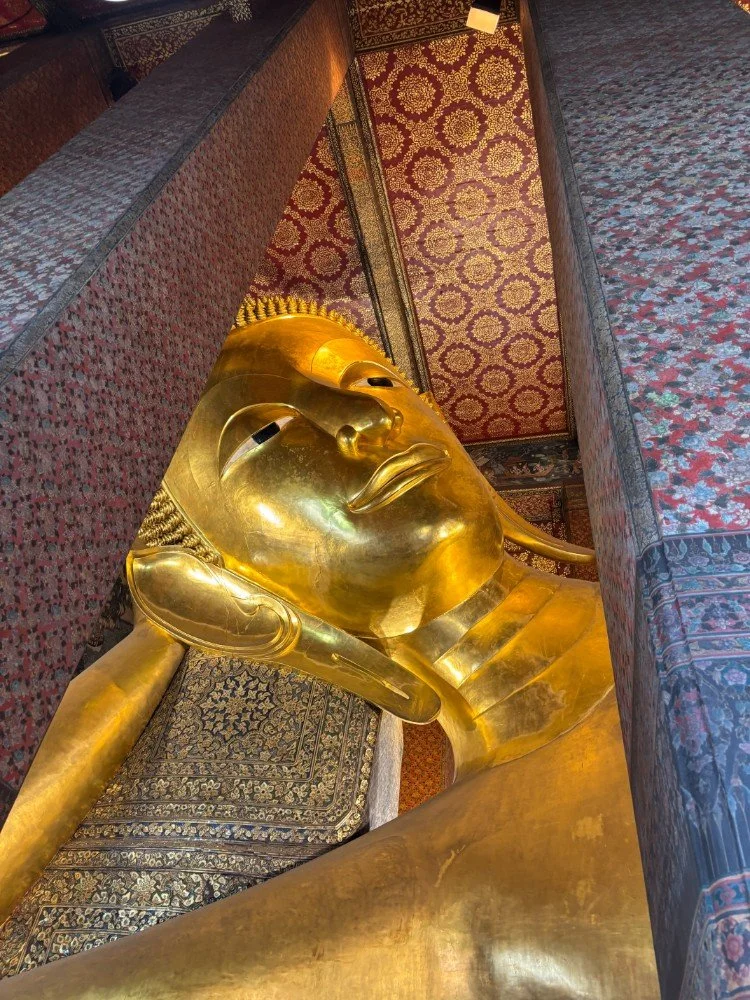
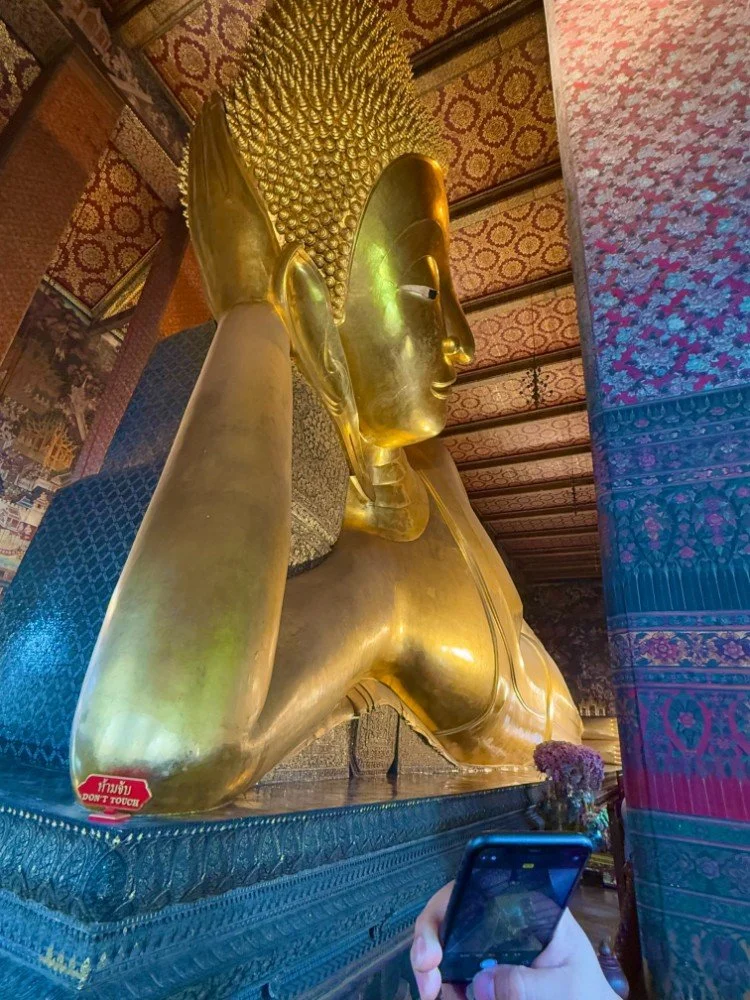
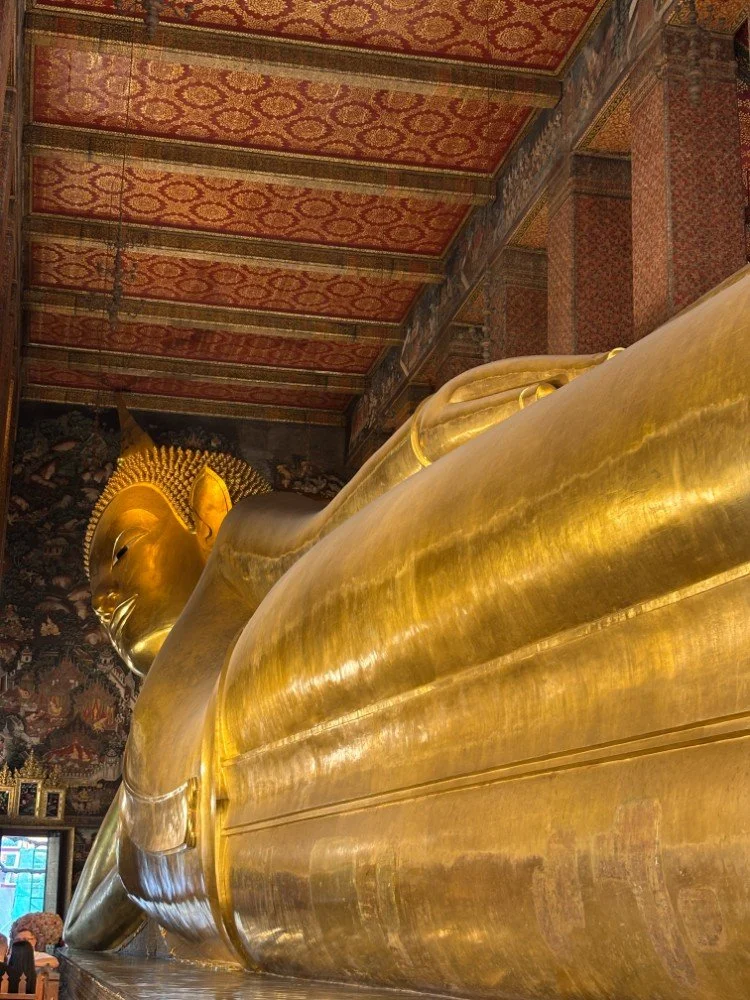
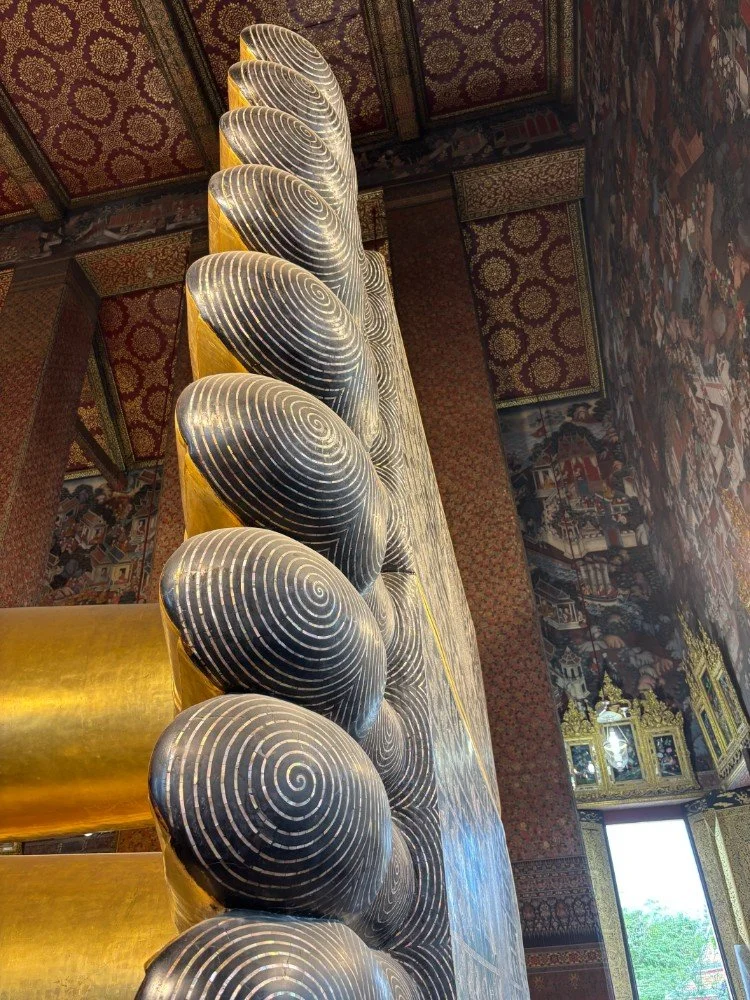
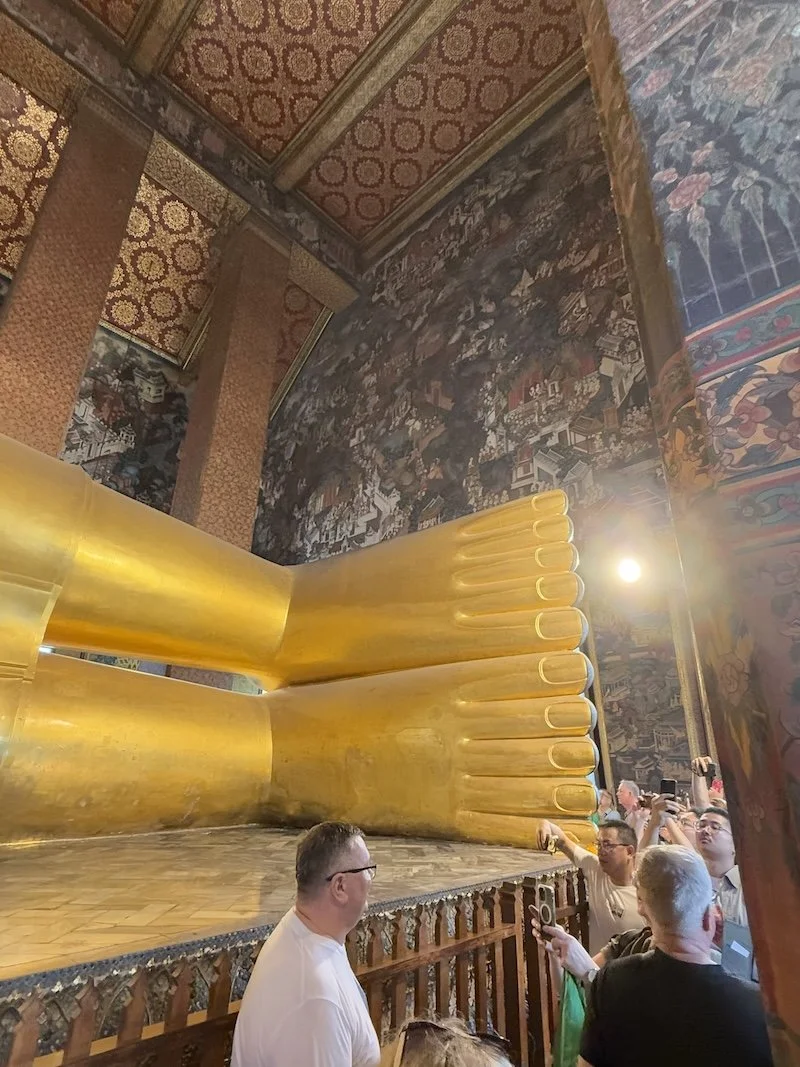
The second temple we visited was Wat Pho, one of Bangkok’s oldest and largest temples, home of the 151-foot-long golden reclining Buddha with mother-of-pearl covering the bottom of the feet. The sculpture was gigantic and beautiful, and tourists walked around it in respectful awe. 108 bronze bowls sit behind the Buddha, where visitors leave coins for good fortune and support of the temples.
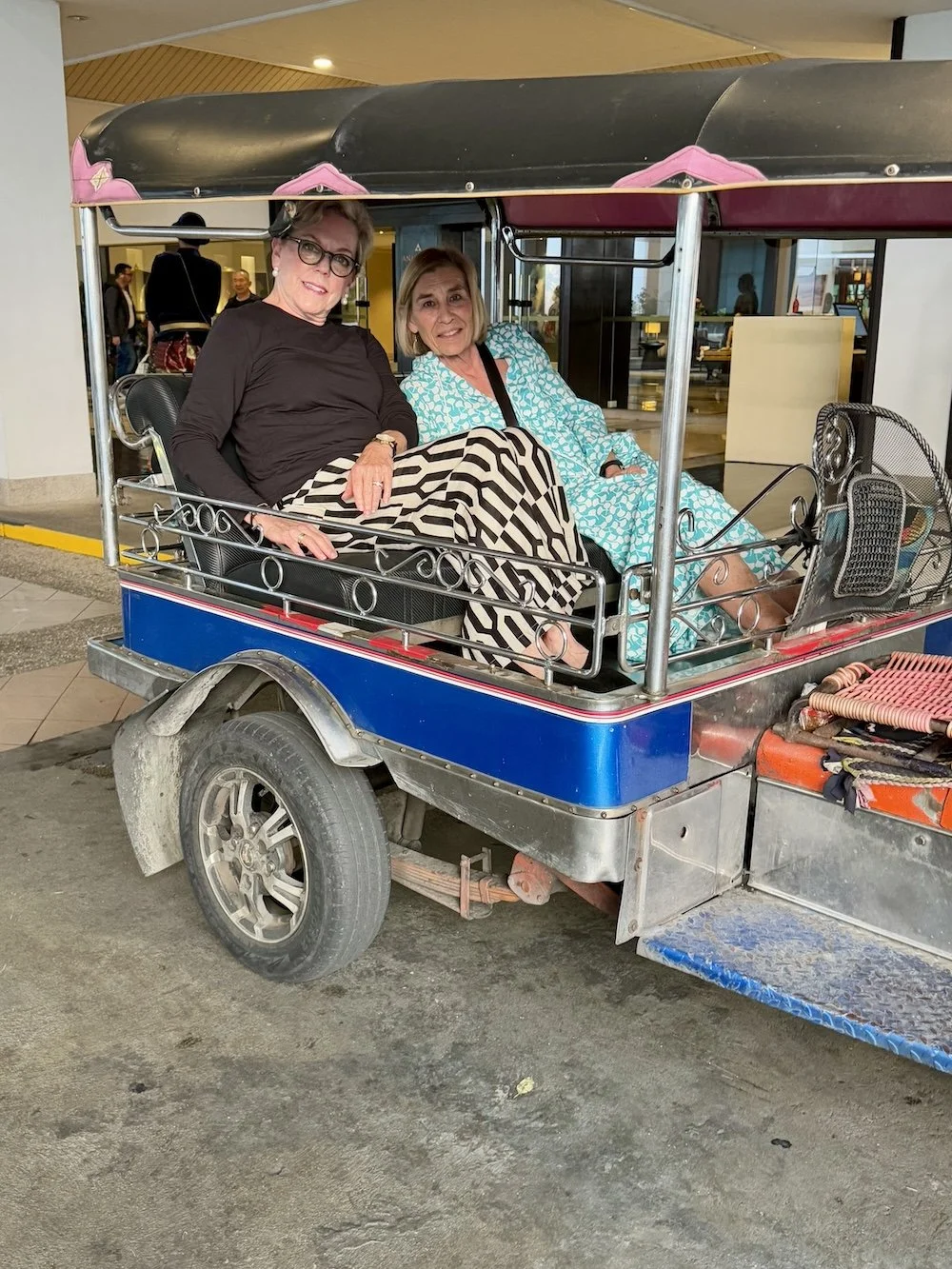
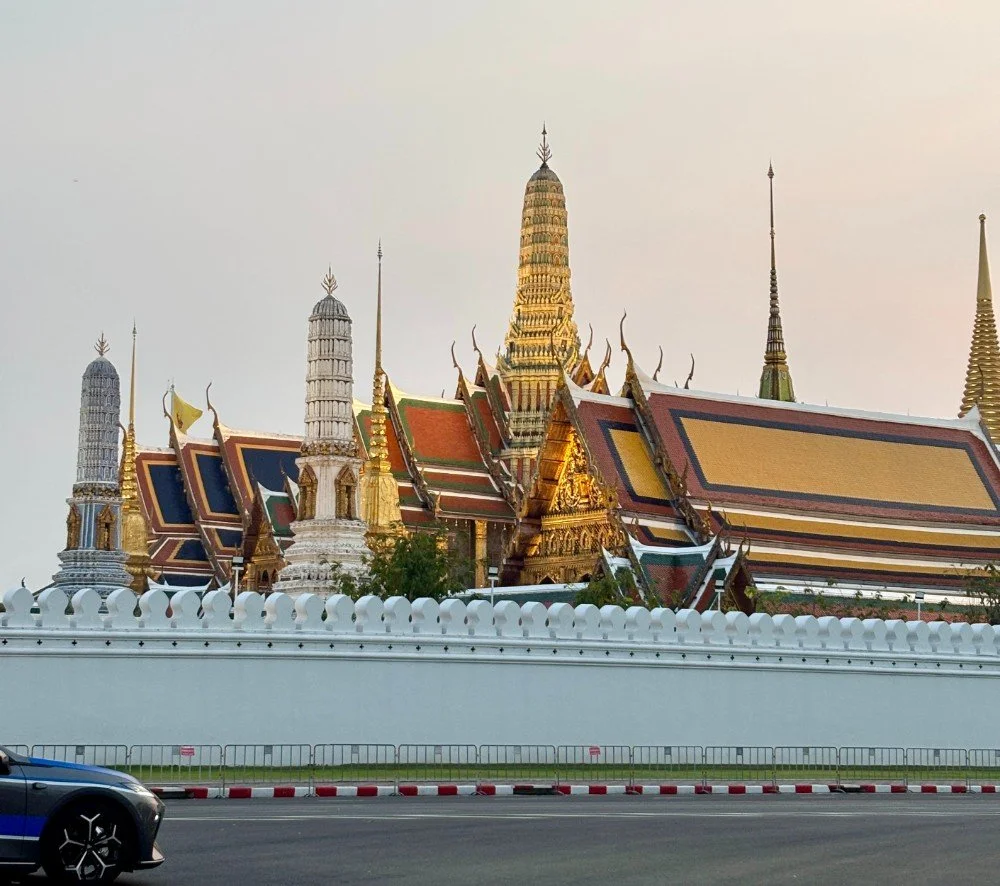
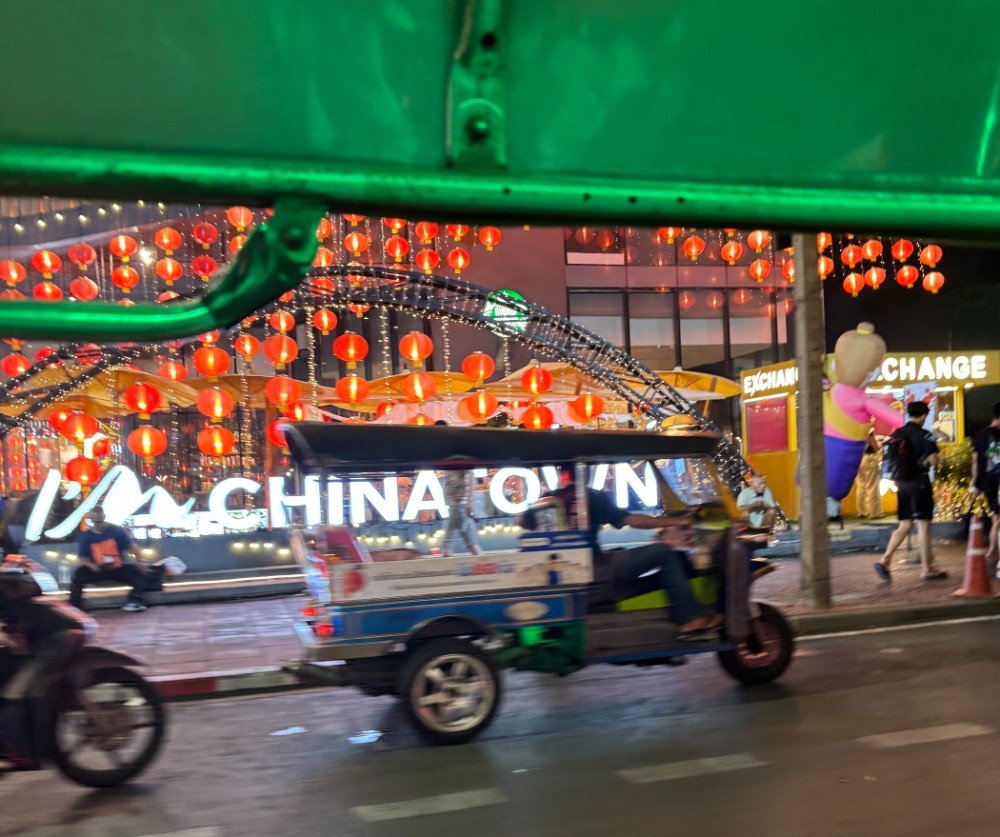
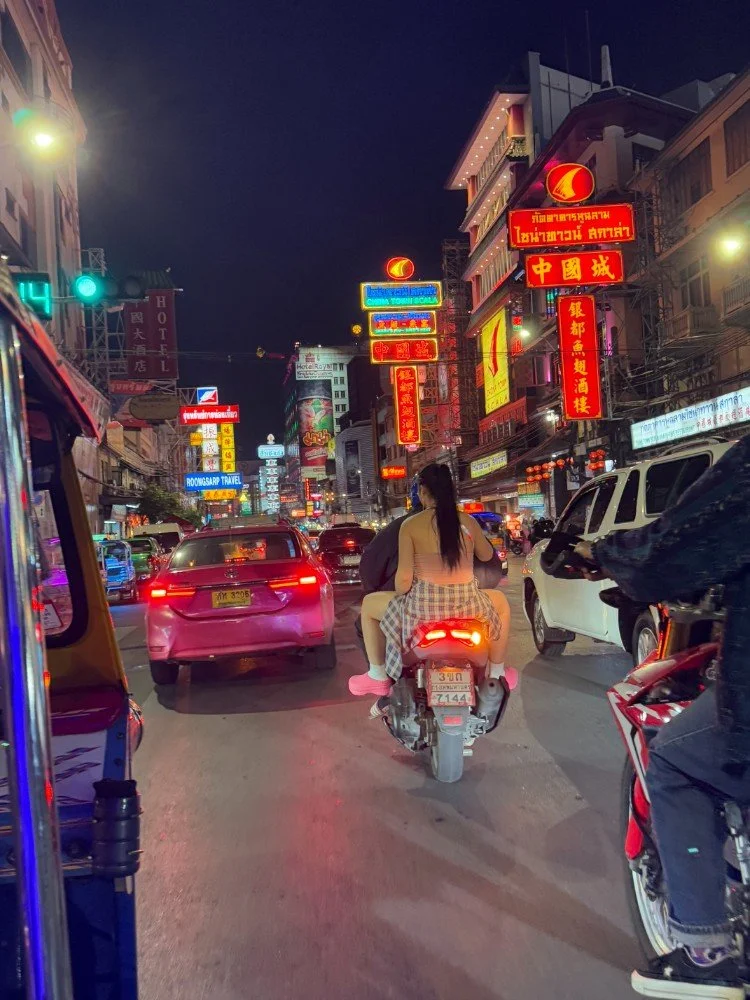
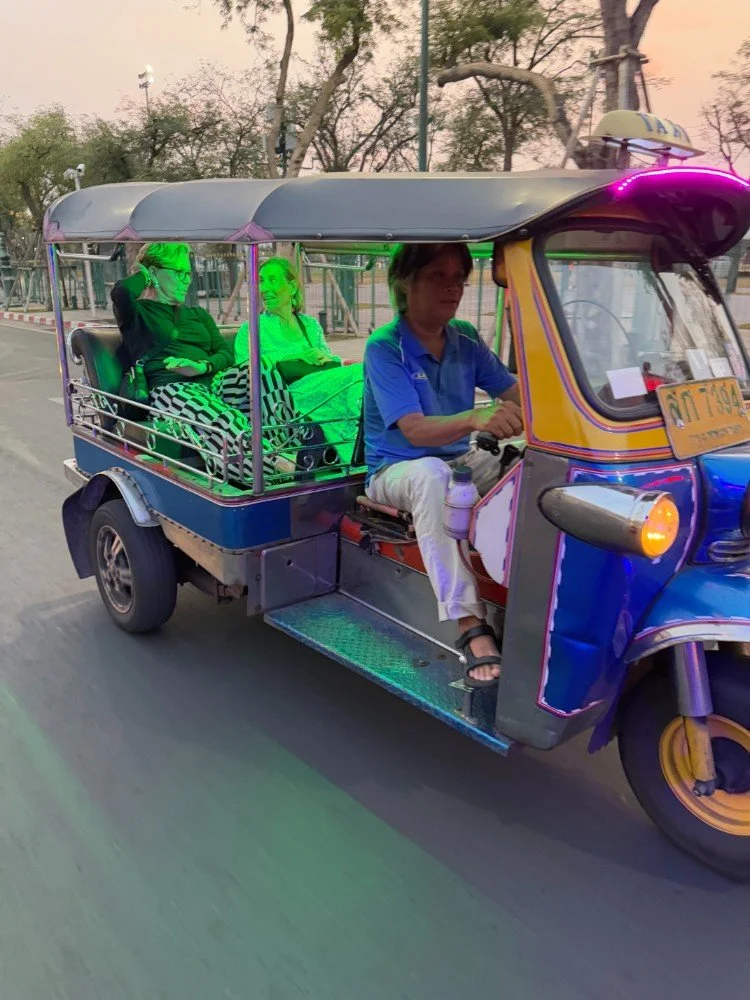
After hours of lounging beside the beautiful Anatara Hotel pool, we headed to the Night Market, where we jumped into two tuk-tuks and headed for Chinatown, just as the sun was setting, so we saw the Royal Palace and other temples spectacularly illuminated.
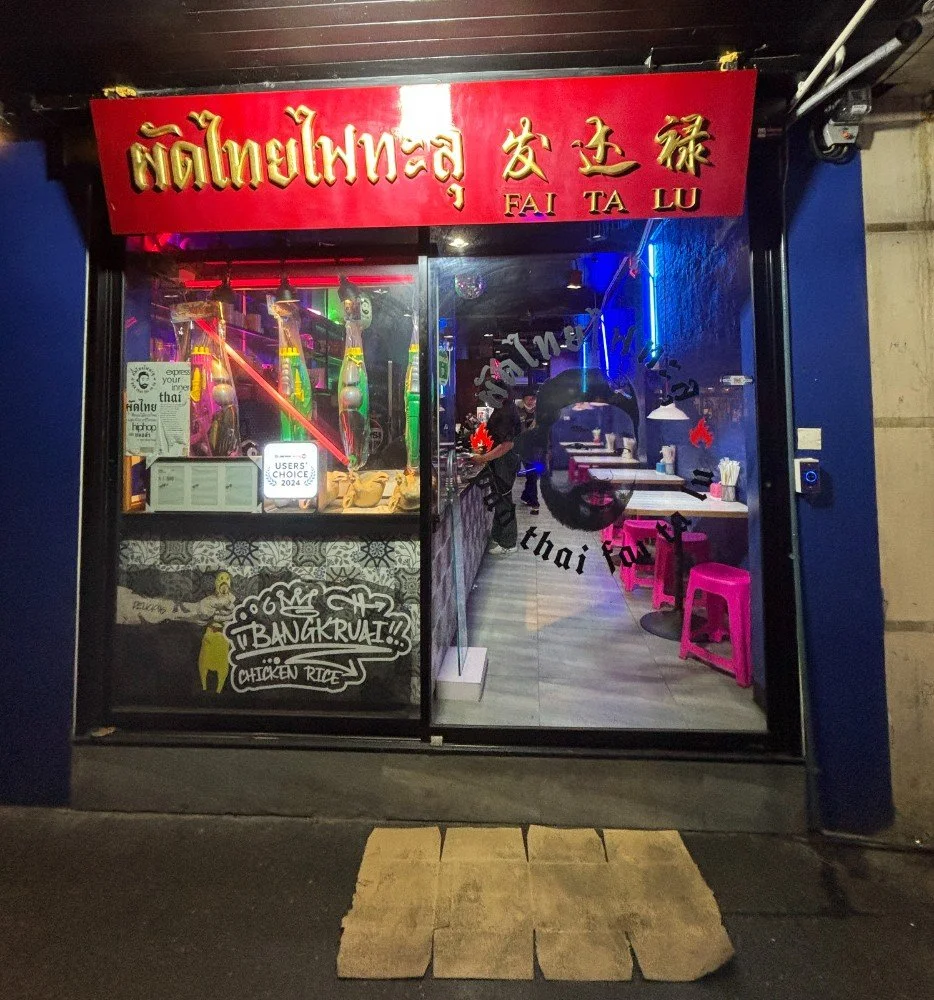
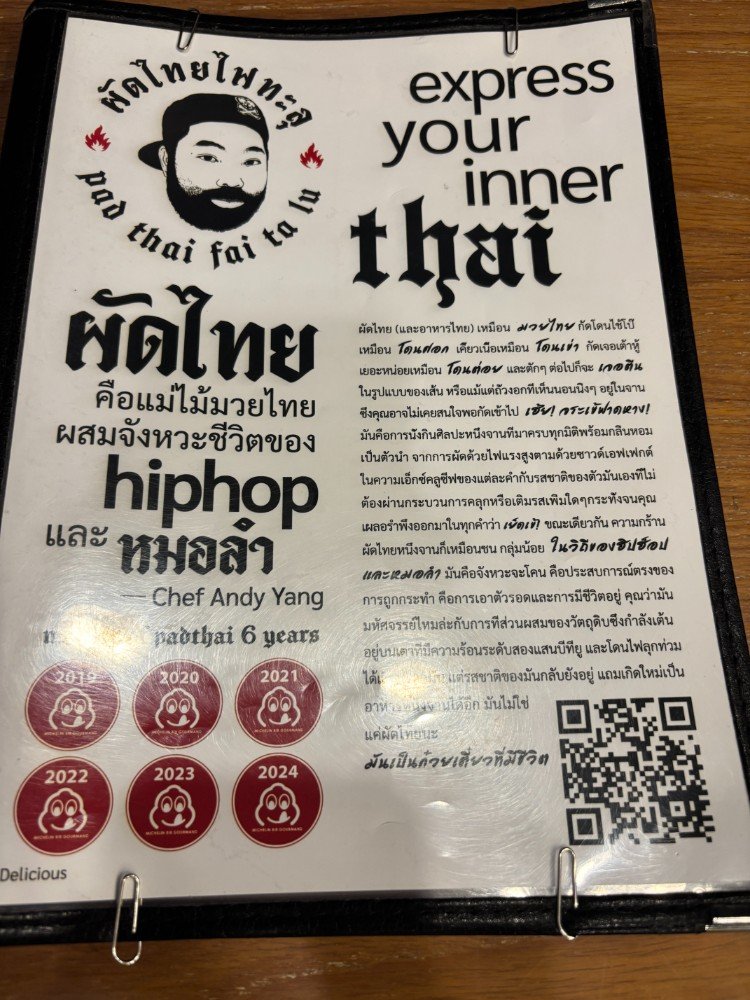
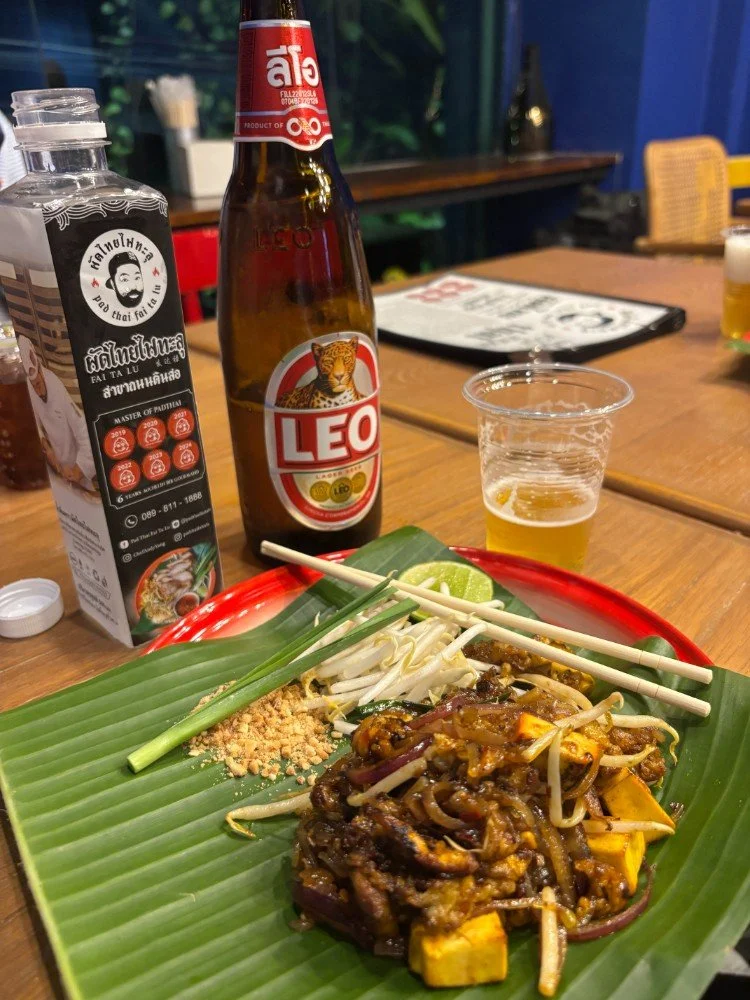
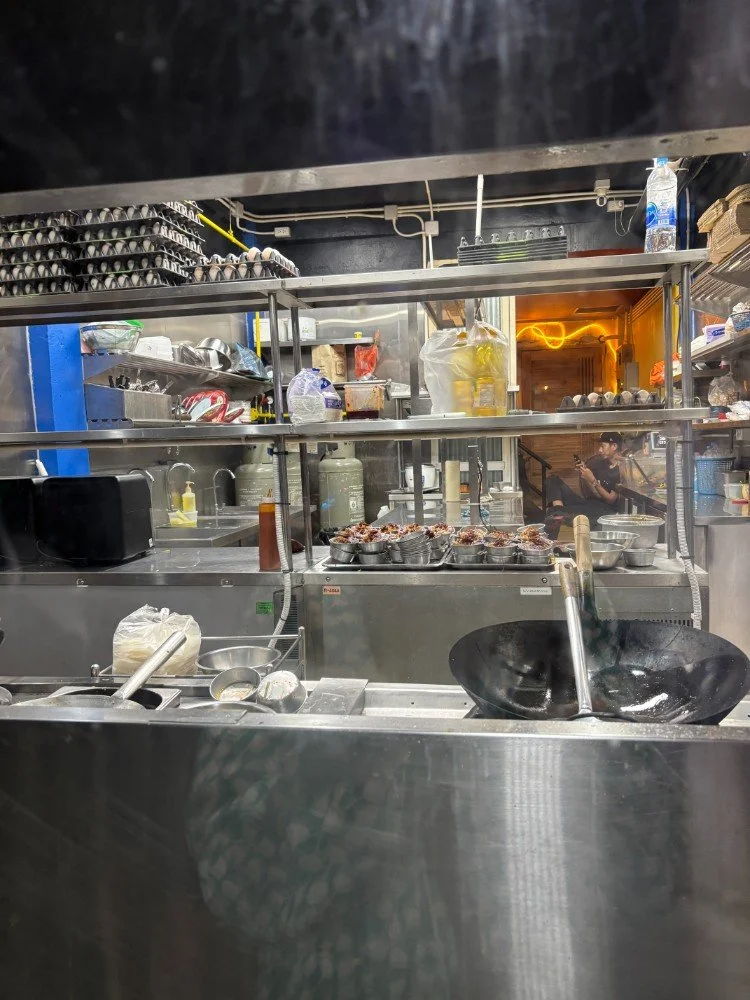
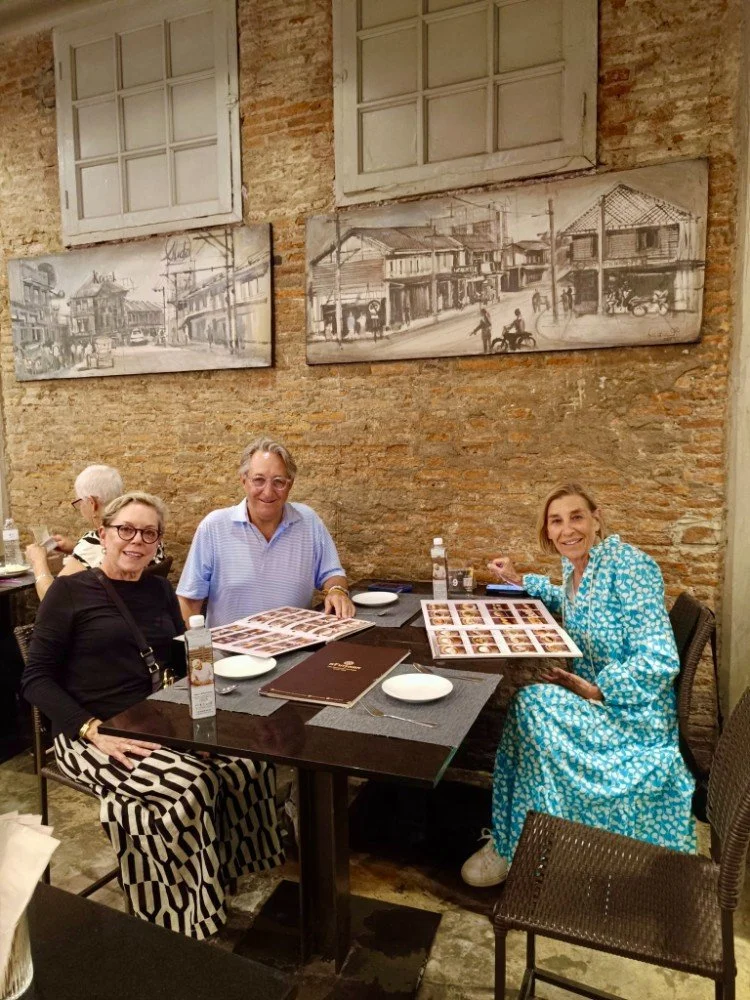
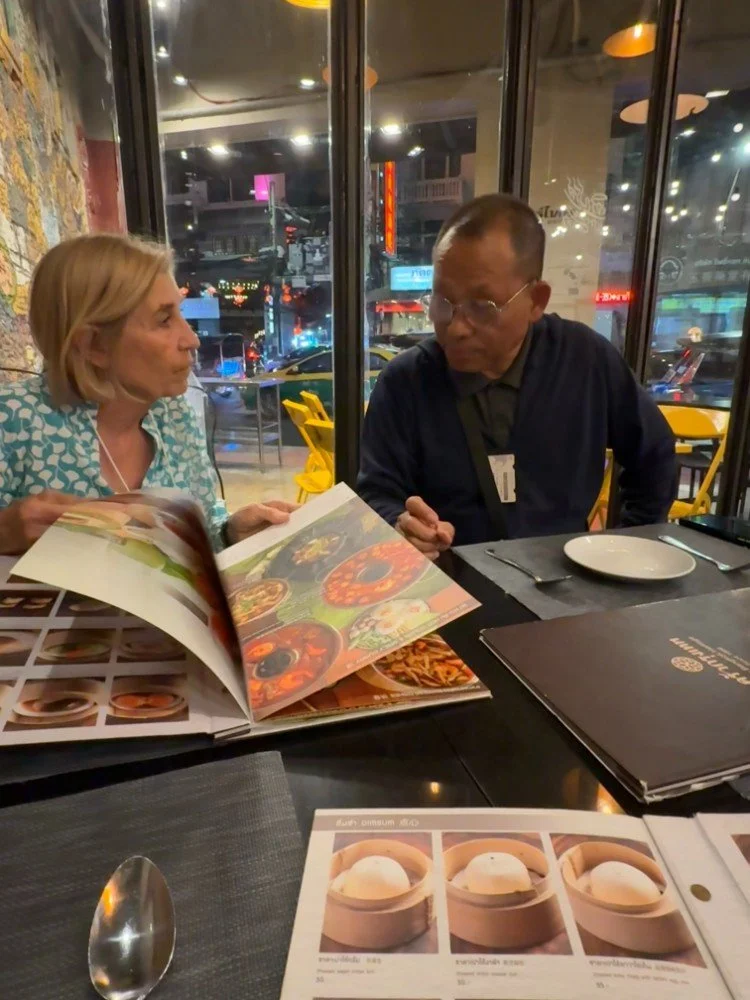
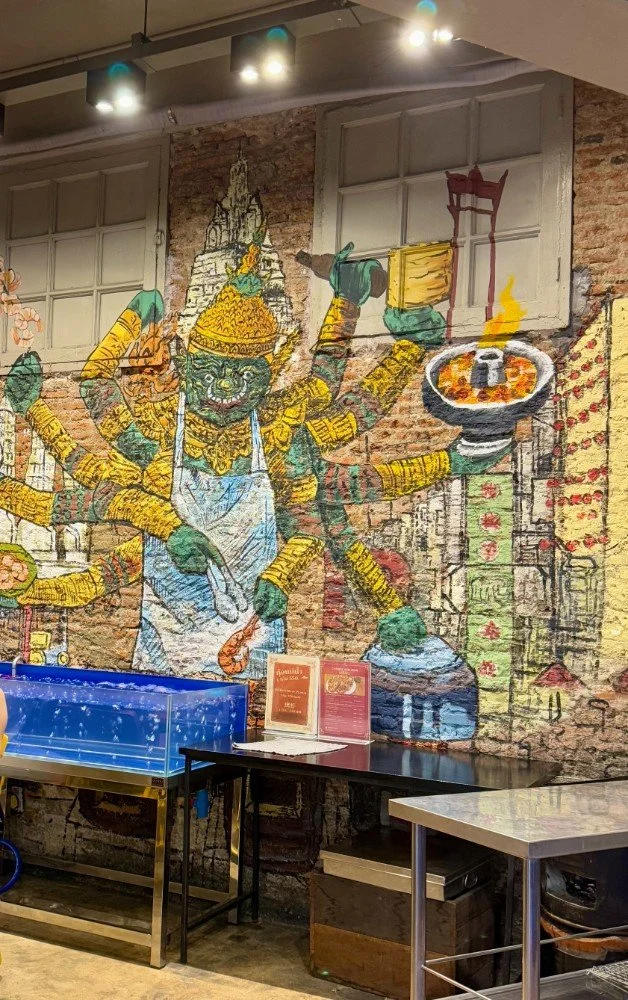
We stopped at two amazing places to enjoy Thai food. The first was a small, unassuming Michelin-star restaurant called Pad Thai Fai Ta Lu, where we enjoyed Chef Andy Yang’s incredible pad Thai, roasted chicken with bean sprouts, a local Thai beer (Leo), and other casual street food. Then we were pedaled over to a Dim Sum shop to try delicious bite-sized dishes of pork and shrimp dumplings, steamed buns filled with barbecued pork, crispy vegetable rolls, and small plates of silky sesame noodles. What a fun experience trying so many delicious foods on our Night Market tour.
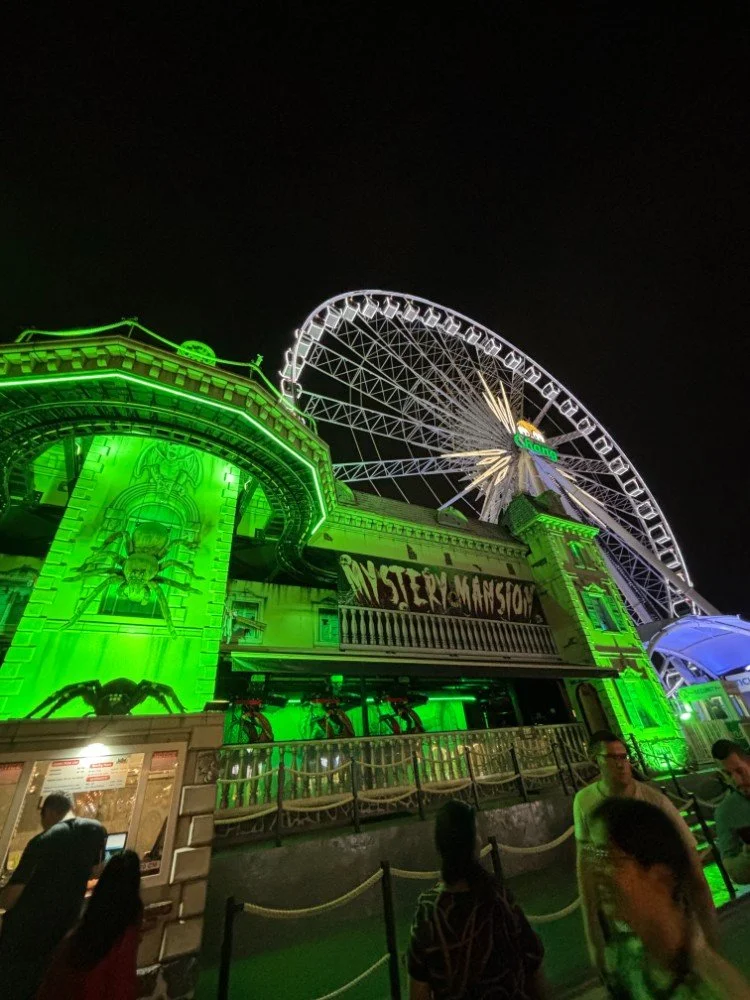
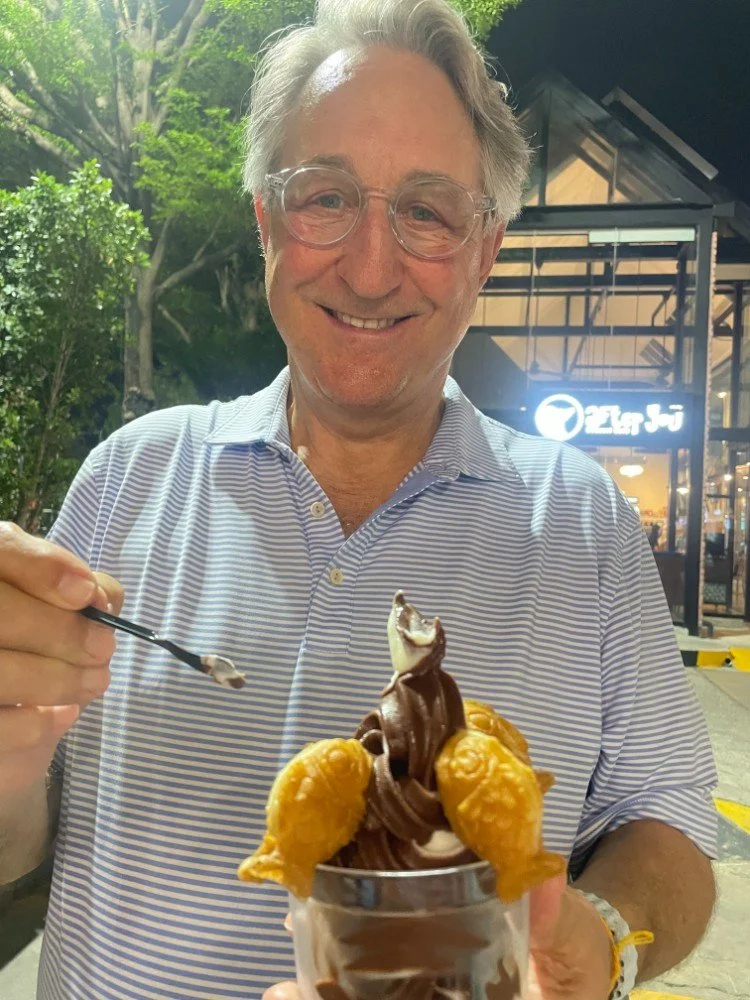
But we weren’t ready to go home yet. Jun picked us up in the van and drove us to Asiatique, the famous riverfront complex with its iconic 20-story Ferris wheel offering spectacular views of the Chao Phraya River, Night Market, and the city. We indulged in some delicious ice cream before heading back to the hotel.
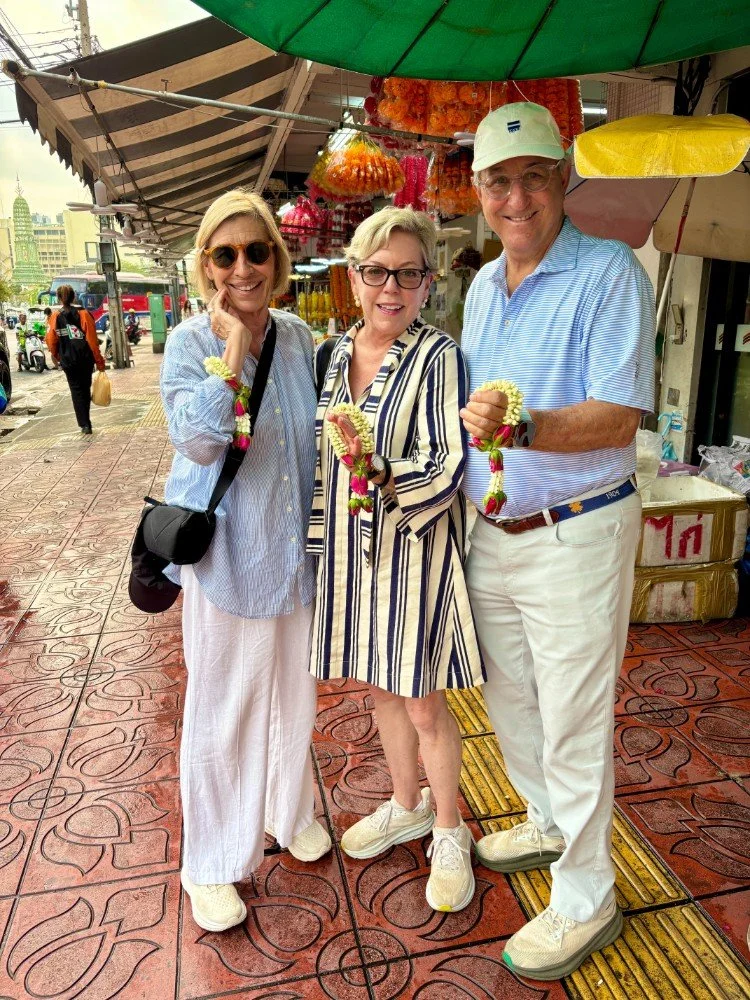
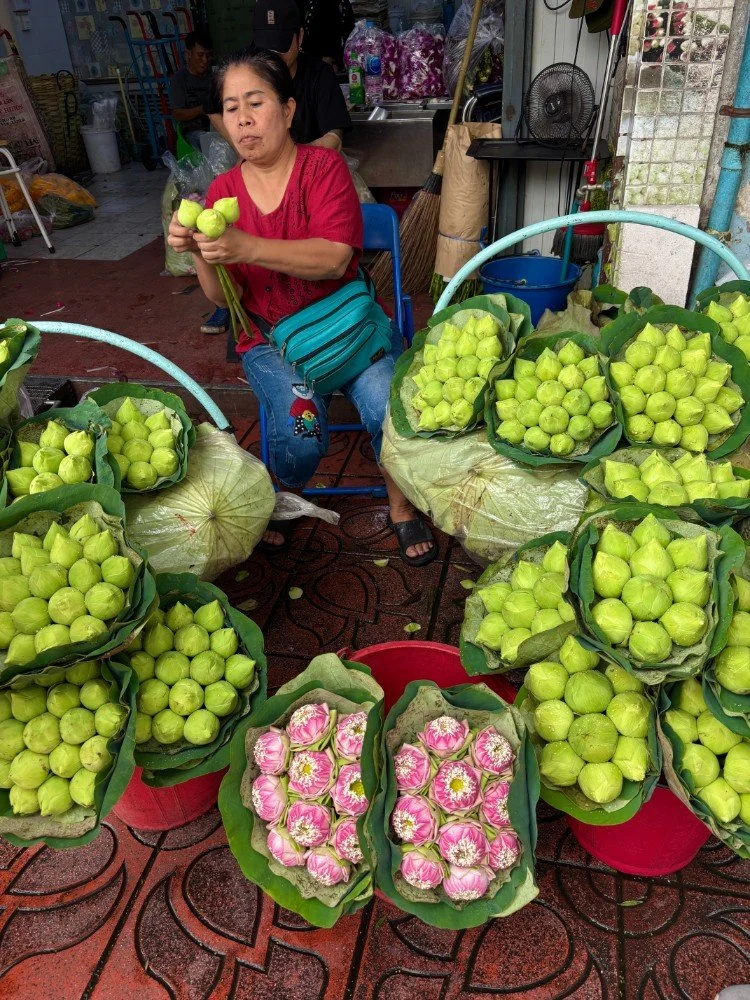
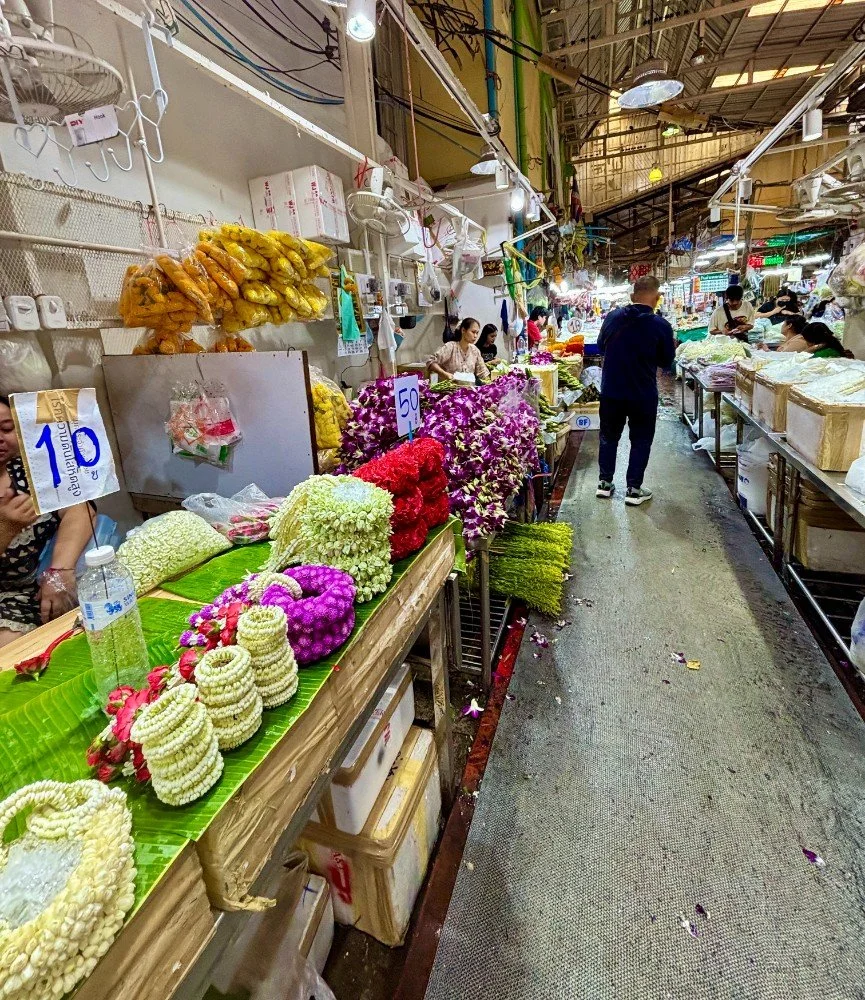
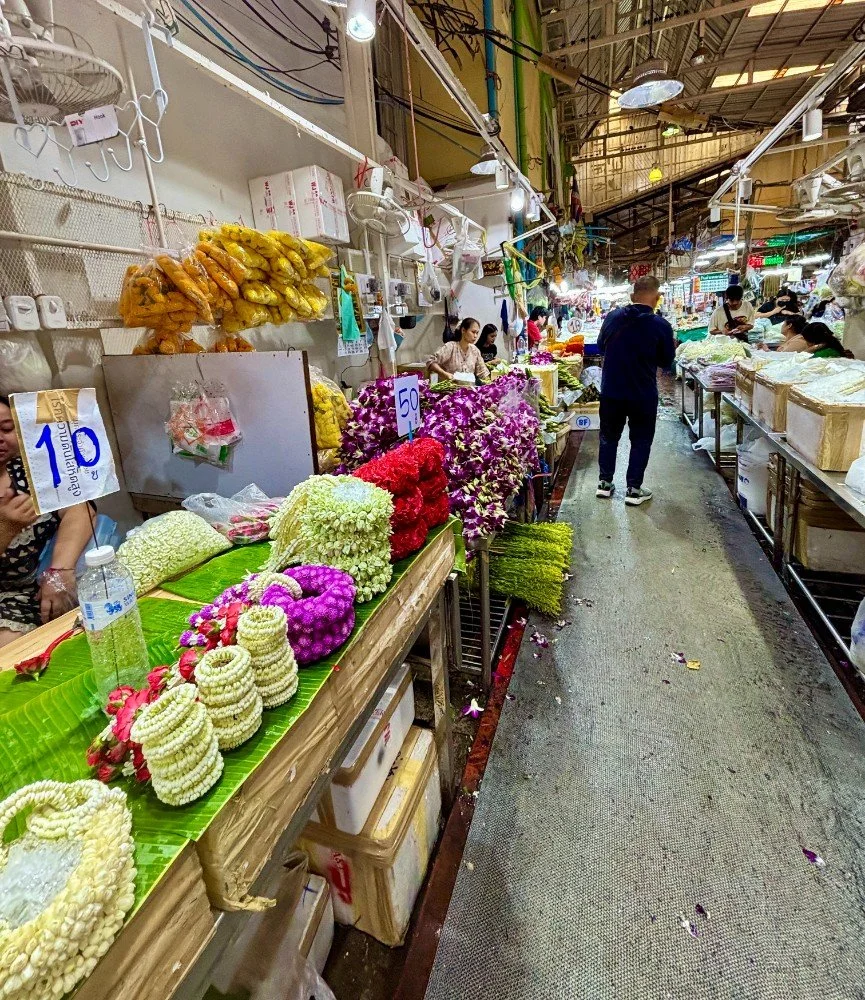
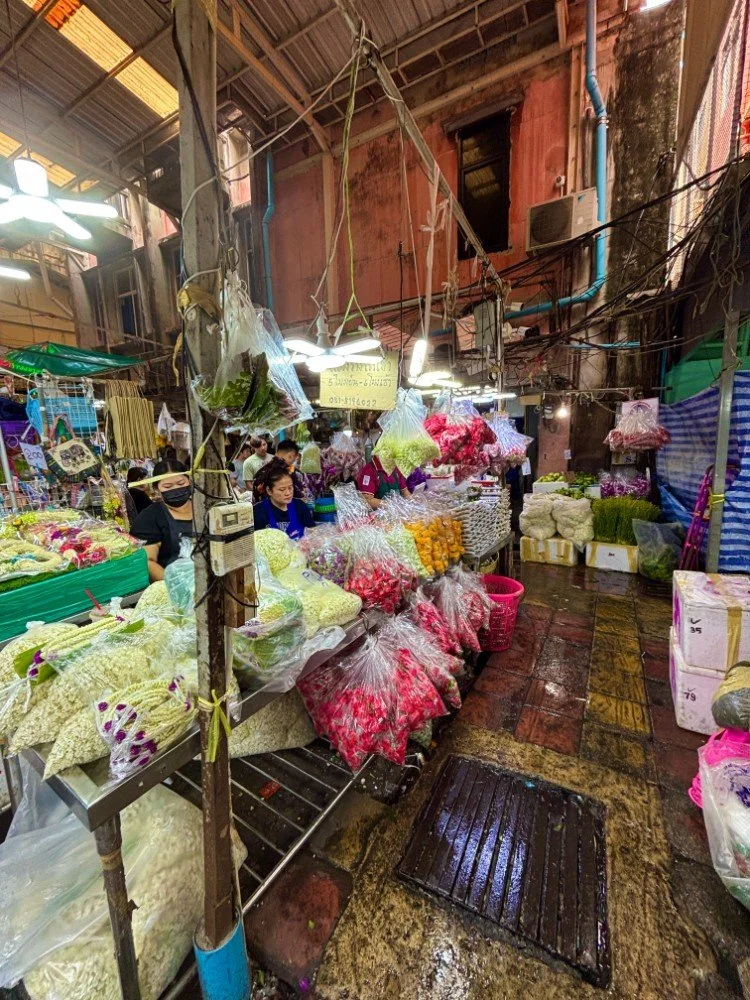
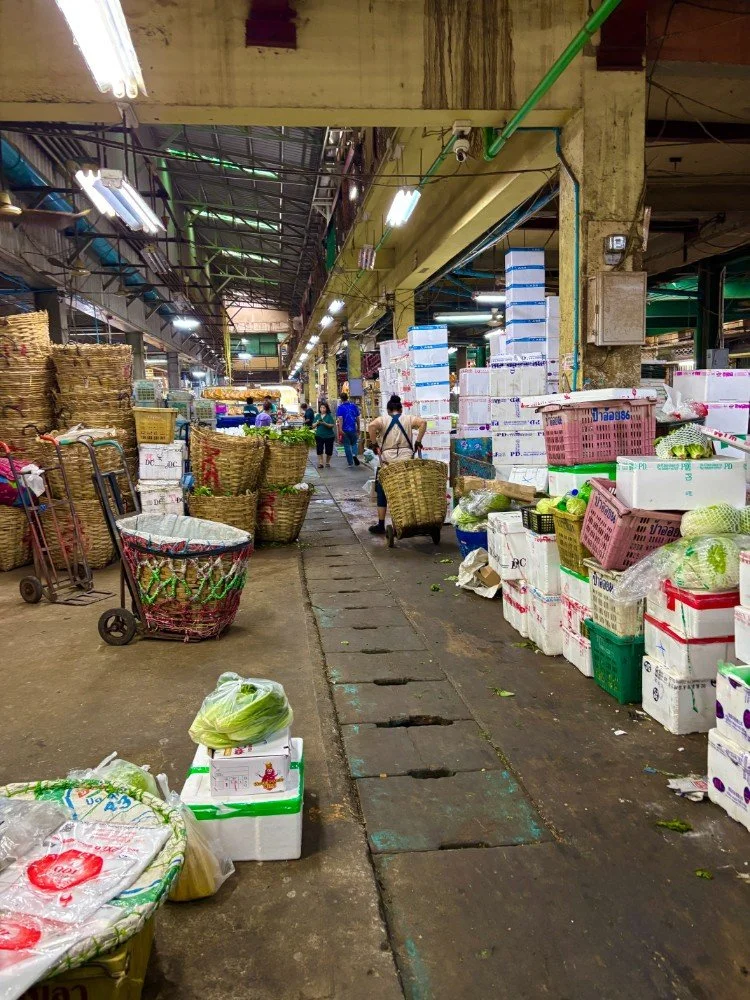
After a sumptuous buffet breakfast with every imaginable food, we visited the Pak Khlong Talat, Bangkok's renowned flower market. Our senses were bombarded by the vibrant colors, the fragrances, and the sounds of vendors hawking their wares. Another huge part of the market was the section where fresh fruits and vegetables were sold. It was mesmerizing to witness the gorgeous flowers and exciting to be given the colorful wrist corsages by the kind merchants.
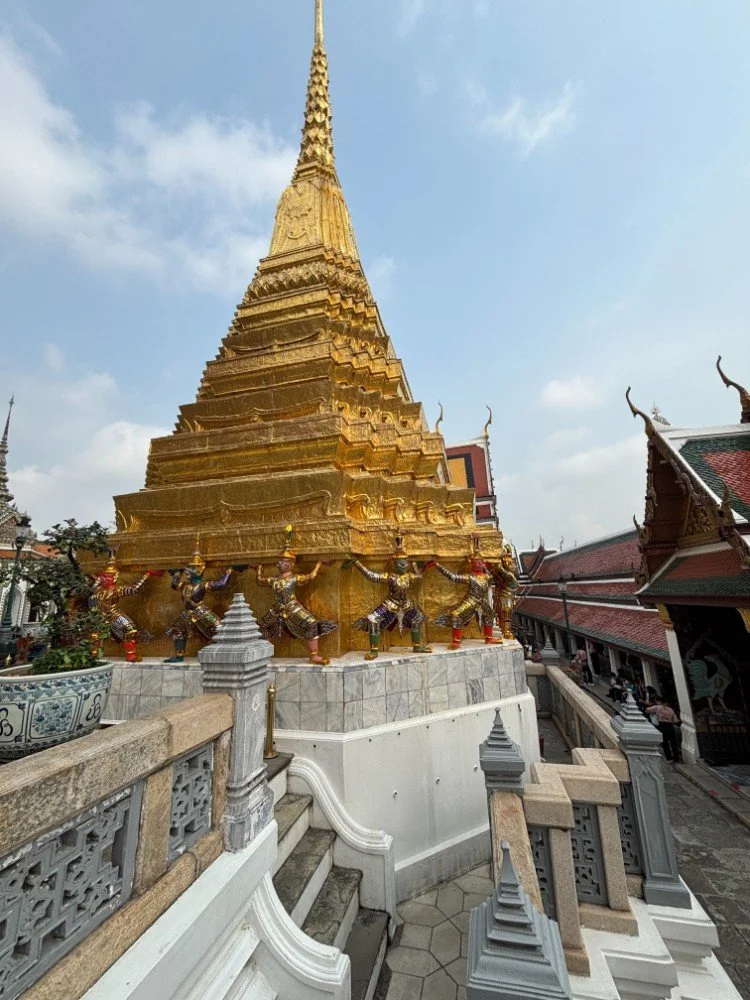
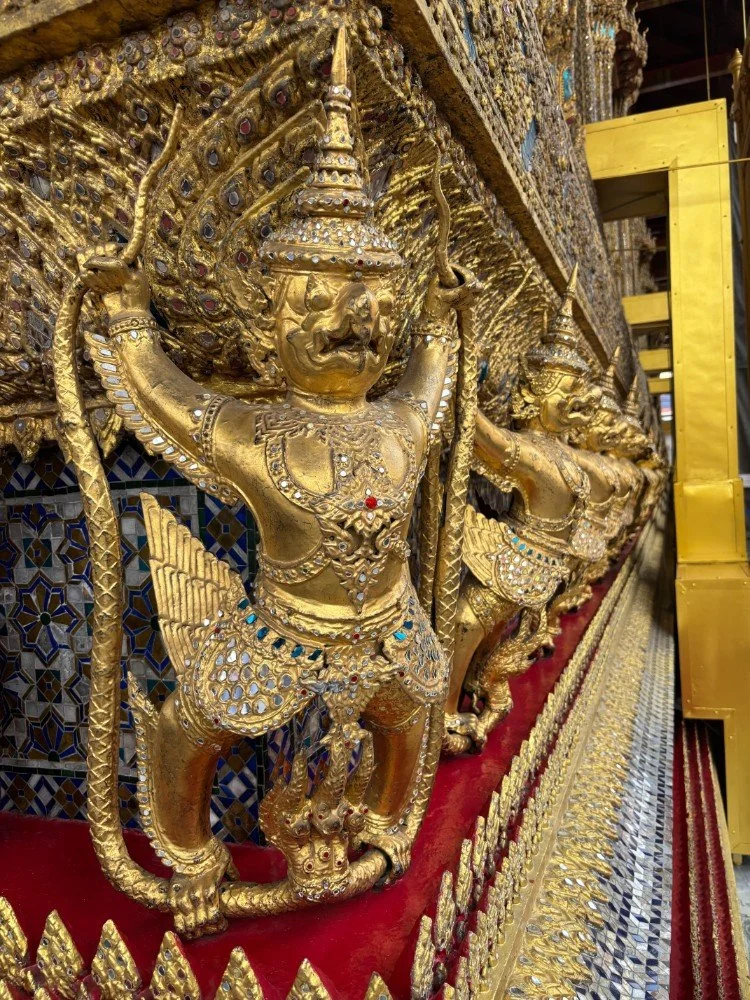
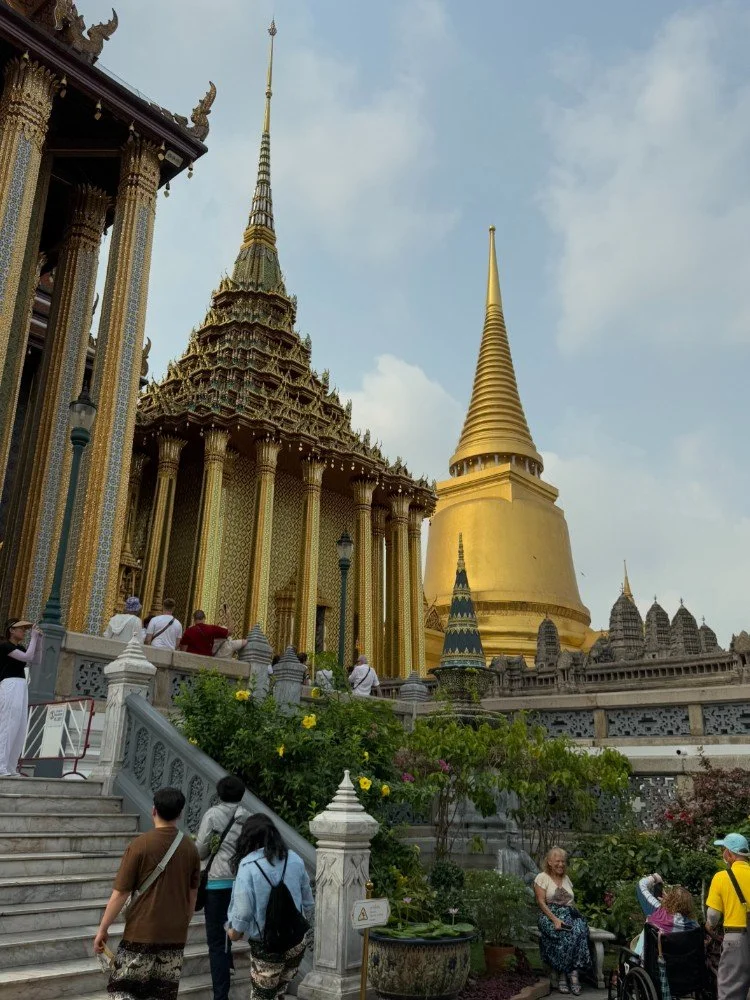
We finally left the colorful flower market and headed to see the Grand Palace that was once the official residence of the Kings of Siam/Thailand (from 1782 to the early 1900s). The palace complex is huge — more than 50 acres — and includes multiple pavilions, temples, stupas, and courtyards–all enclosed by gleaming white walls. The Wat Phra Kaew temple was sumptuous and contained many gold carvings and mosaic-covered items.
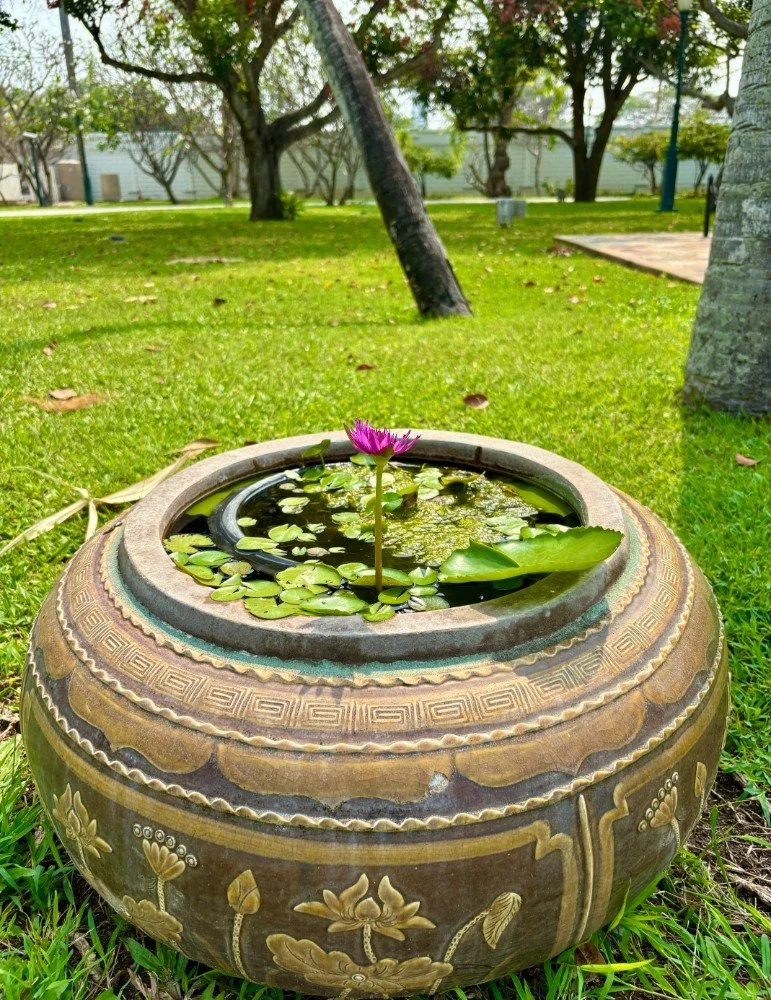
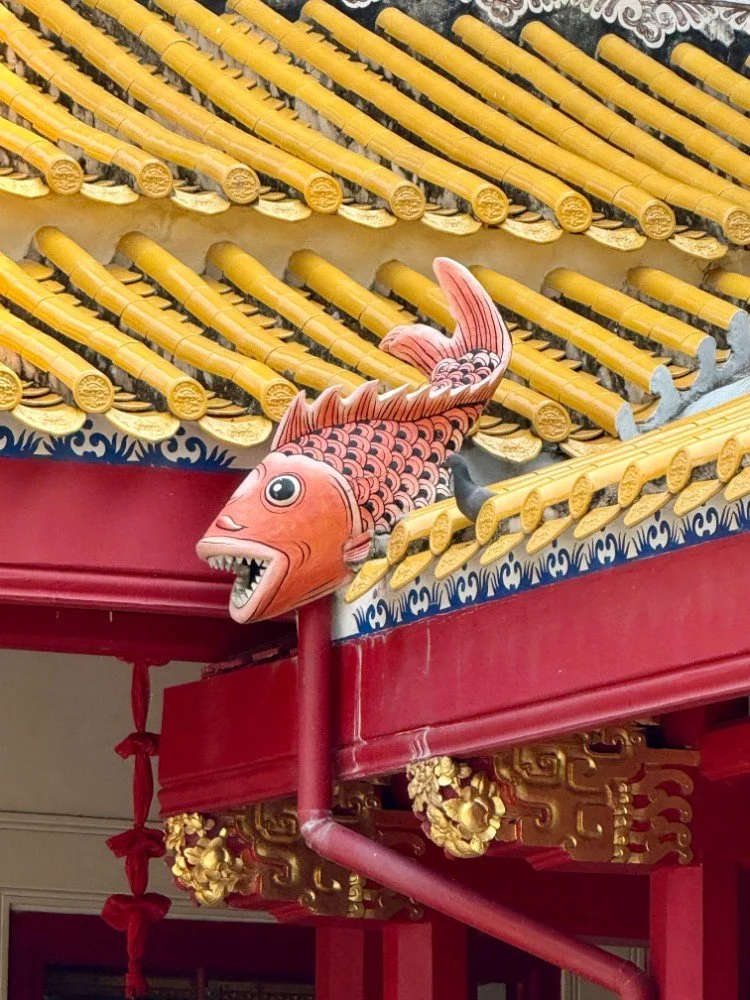
Our main destination for the remainder of the day was Ayutthaya, the ancient Siamese capital. We first stopped at the Bang Pa-In Royal Palace, also known as the Summer Palace, where King Rama V and the royalty escaped the bustle and heat of the city to luxuriate in its gorgeously landscaped gardens with lovely bridges connecting lakes and canals throughout the lush property. The area was so huge we were driven through it on tree-lined lanes to various pavilions and palaces with many different architectural styles (Gothic, Renaissance, Chinese, Thai) in a golf cart.
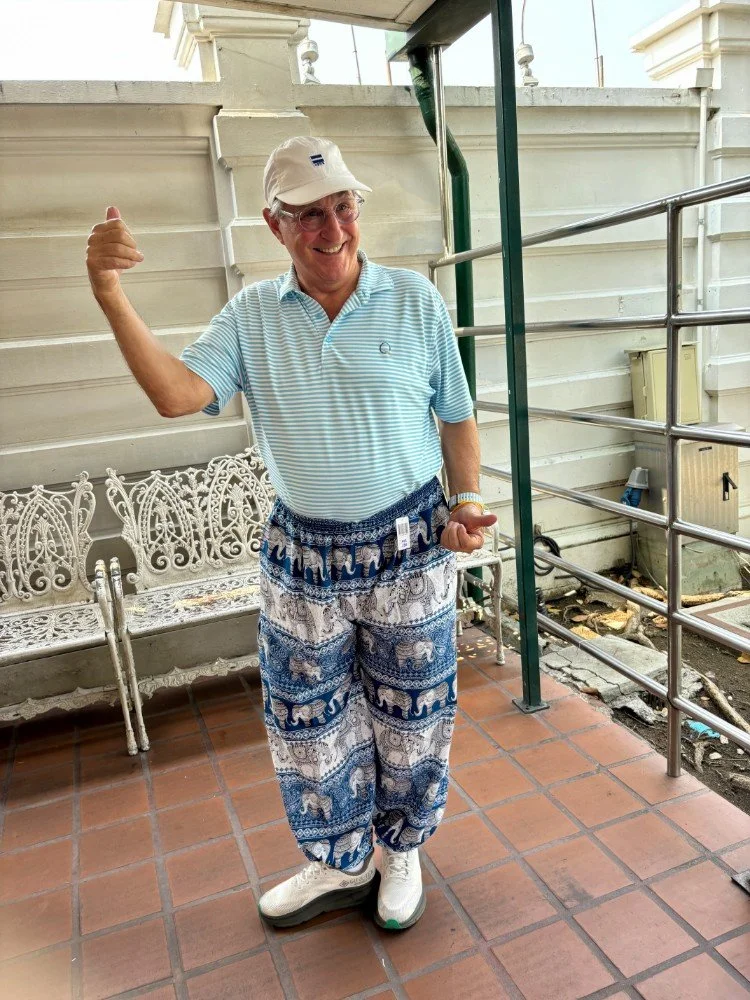
One humorous aside: Ray was wearing shorts on this hot day and was required to buy a pair of drawstring pants to cover his exposed legs before being allowed on the premises. A very respectful place where modesty is required!
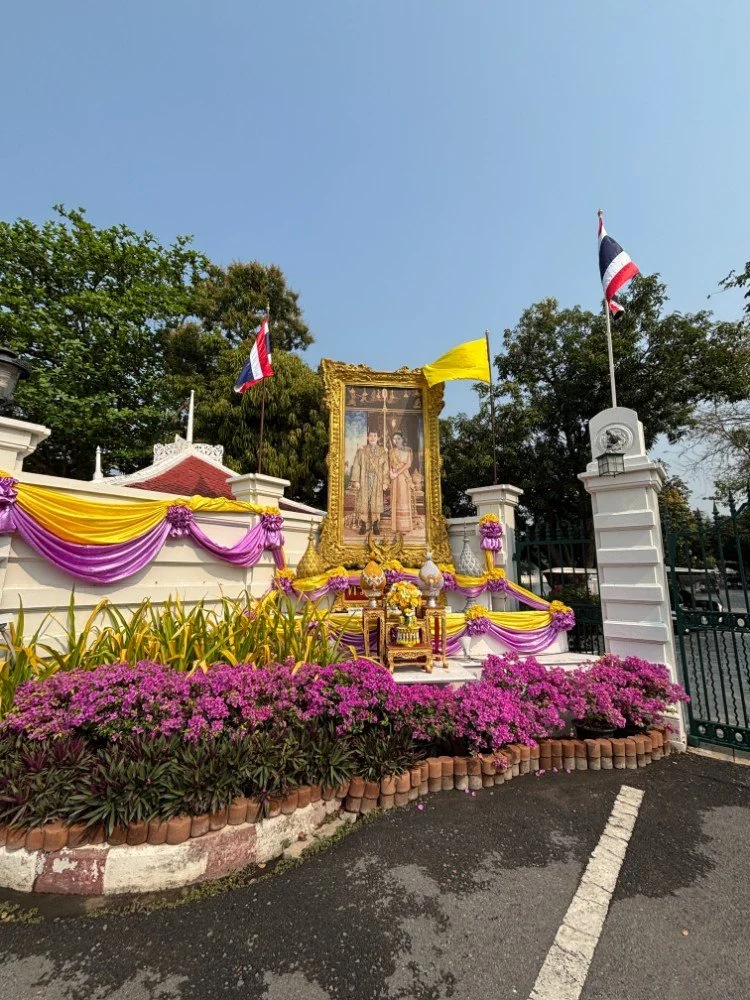
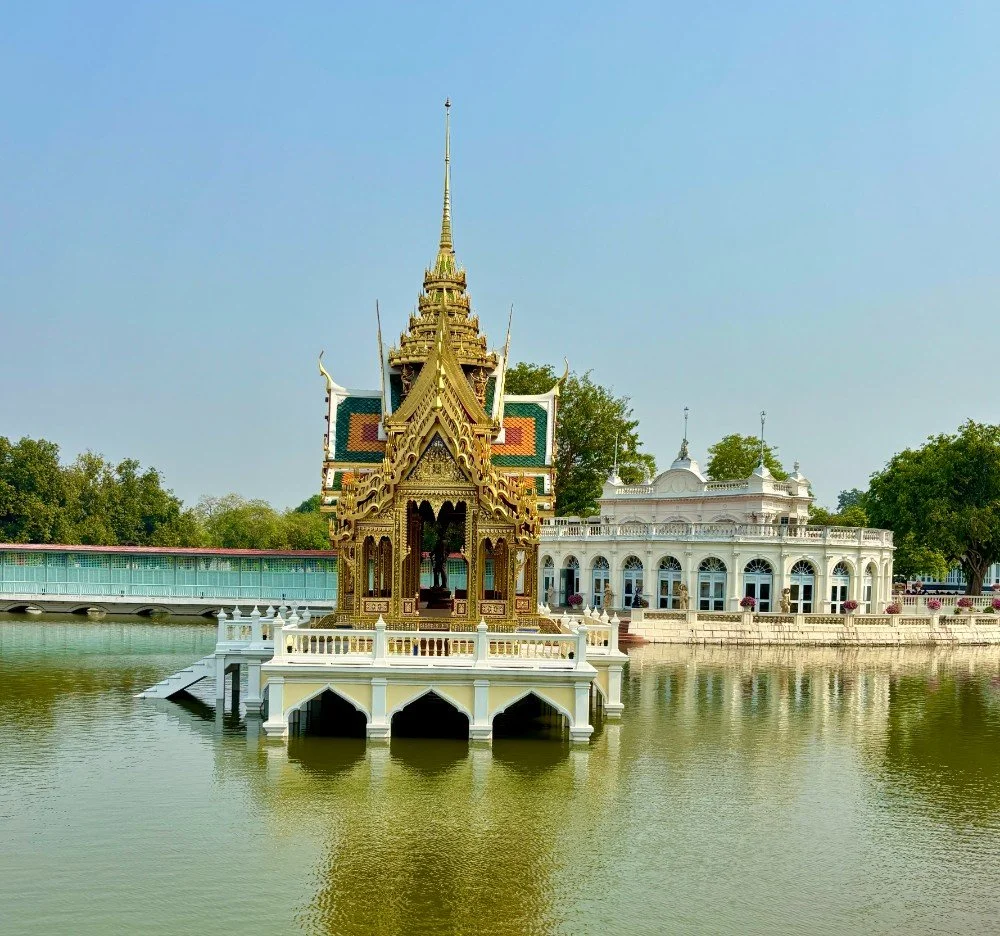
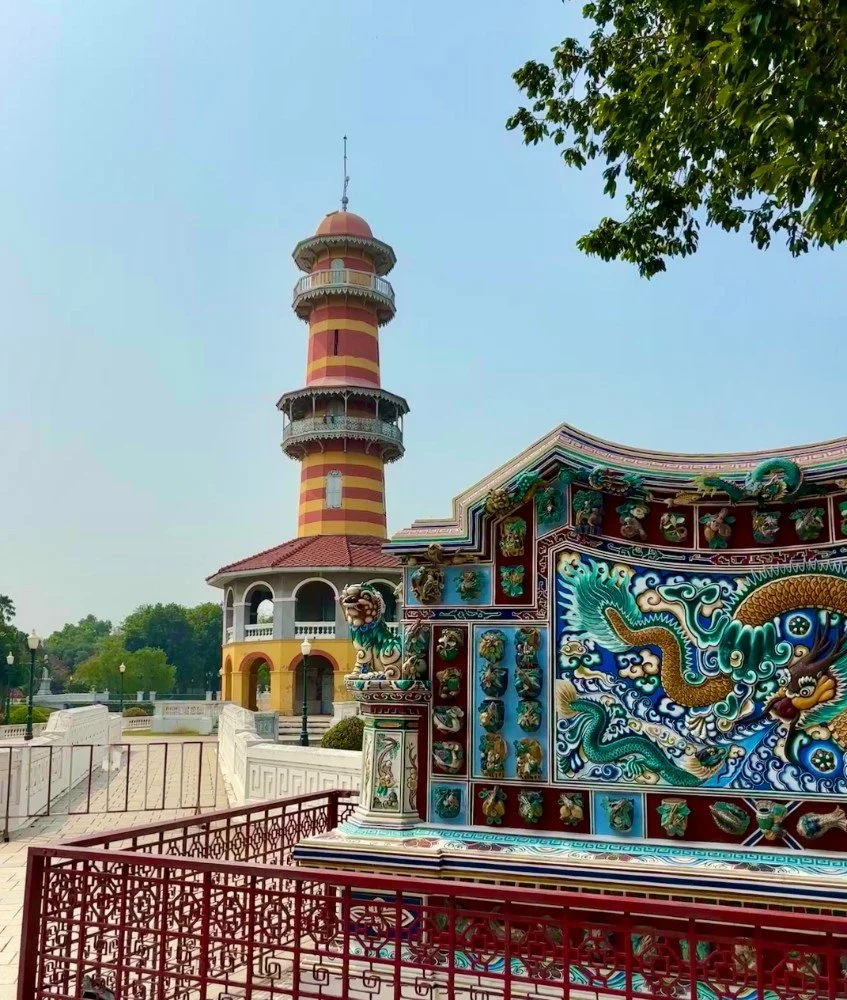
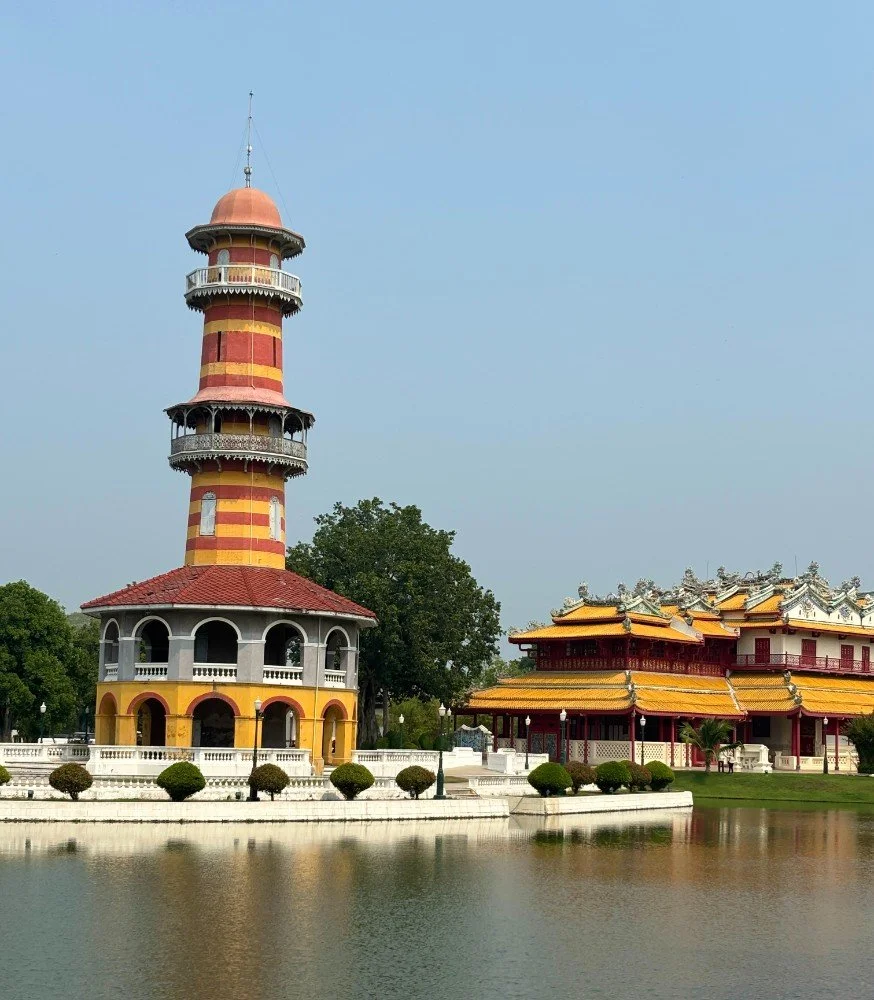
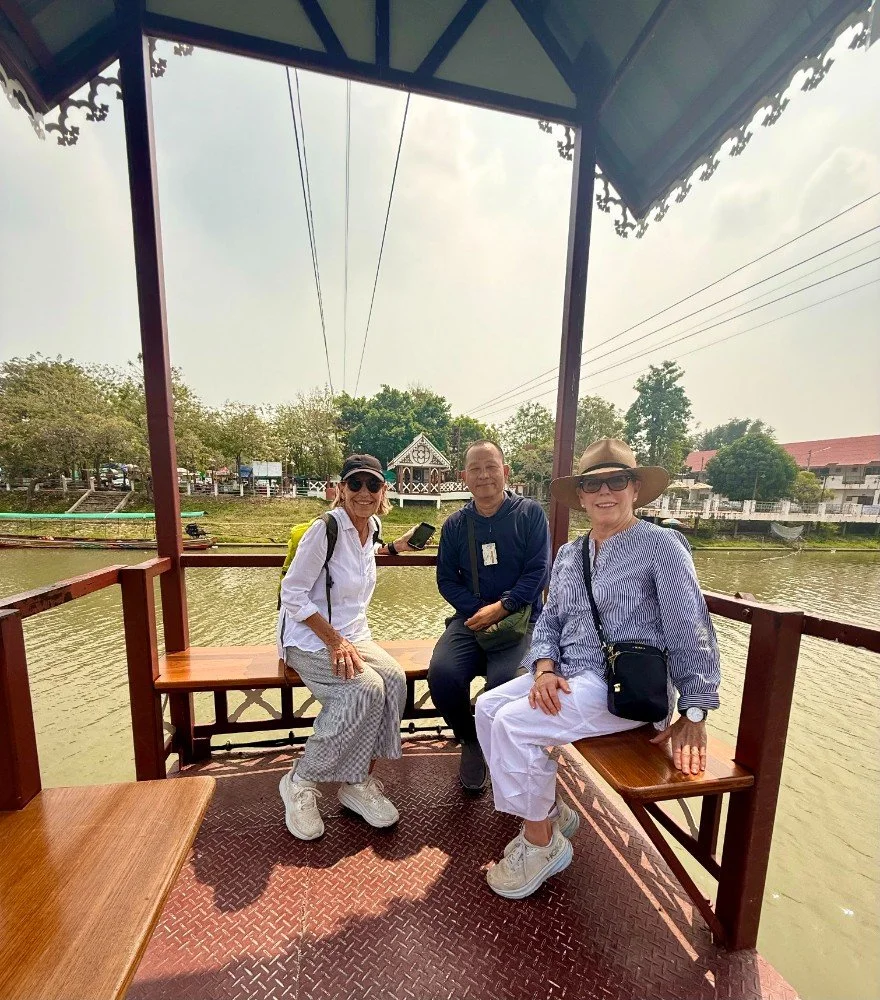
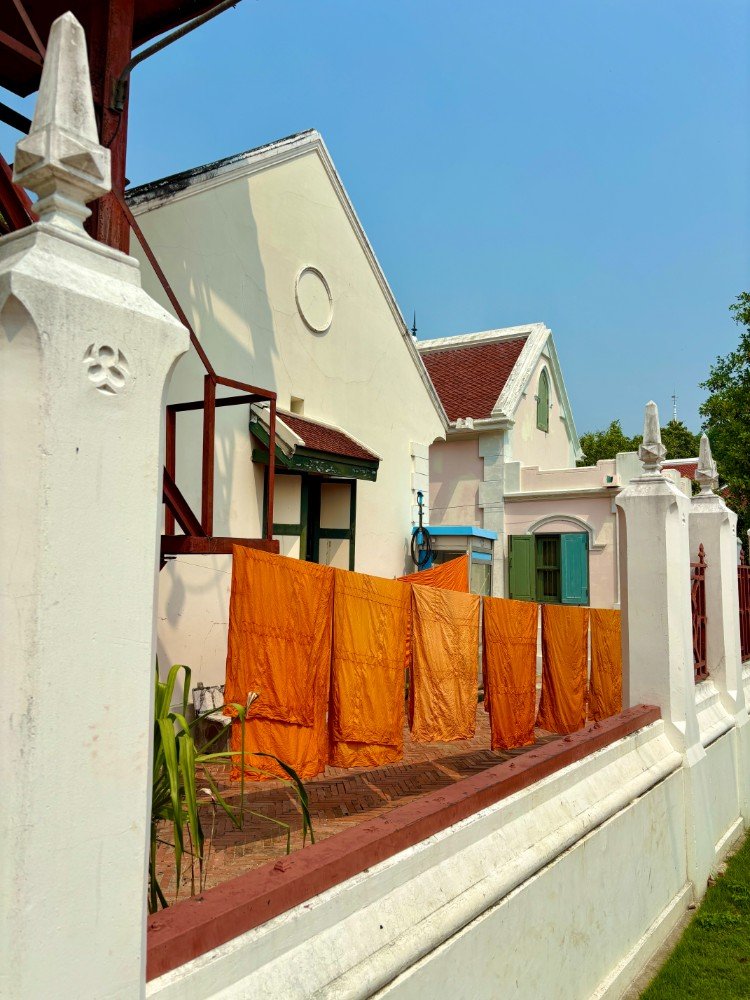
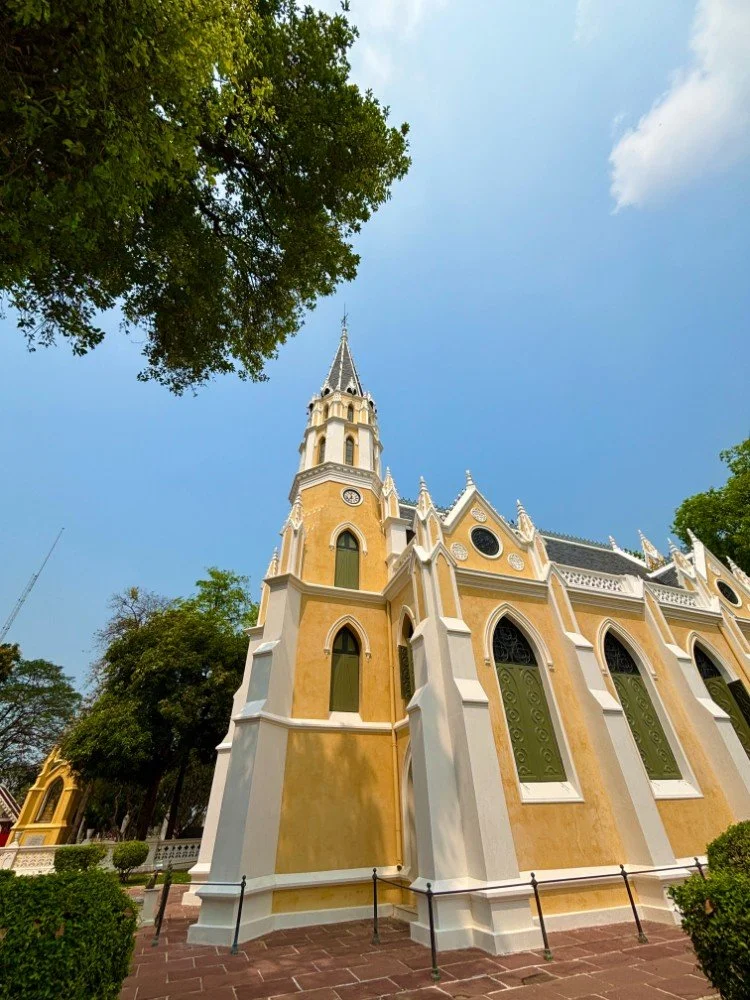
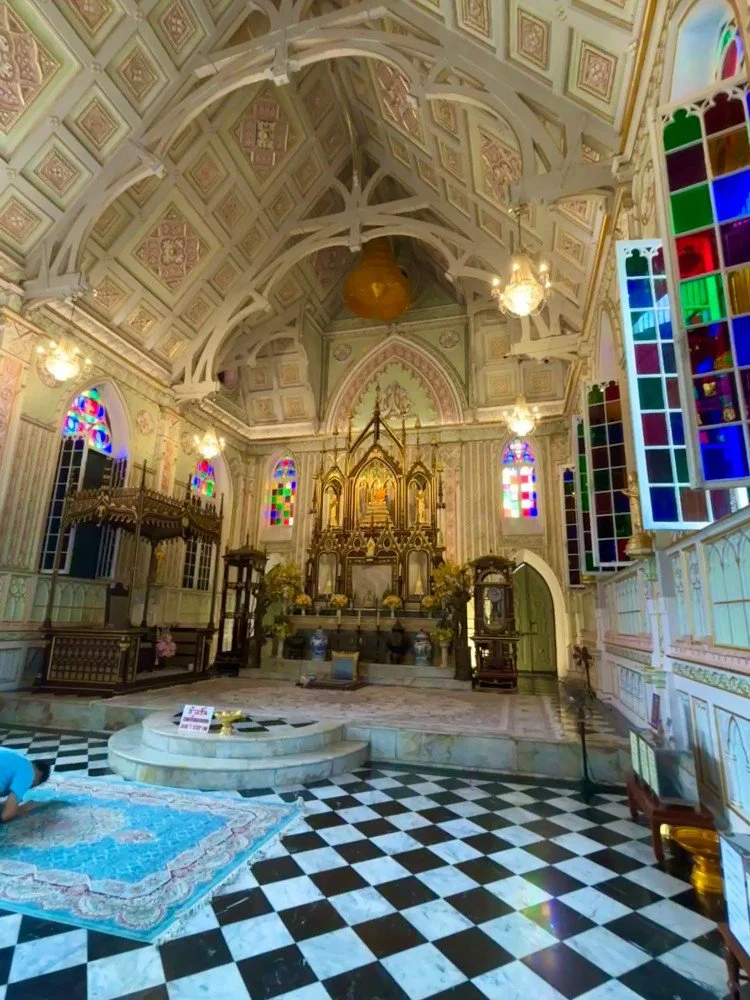
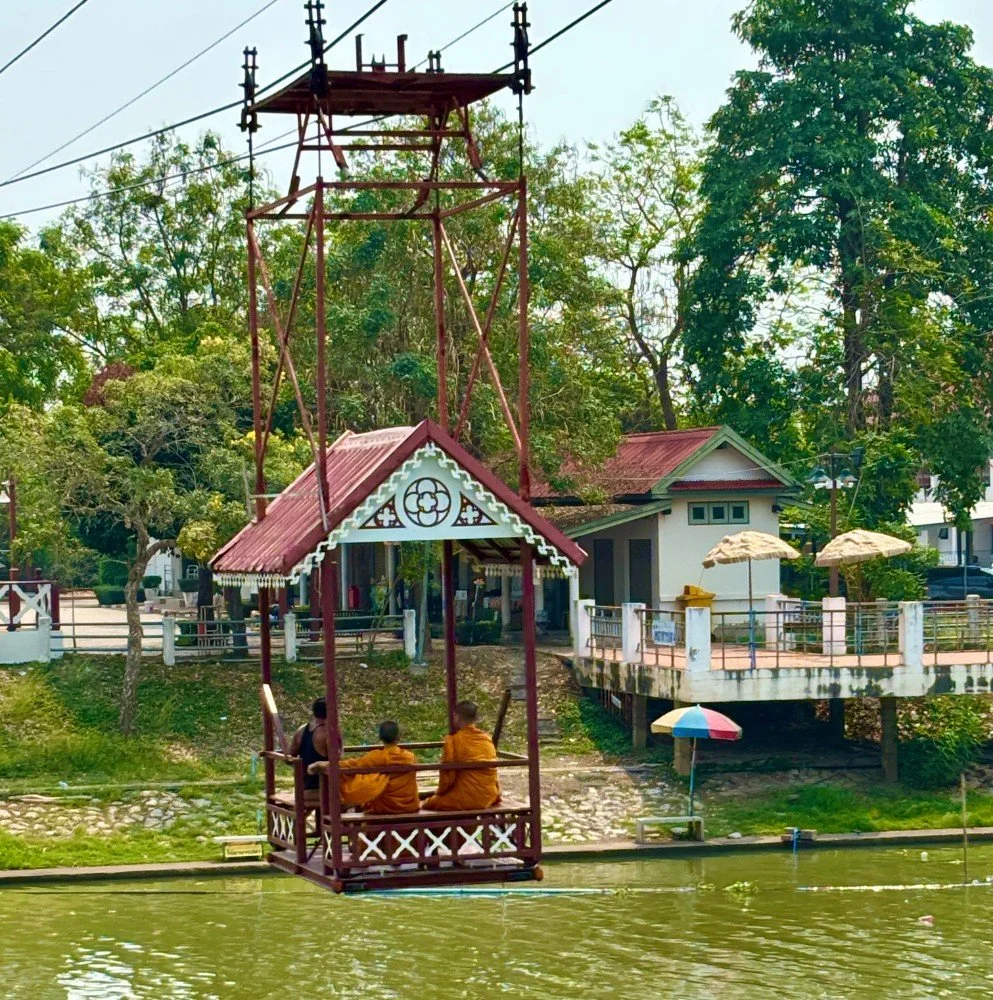
Across the narrow river on a small island from Bang Pa-In Royal Palace was Wat Niwet, a Thai temple in Gothic Christian church style with a steeple and stained glass windows but no cross — quite an oddity — but beautiful. It represented King Chulalongkorn’s keen interest in Western architecture yet reserved traditional Thai Buddhist worship by placing a golden Buddha statue on the altar instead of Christian artifacts. Along with a few monks in orange robes, we boarded the small cable car to cross the water and have a better view. We saw the monks’ robes and other laundry hanging out to dry but few other signs of life as we walked along the sunny riverbank.
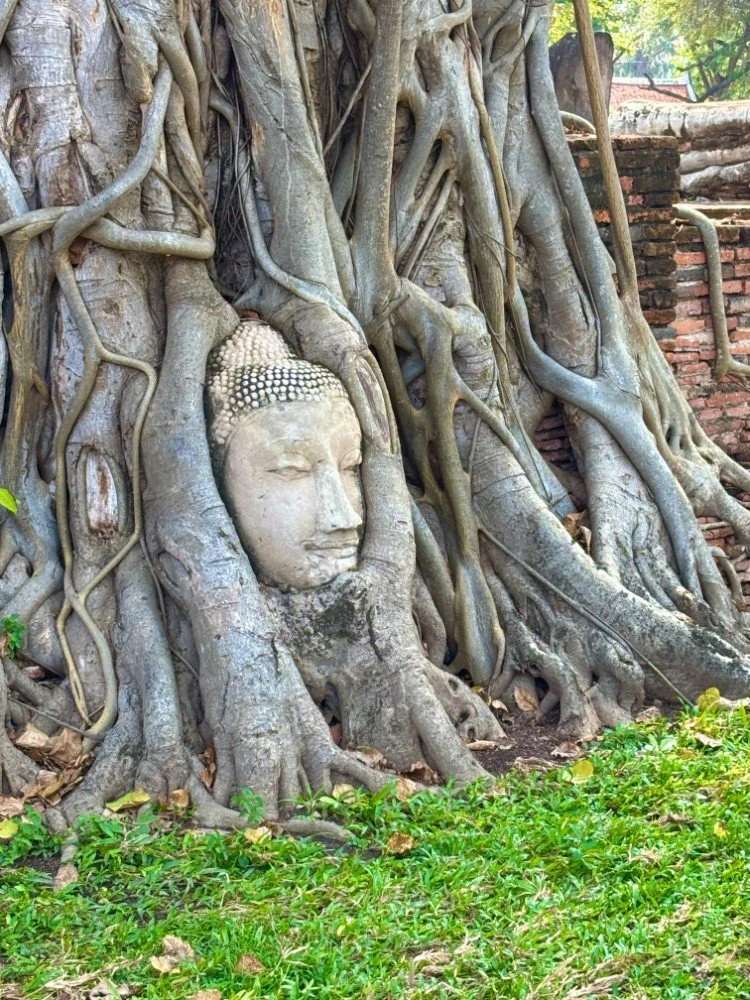
It was difficult to surpass the morning’s cultural sights, but our knowledgeable guide Ken tried in the afternoon. Truthfully, the temples, pavilions, and history were starting to run together in our minds. But our last stops before heading back to Bangkok were awesome. The Wat Mahathat temple, one of the oldest ruins in the Ayutthaya region, was striking because of its sandstone Buddha head that was entwined among the roots of a huge banyan tree, making it an eerie site. We walked among row after row of decaying Buddha statues and ancient brick stupas, marvelling at their iconic carvings.
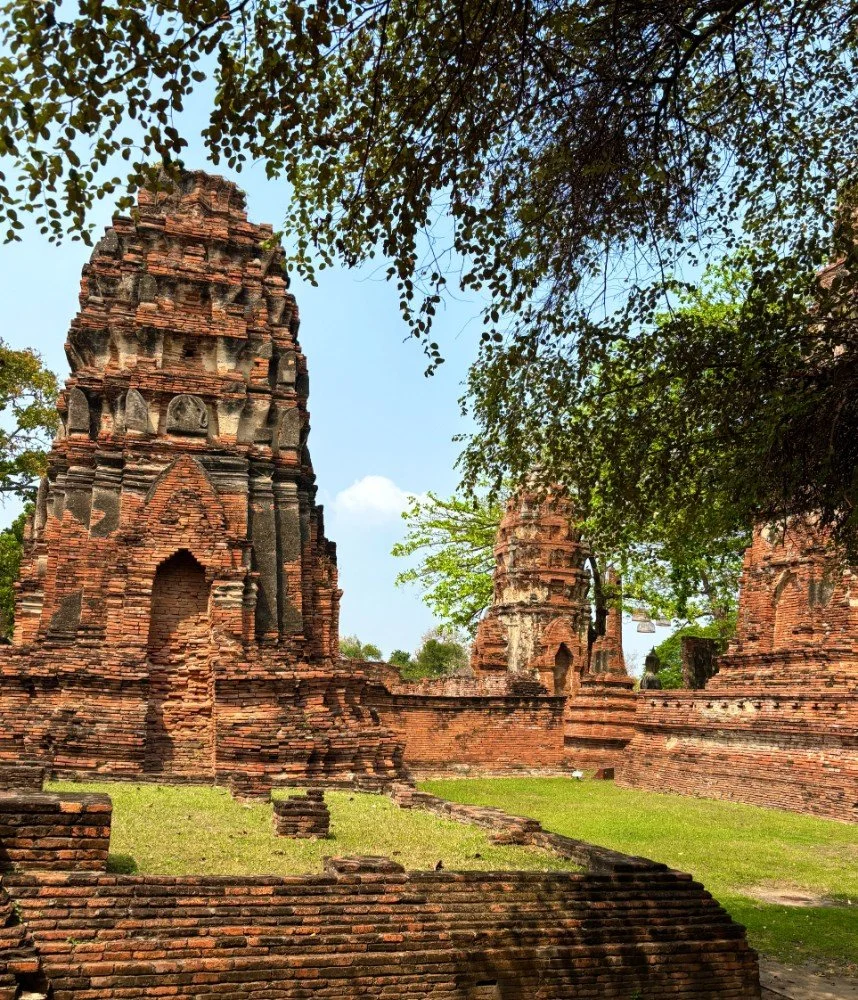
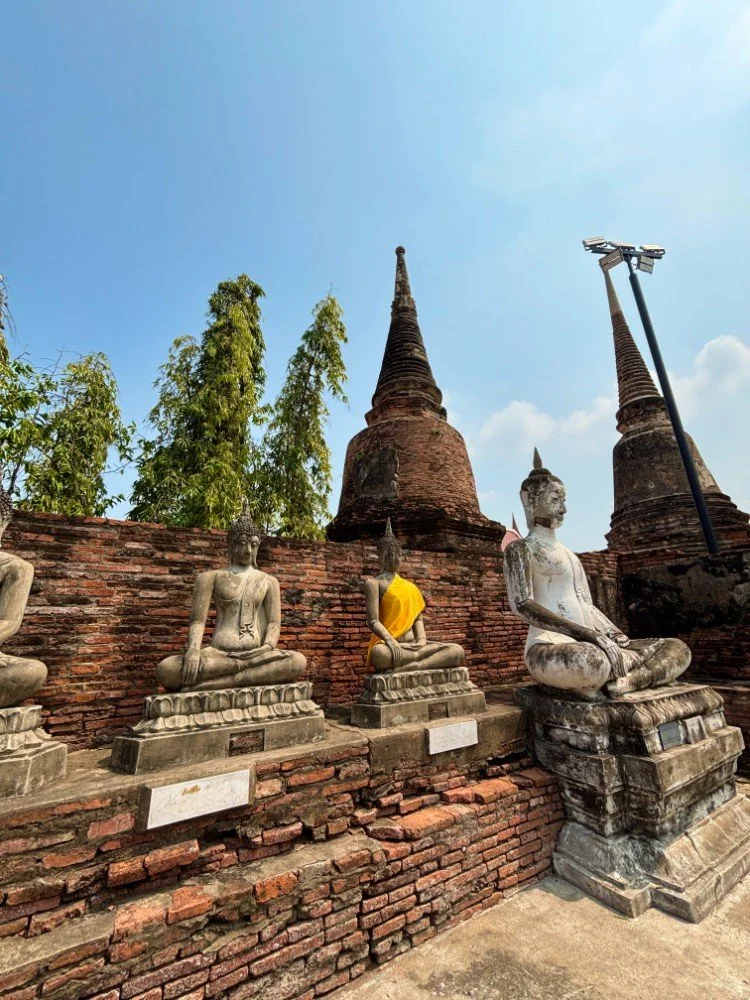
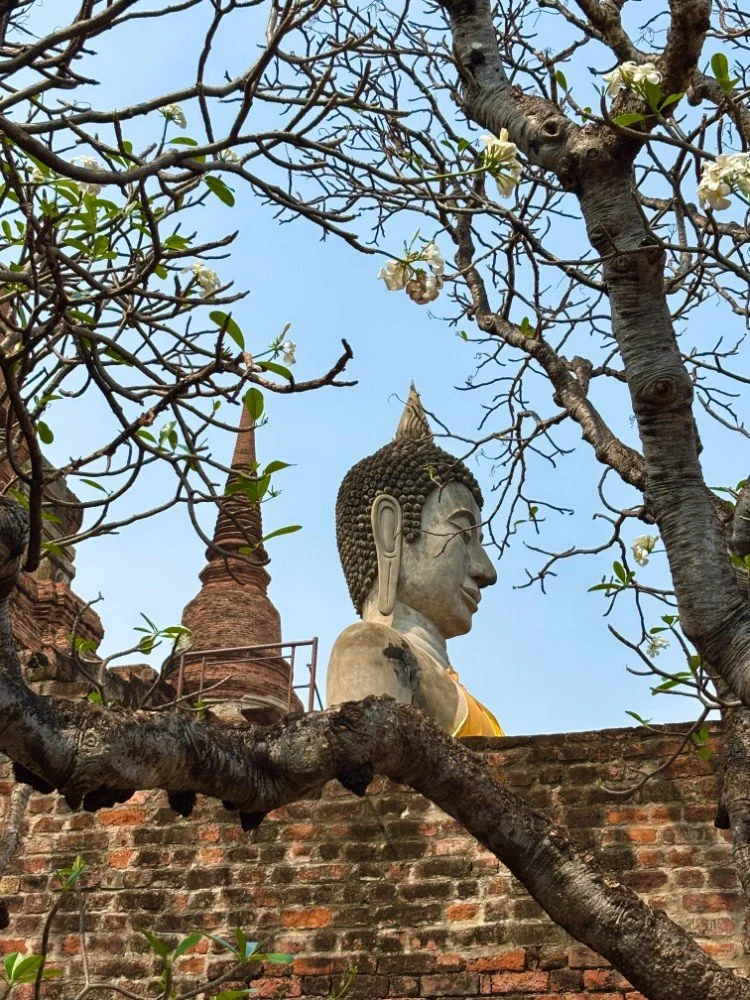
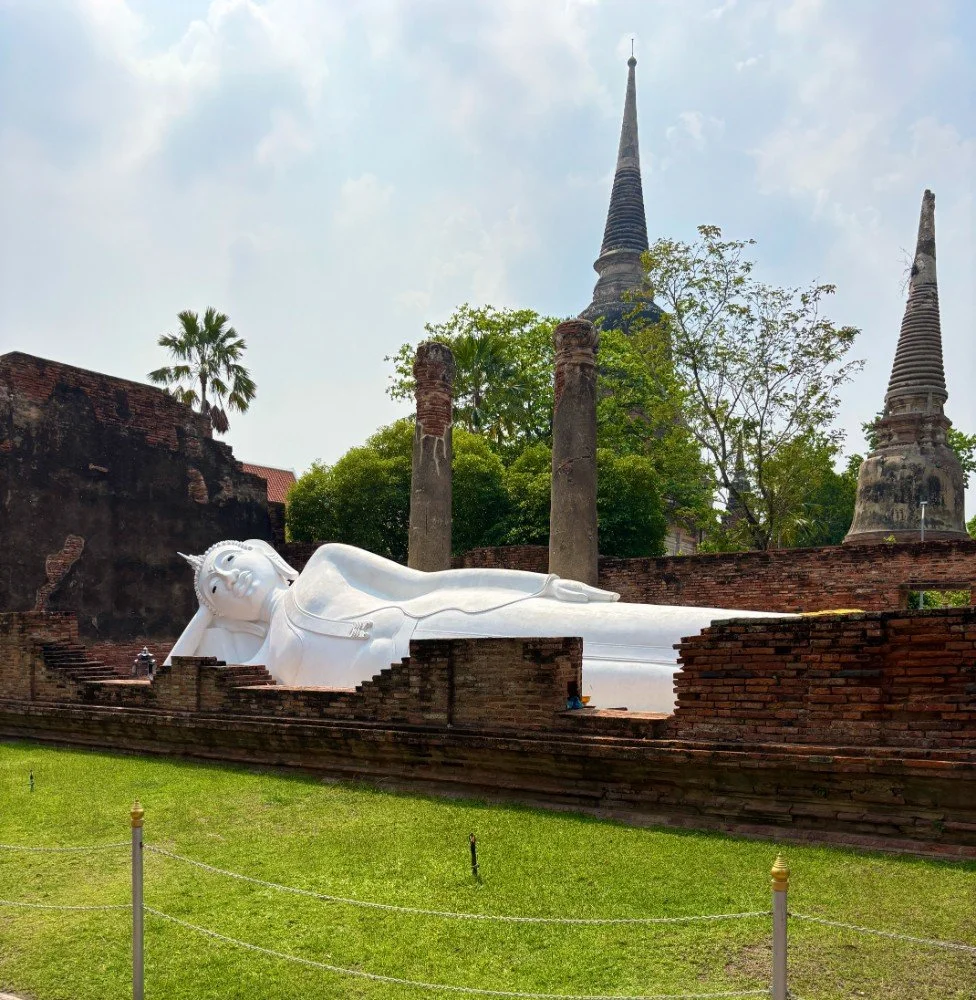
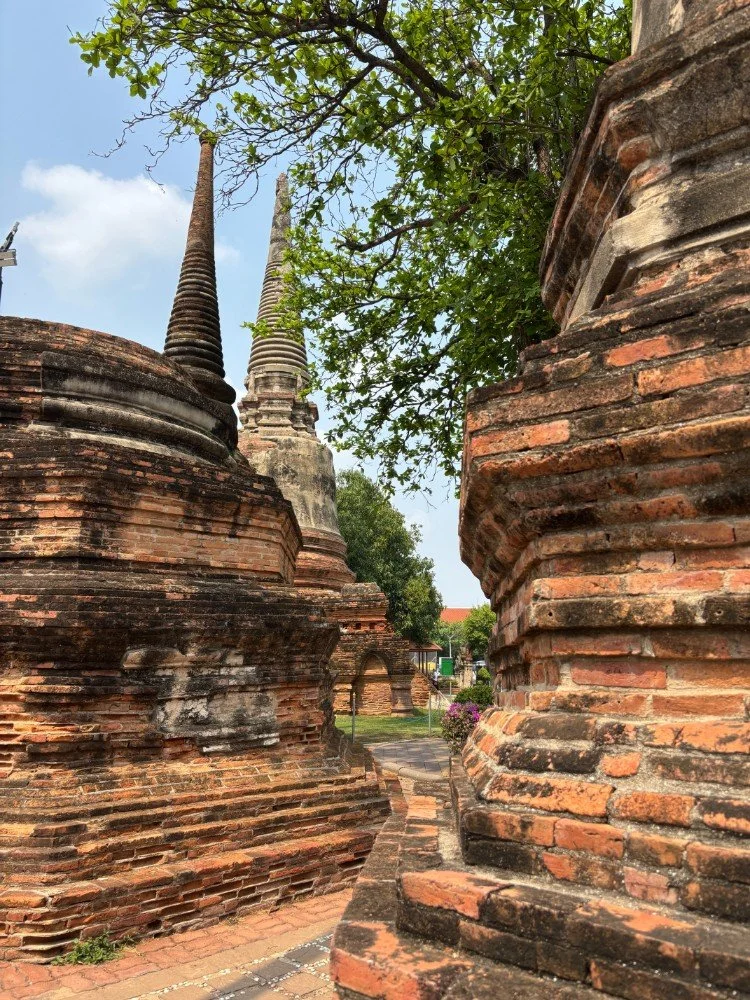
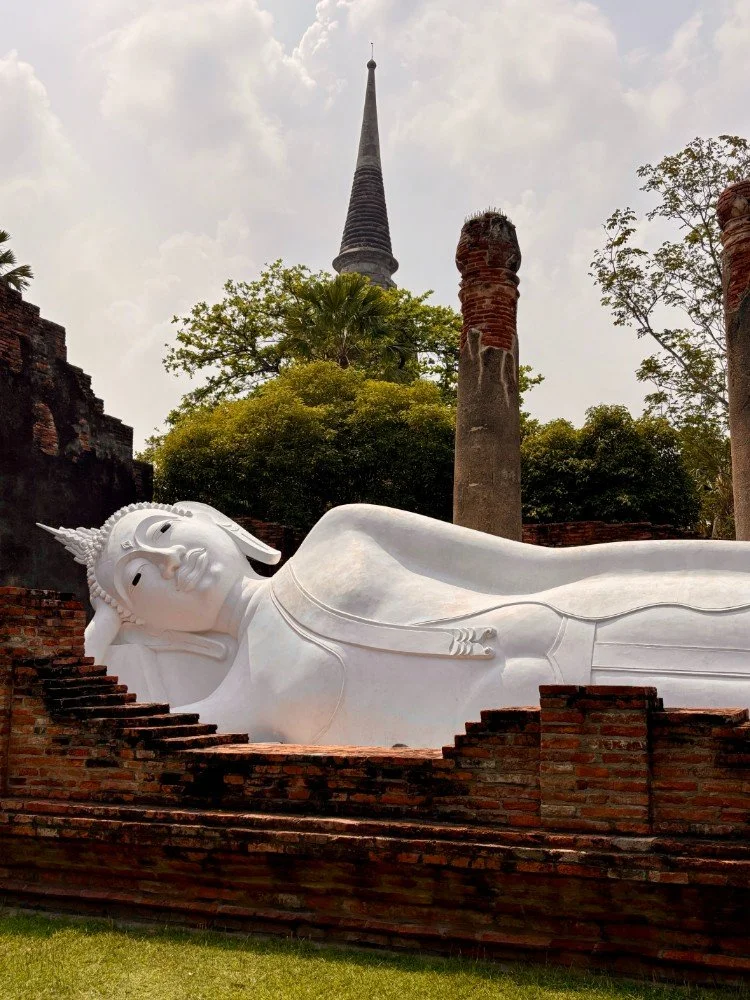
Wat Yai Chai Mongkhon, our last stop, was conceived and founded in 1357 by King U Thong as a replica of Angkor Wat, but it was not even close. Still, young people flock there to take photos of themselves in traditional Thai dress among the crumbling brick stupas and rows of seated Buddha statues draped in bright saffron robes. Although it looks like marble, a giant reclining Buddha of smooth stucco with a white plaster coating, symbolizing serenity and purity, lies peacefully on its right side, its head resting in its hand.
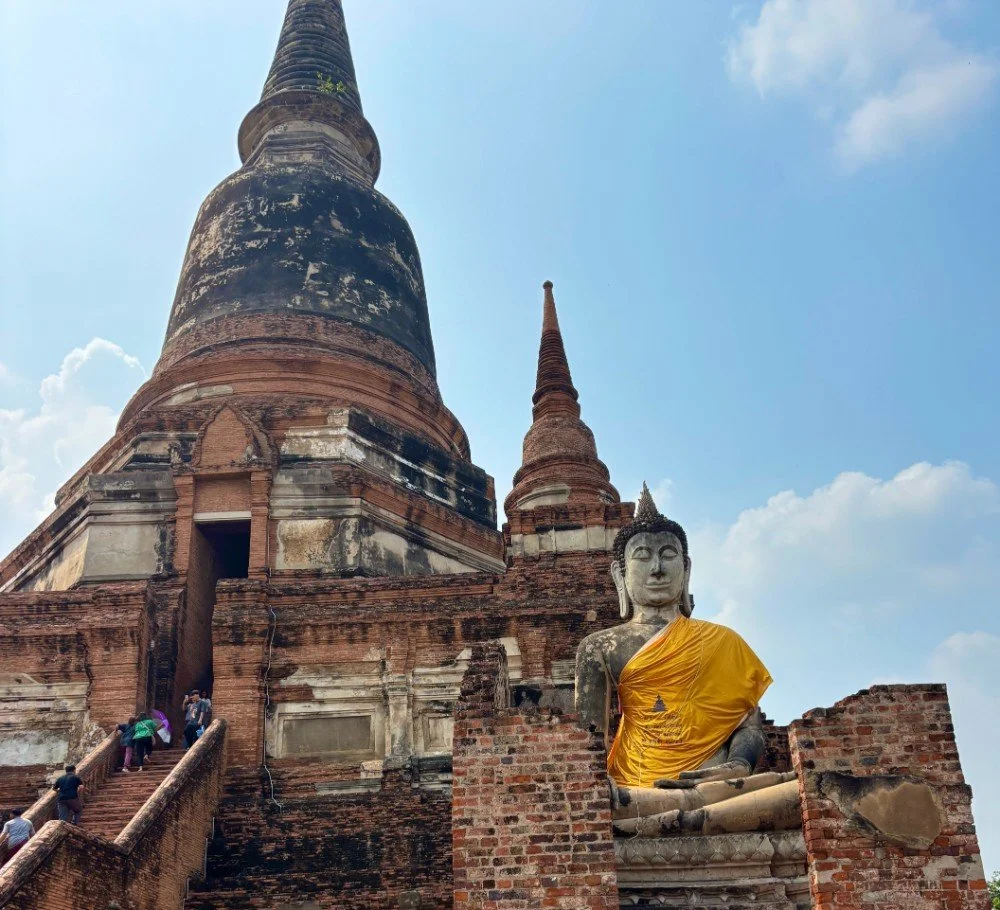
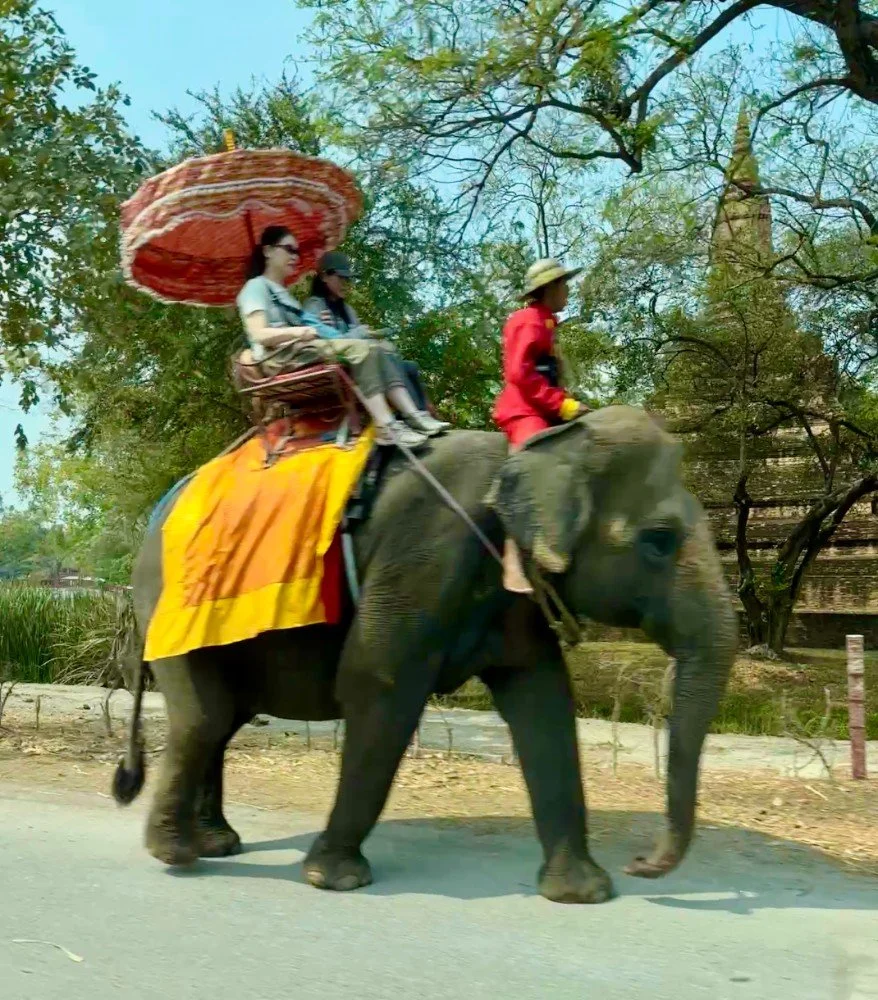
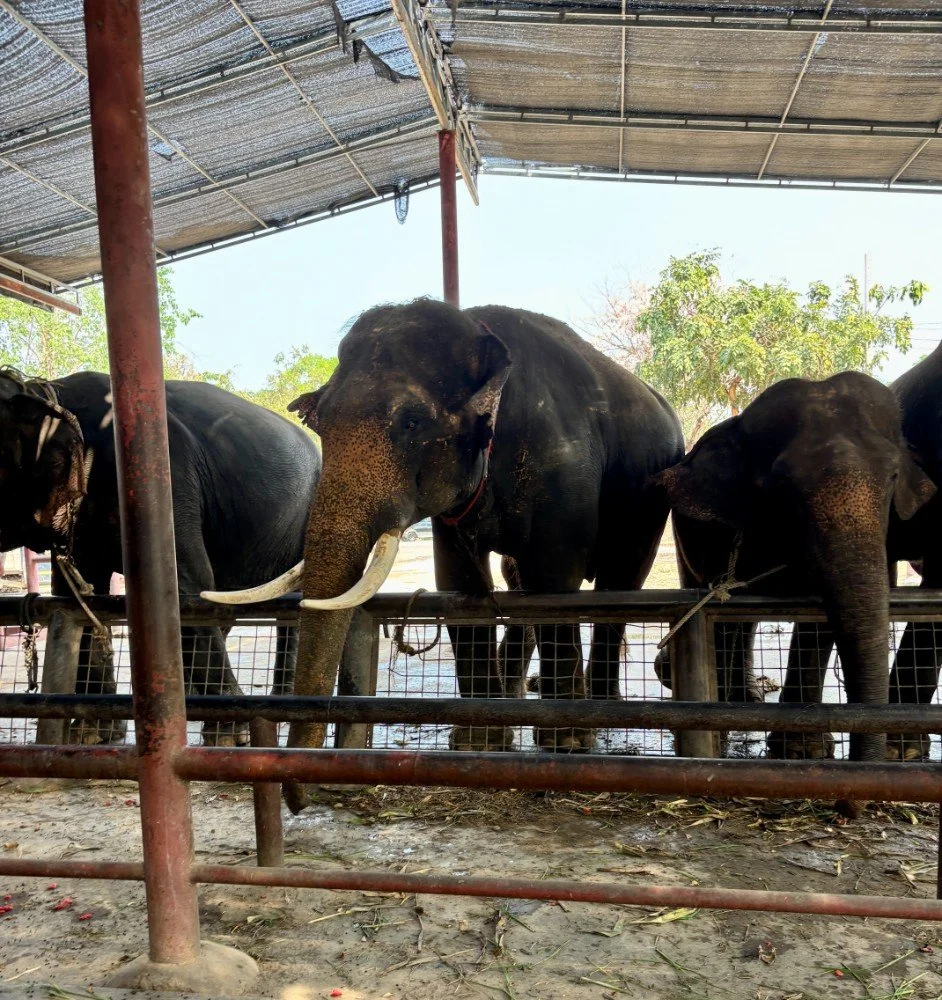
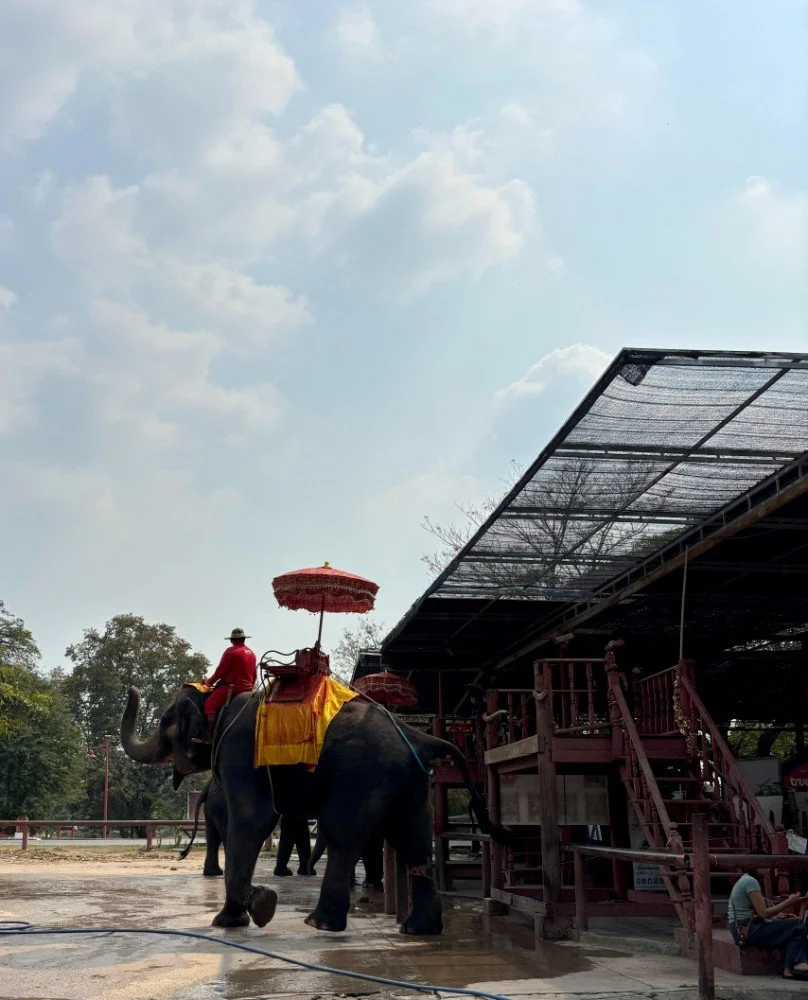
Ken had hinted at our seeing the great white elephants while in Ayutthaya. One of the great Thai kings supposedly won an important battle in 1592 while riding a war elephant; thus, the proliferation of elephants — both real and statuary — around Ayutthaya. But when we saw the small herd of elephants draped in colorful blankets and dangling tassels and bearing tourists who rode around the park and temple ruins, the experience was heartbreaking.
Rather than inspiring awe, it felt embarrassing, shameful, and sad. It was very disturbing and disappointing to see the ones tethered to each other and to a fence, being fed, watered, and gawked at. I wish we could have seen these magnificent animals roaming freely in spacious, natural habitats, where they could simply be elephants instead of tourist attractions.
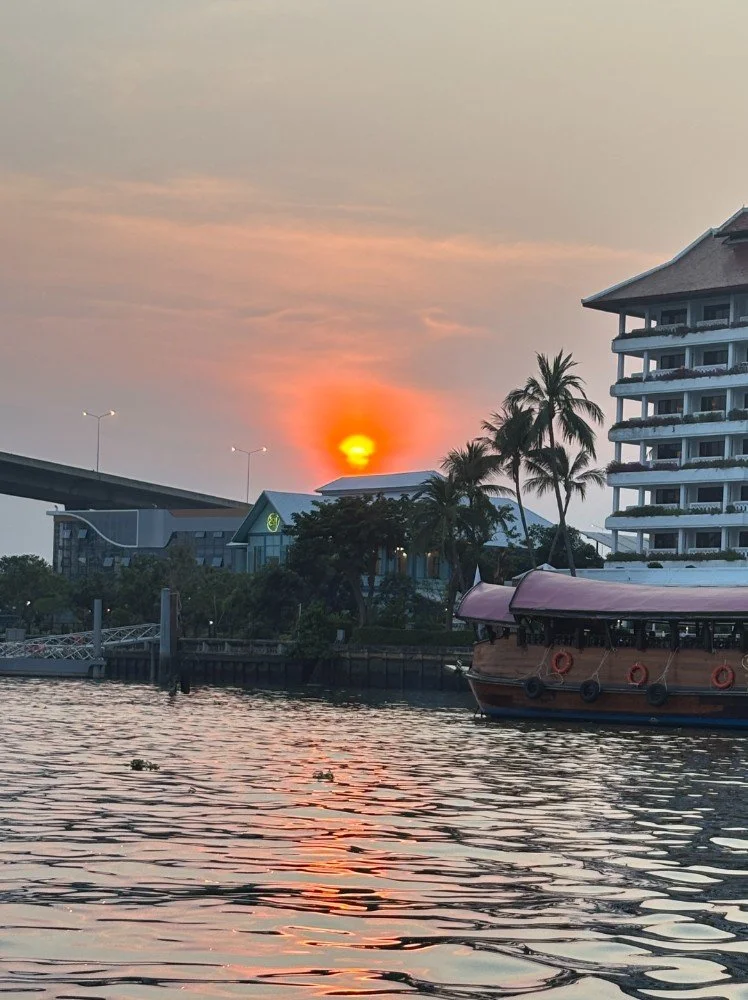
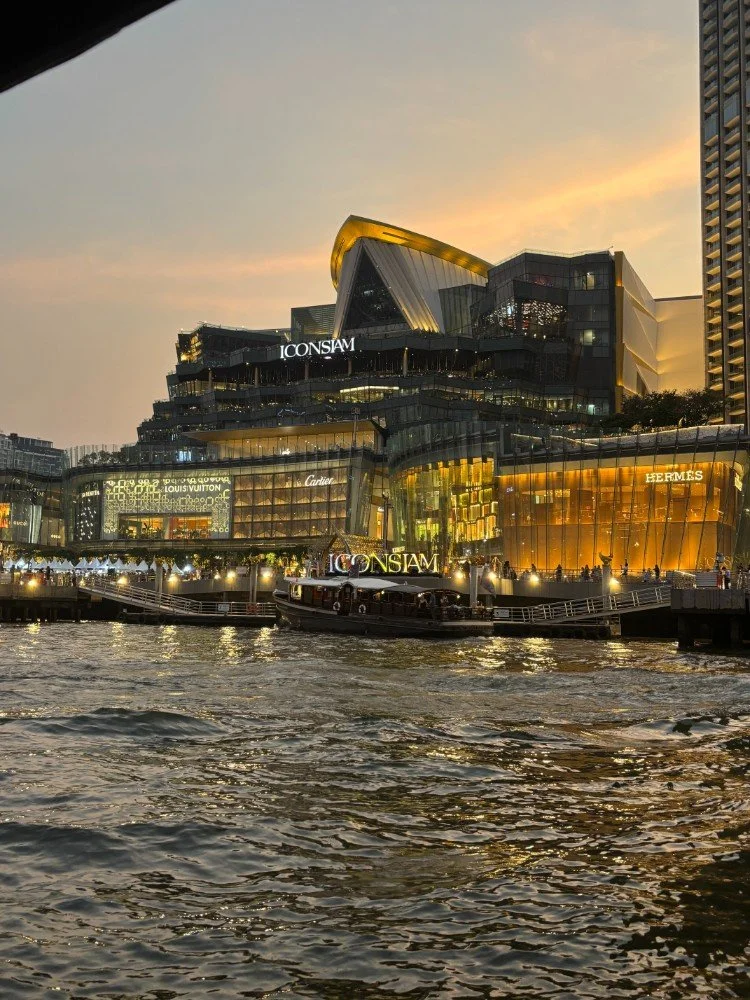
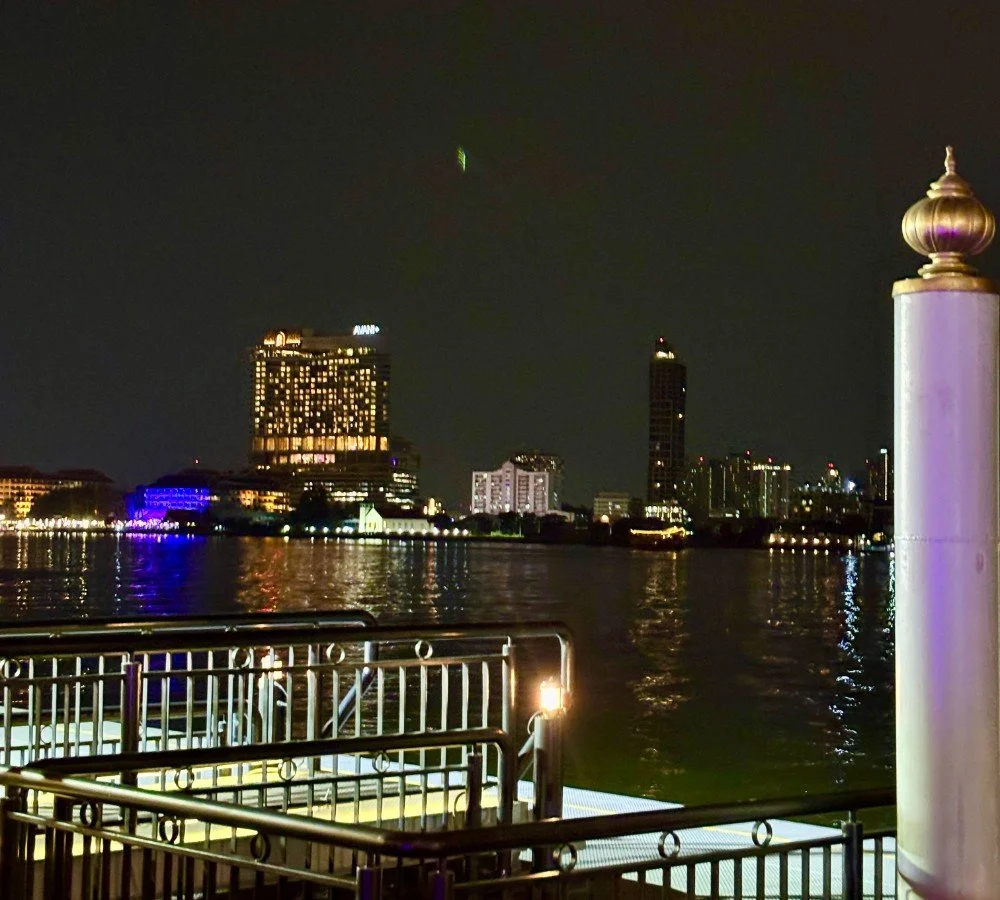
The ride back into Bangkok was a little somber. But we shook off our moodiness after a short rest and boarded a pedestrian ferry the Anantara Hotel provided to venture out on our last night in Bangkok to the massive ICONSIAM, Bangkok’s premier luxury shopping and entertainment complex on the west bank of the Chao Phraya River. The sunset was spectacular, and then the cityscape was brilliantly and colorfully illuminated.
The ICON had all the flagship stores of international fashion and jewelry designers, high-end restaurants and bars, and an incredible fountain and light show reflected in the river that would rival something in Las Vegas, but it also had a traditional floating market with regional foods, handicrafts, and performances.
It was a strange way to end our short visit to Bangkok. After spending our time exploring ancient temples, royal palaces, and historic sites, we ended our day and our trip to Thailand in one of the city's newest and most luxurious shopping malls. The contrast between old and new was striking and reminded us how Bangkok blends its rich history with modern life, and in many ways it perfectly captured the city's ability to embrace both its rich heritage and its rapid modernization.
As always, I scattered David’s ashes in the river and at almost every temple we visited, knowing he would have loved to have been there with us.